The short answer
Commercial duct cleaning is primarily a coordination project: defining zones, scheduling around occupants, arranging above-ceiling access, and communicating clearly with tenants. The cleaning techniques resemble residential work at a larger scale.
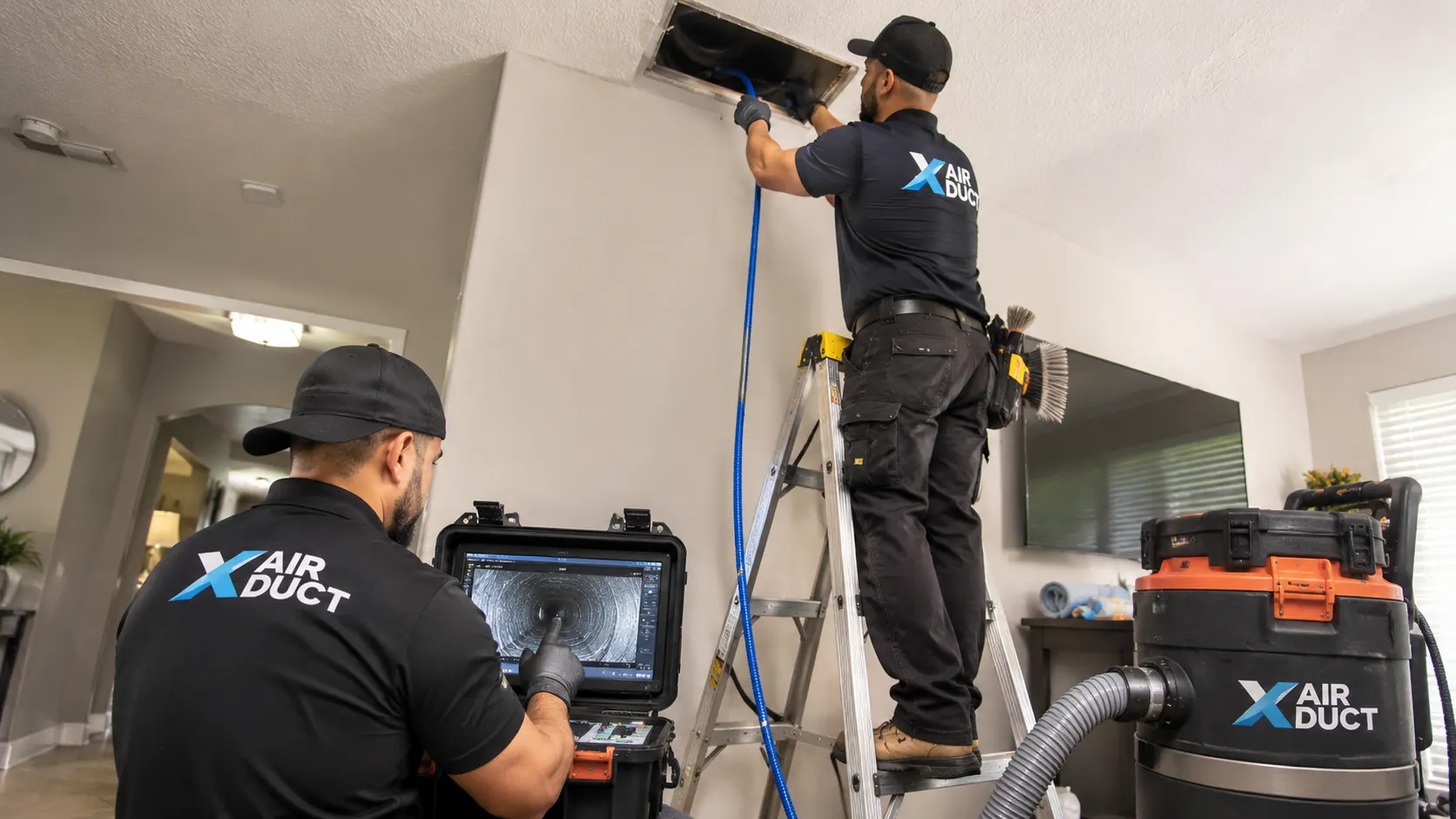
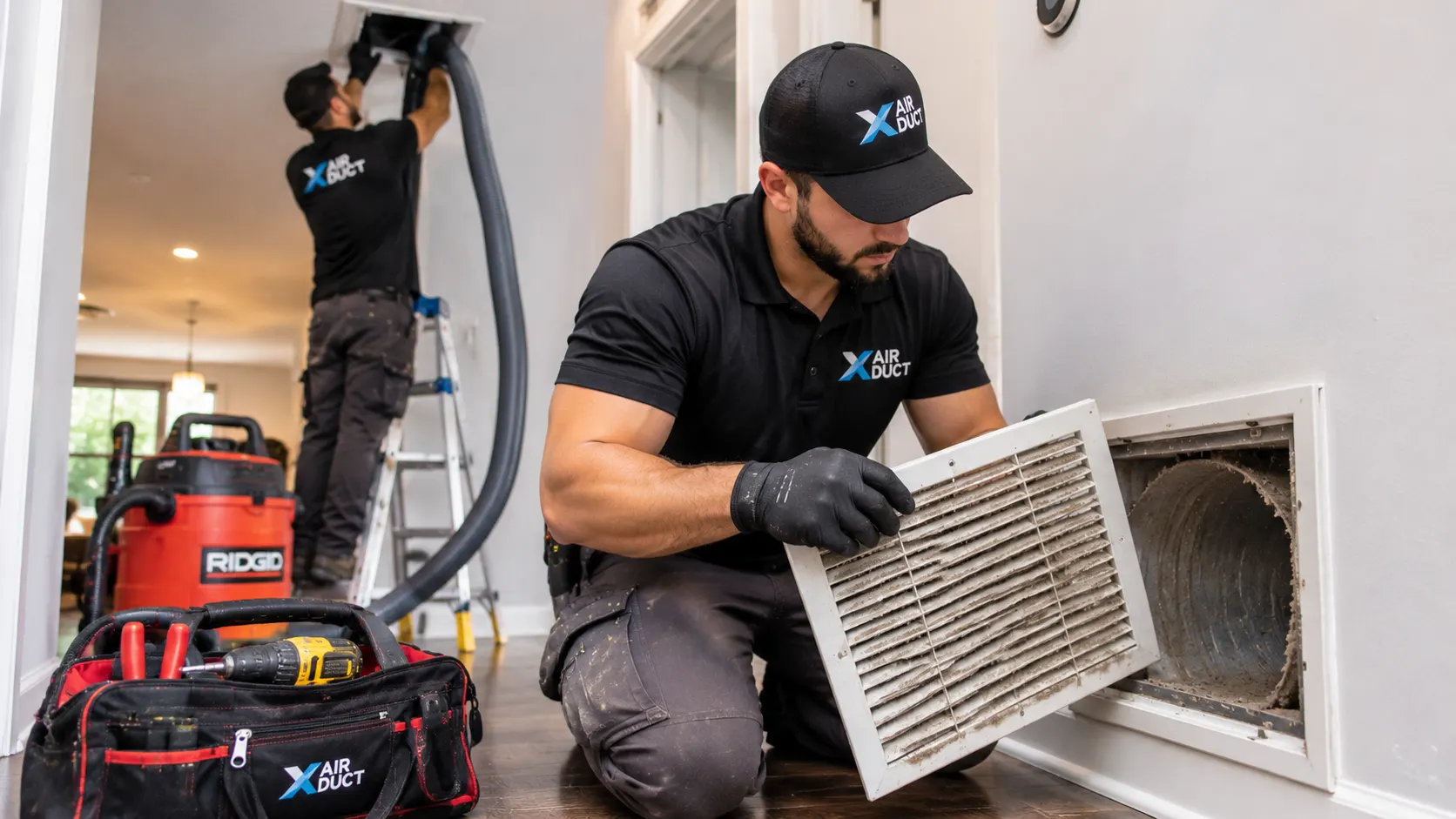
Photography is illustrative of the type of work we perform. It does not depict specific completed jobs or named employees.
Define scope
Which floors, zones, units, and duct sections are included? What is excluded?
Plan around people
After-hours or phased work limits disruption. Notify occupants in advance.
Access
Ceiling tiles, access panels, and mechanical rooms need management coordination.
Documentation
Ask for a written summary of what was done and what was inaccessible.
Defining scope in commercial spaces
Commercial duct systems can be larger and more varied than residential ones, with multiple rooftop or split systems, long trunk lines above suspended ceilings, and zones serving different tenants. Scope should be defined in writing: which systems, floors, or suites; which components; what is excluded; and how inaccessible sections will be reported. Clear scope protects the owner, the tenants, and the contractor.
Planning around occupants
Commercial work must respect the people who use the building:
- Schedule after hours, on weekends, or in phases to limit disruption.
- Notify tenants and occupants in advance about timing and noise.
- Protect workstations, merchandise, and equipment near the work area.
- Coordinate ceiling tile removal and replacement.
- Confirm security, alarm, and access arrangements.
Documentation for facilities teams
Facility managers need records they can file and share. A useful summary lists the systems and areas cleaned, areas not reached, observations such as damaged insulation or disconnected ducts, and recommendations for the HVAC contractor. Photos from the inspection camera help illustrate findings.
Knowing what is out of scope
Some commercial systems, such as kitchen exhaust hoods, laboratory exhaust, or specialized process ventilation, require specialized contractors and standards. X Air Duct focuses on conventional supply and return ductwork and dryer vents, and we say so during scoping rather than taking on work outside our experience.
Example: a phased office project
A two-floor office cannot close during the week. The work is split into zones by system, cleaned over consecutive evenings after staff leave. Each morning, workstations are back in place and the facilities manager receives a short note on progress. At completion, a summary lists each zone, areas not reached, and observations for the HVAC contractor. Phasing keeps the business running while the work gets done.
Questions facilities managers should ask
Useful questions for any provider:
- How will you define and document scope by zone?
- What protection will you use for workstations and inventory?
- Can you meet our insurance and access requirements?
- How will you report areas you could not reach?
- Which systems are outside your scope?
Limits
Commercial duct cleaning does not replace HVAC service, and it is not a health intervention. The EPA notes that duct cleaning has not been shown to prevent health problems.
Documentation format
A useful commercial report is organized by system and zone: what was inspected, what was cleaned, what was not reached and why, observations for other trades, and recommended next steps. Images are labeled by location. Consistent formatting lets facilities teams compare visits year to year.
Coordinating with the HVAC contractor
Share the schedule with the building’s HVAC contractor. They may want to replace filters after cleaning, inspect equipment the same week, or follow up on observations. Coordination avoids recontaminating freshly cleaned ducts.
When commercial cleaning is warranted
The same EPA criteria that guide residential decisions apply: visible mold growth on hard surfaces, pest infestation, or excessive debris. Commercial triggers often include tenant build-outs, change of occupancy, or complaints about dust from specific diffusers. Inspection by zone confirms which areas actually need work, avoiding whole-building cleaning when only part of a system is affected.
Limitations to keep in mind
Mechanical equipment service and code compliance are outside duct cleaning scope.
Takeaway
Good commercial projects are planned zone by zone with the manager.
Related reading and services
Have a question about your own system? X Air Duct brings 18 years of industry experience.
Request an estimate