What commercial duct cleaning is
Commercial ventilation work is as much about coordination as it is about cleaning. Offices, medical suites, retail spaces, and managed residential buildings each have occupants, schedules, and building rules that shape when and how work can happen.
X Air Duct approaches commercial duct cleaning by first defining scope with the property manager or owner: which zones, which units, what access is available above ceilings, and what hours are realistic. Eighteen years of industry experience helps us ask the right questions early so there are fewer surprises once work starts.
Larger commercial systems can involve components that fall outside duct cleaning, such as rooftop equipment, controls, and mechanical repairs. We are clear about where our scope ends.
Who may need it
- Property managers planning maintenance between tenants.
- Office and retail owners after a build-out or remodel.
- Associations preparing scopes for common-area ventilation.
- Businesses that have observed visible debris discharging from supply diffusers.
Signs that an inspection may be useful
- Visible debris at supply diffusers or around return grilles in ceiling tiles.
- Construction dust from a recent tenant improvement.
- Complaints from occupants about visible dust near specific diffusers.
The inspection and cleaning process
- 1
Scope meeting
Zones, access, hours, insurance requirements, and building rules are discussed with the manager.
- 2
Assessment
Representative diffusers, returns, and accessible ducts above ceilings are examined.
- 3
Staging plan
Work is sequenced by zone to limit disruption, with protection for workstations and floors.
- 4
Cleaning
Accessible ductwork is cleaned zone by zone using collection and agitation suited to the system.
- 5
Zone review
Findings are summarized for the manager, including areas that were not accessible.
- 6
Maintenance planning
We discuss filter programs and inspection intervals appropriate to the building.
Equipment commonly used
- Collection equipment suited to commercial duct sizes.
- Inspection cameras for above-ceiling sections.
- Ceiling tile and work area protection.
Safety considerations
- Work areas are cordoned where occupants are present.
- Ladder work above workstations is scheduled for low-occupancy periods where possible.
- Building access, elevator use, and loading rules are followed.
Typical system limitations
- Large central systems and rooftop units may include components outside our duct cleaning scope.
- Some ducts above hard ceilings are not accessible without additional access openings.
What this service does not accomplish
- It does not replace mechanical maintenance by the building HVAC contractor.
- It does not certify indoor air quality or code compliance.
- It is not a remedy for moisture problems, which must be identified and corrected first.
How needs differ by property
A two-suite office with split systems is a very different project from a multi-floor building with central air handling. Medical, restaurant, and specialized spaces may have requirements we will discuss up front and, if they fall outside our work, say so.
What to ask before scheduling
- Can you work after hours or in phases by zone?
- What documentation will you provide after the work?
- What will you need from building management for access?
How often?
Commercial schedules should follow inspection findings, occupancy, and any requirements set by the building or tenants, not a generic interval.
Commercial Duct Cleaning: frequently asked questions
01Do commercial ventilation systems require a different approach?
Yes. Commercial work is shaped by occupants, business hours, larger duct sizes, above-ceiling access, and building rules. Scope should be defined zone by zone with the property manager.
Commercial solutions02What should I ask a contractor about duct access?
Ask which parts of the system can be reached through existing registers, returns, and access panels; whether any section will be inaccessible; and whether new access openings would be needed and who would seal them. Clear answers prevent surprises.
03Does every HVAC system require the same cleaning method?
No. Duct material, size, layout, and access all change the approach. Sheet metal tolerates firmer agitation, while flexible duct needs gentler tools. Commercial systems may involve larger trunk lines and above-ceiling access. A one-size routine is a warning sign.
Where we provide commercial duct cleaning
Available across Broward, Miami-Dade, and Palm Beach counties, including:
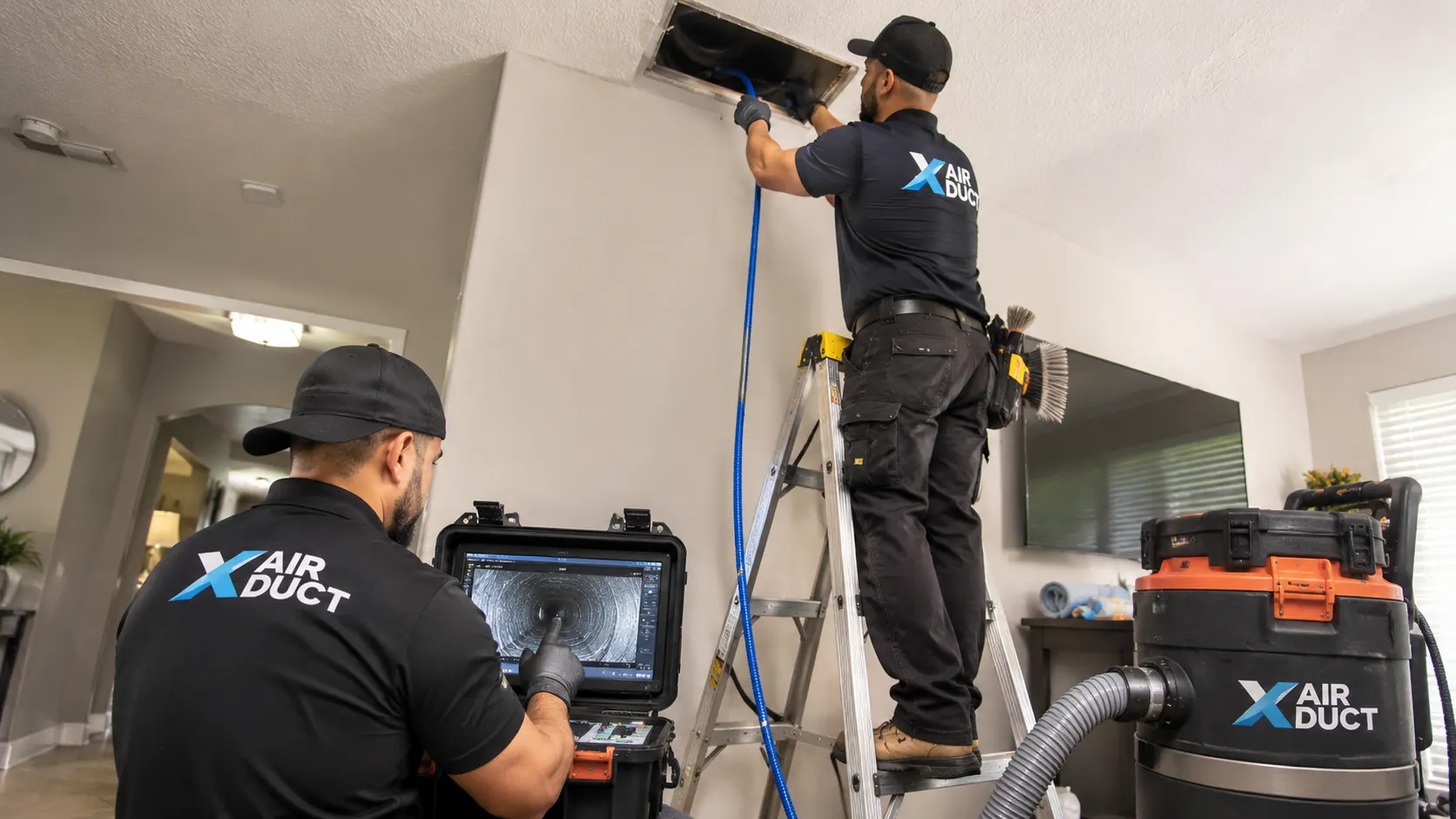
Photography is illustrative of the type of work we perform. It does not depict specific completed jobs or named employees.