
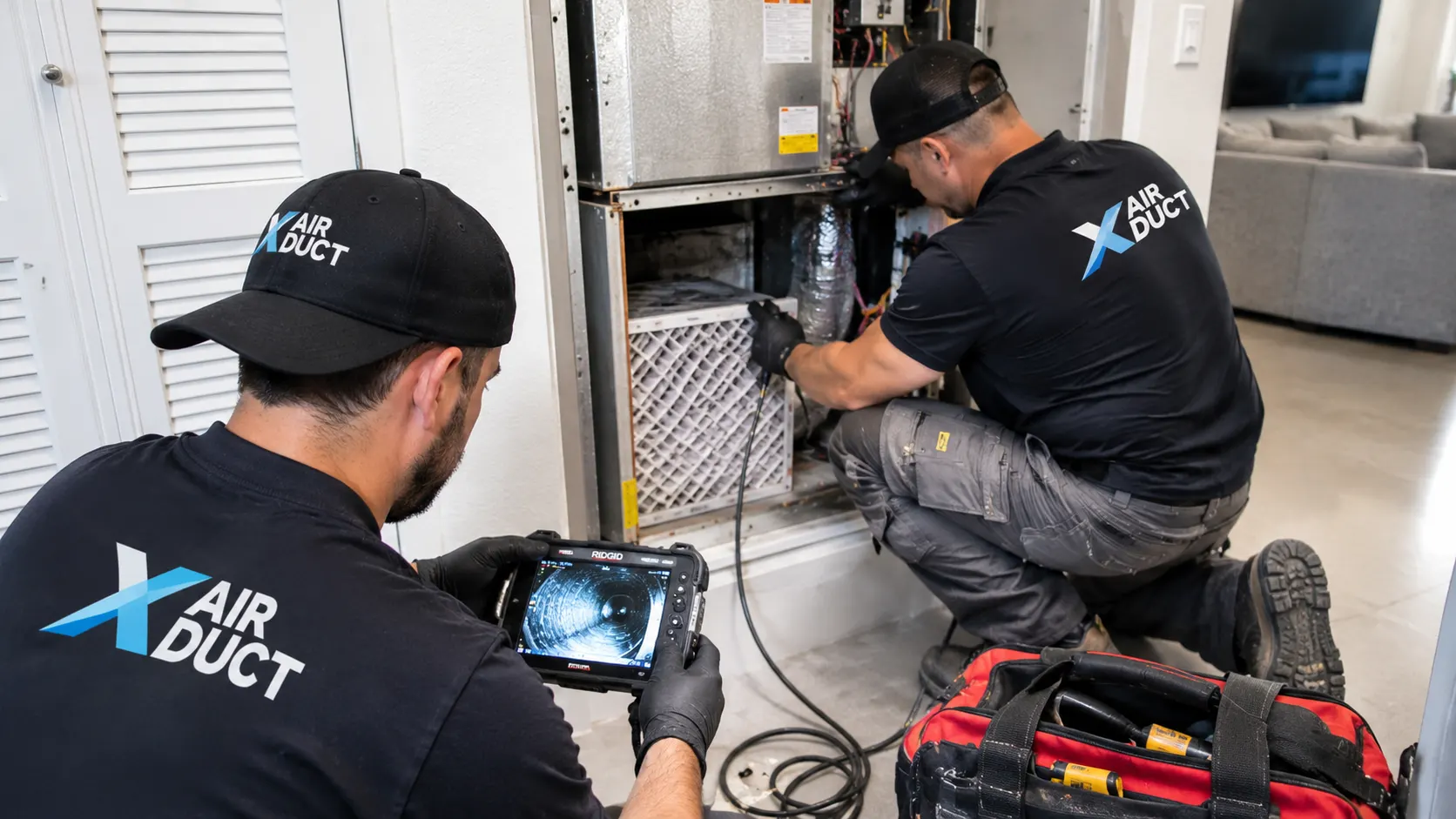
Weak airflow is one of the most common ventilation complaints, and one of the most misdiagnosed. Dirty ducts are sometimes the cause, but filters, closed registers, leaks, and equipment problems are often more likely.
This guide walks through the system from return grille to supply register so you can narrow down where a problem is.
The return side
Air enters through return grilles and passes through the filter. A clogged or oversized filter is the first thing to check. Blocked returns starve the system.
The equipment
The blower moves air; the evaporator coil cools and dehumidifies it. A dirty blower or frozen coil reduces airflow everywhere. These require a licensed HVAC contractor.
The supply ducts
Crushed flexible ducts, disconnected joints, and debris blockages reduce airflow to specific rooms.
Registers and rooms
Closed or covered registers and closed doors without return paths cause uneven comfort.
A diagnostic order
Check filter, then registers and returns, then whether the problem is whole-house or one room. Whole-house points to equipment; one room points to ducts or registers.
How air moves through a forced-air system
The blower in the air handler pulls room air through the return grille and filter, pushes it across the cooling coil, and sends it through supply ducts to registers in each room. For the system to work well, air has to flow freely on both sides. Restrictions on the return side starve the blower; restrictions on the supply side reduce the air reaching rooms. Either way, comfort and efficiency suffer.
The most common causes of weak airflow
Weak airflow usually has an ordinary explanation. In rough order of how often we encounter them: a dirty or wrong-size filter; closed or blocked registers; interior doors shut with no return path; crushed, kinked, or disconnected flexible duct in an attic; debris after renovation; a dirty coil or blower; and equipment problems such as a failing motor or refrigerant issue. Only some of these involve duct cleaning.
Troubleshooting step by step
Start with the filter: replace it and confirm the size. Walk every room and check that registers are open and unobstructed. Note whether the weak area is a single room, a wing, or the whole house. A single room points to that branch. A wing points to a trunk or zone. The whole house points to the filter, coil, blower, or equipment. Then request an inspection for duct issues or an HVAC service call for equipment issues.
Registers, returns, and balance
Supply registers often have adjustable dampers. Closing too many in unused rooms can raise pressure in the ducts and reduce overall performance rather than redirecting air. Returns need clear space in front of them. Rooms with no return of their own rely on door undercuts or transfer grilles; when doors are closed, those rooms may get less air. An HVAC contractor can evaluate balancing if comfort varies widely.
Filters: the biggest everyday factor
The filter protects the coil and ducts from debris. The right filter fits the slot snugly with the airflow arrow pointing toward the air handler. A filter that is too restrictive for the system can reduce airflow; one that leaves gaps lets debris bypass it. Follow the equipment manufacturer or HVAC contractor recommendation for filter type, and check it monthly.
When cleaning helps and when it does not
Cleaning helps when the restriction is debris inside the ducts: construction dust, a heavy layer from years without a filter, or an obstruction. It does not help when the cause is a crushed duct, disconnected branch, closed damper, dirty coil, or failing blower. Honest inspection distinguishes these cases.
Working with your HVAC contractor
Share inspection findings with your HVAC contractor, including photos. Ask them to check static pressure, coil condition, blower operation, and duct connections if airflow issues persist after the basics are addressed. Coordinated work avoids paying for cleaning when the problem is mechanical, or for equipment repairs when the problem is debris.
A quick airflow log
When diagnosing a comfort problem, keep a short log for a week: date, outdoor conditions, thermostat setting, rooms that felt weak, and any changes such as a new filter. Patterns often appear quickly and give professionals a head start.
Example: the warm back bedroom
A family notices the back bedroom stays warmer than the rest of the house. The filter is new and the register is open. The camera shows the branch to that room is clean, but in the attic the flexible duct is pinched where it crosses a truss. Cleaning would not have helped. An HVAC contractor reroutes and supports the run, and airflow returns. This is a typical case where inspection prevents paying for the wrong service.
Example: the whole-house slowdown after a remodel
After a kitchen renovation, every room feels weaker. The filter loaded quickly during the work and was not changed. Replacing it helps, but the camera shows fine construction dust in the return and nearest trunks. Cleaning the affected sections, along with a fresh filter, restores normal flow. Here, debris was the cause, and cleaning was the right answer.
Return air problems
Undersized or blocked returns are a common, overlooked cause of poor airflow. Furniture in front of a return grille, a closed closet door serving as the return path, or a filter crammed into a slot too small for it all limit how much air the blower can move. Look at the return side first when the whole house feels weak.
Limits of this guide
This guide explains general airflow concepts. Measuring static pressure, evaluating blower performance, and diagnosing equipment require a licensed HVAC contractor. We inspect and clean ducts and say clearly when a problem lies elsewhere.
A homeowner airflow checklist
Replace the filter and confirm its size. Open every register and clear furniture away. Keep a clear space in front of returns. Leave interior doors open or confirm rooms have a return path. Note which rooms are weak and when. Request a duct inspection for suspected debris or disconnections, and an HVAC service call for equipment concerns. Record what changed after each step so professionals can see the full picture.
Ventilation versus circulation
Circulation moves indoor air around the house through the duct system. Ventilation brings in outdoor air and exhausts stale or moist air, usually through bathroom and kitchen fans in South Florida homes. Both affect comfort, but they are separate. A clean duct system does not ventilate a home, and exhaust fans do not fix poor duct airflow.
| Pattern | Likely area | Who to call |
|---|---|---|
| Whole house weak | Filter, blower, coil | Check filter; HVAC contractor |
| One room weak | Branch duct, register | Duct inspection |
| Debris from register | Inside duct | Duct inspection and cleaning |
Common questions
01Do air filters replace the need for duct cleaning?
Filters and duct cleaning do different jobs. A properly fitted filter, changed on schedule, reduces how much dust reaches the system and is the single most useful maintenance habit. It does not remove debris that is already in the ducts, and it cannot catch dust that enters through gaps or leaks. Good filter habits often mean cleaning is needed less often.
Air duct cleaning vs. HVAC maintenance02Does every HVAC system require the same cleaning method?
No. Duct material, size, layout, and access all change the approach. Sheet metal tolerates firmer agitation, while flexible duct needs gentler tools. Commercial systems may involve larger trunk lines and above-ceiling access. A one-size routine is a warning sign.
03What should I ask a contractor about duct access?
Ask which parts of the system can be reached through existing registers, returns, and access panels; whether any section will be inaccessible; and whether new access openings would be needed and who would seal them. Clear answers prevent surprises.