
What dryer vent inspection is
A dryer vent inspection follows the exhaust path: the transition hose behind the dryer, the visible and concealed duct run, and the exterior termination. The goal is to understand whether lint has accumulated, whether the route looks reasonable, and whether anything appears crushed, disconnected, or unsuitable.
Many homeowners have never seen where their dryer vent goes. In South Florida, vents can exit through block walls, run through garage ceilings, terminate on the roof, or join a building chase in condominiums.
X Air Duct draws on 18 years of industry experience to explain what an inspection shows and when the right next step is cleaning, monitoring, or a qualified installer.
Who may need it
- Anyone whose dryer performance has changed.
- New homeowners or tenants with an unknown vent history.
- Households after a new dryer installation, to confirm the connection and route look right.
- Condominium owners clarifying what portion of the vent is theirs.
Signs that an inspection may be useful
- Longer drying times or damp clothes after a full cycle.
- An exterior flap that does not open while the dryer runs.
- A transition hose that looks kinked, crushed, or made of thin plastic or foil.
The inspection and cleaning process
- 1
Ask
Dryer type, location, building type, and recent symptoms.
- 2
Find the termination
Locate the exterior hood and observe its condition.
- 3
Check the transition
Inspect the connection behind the dryer for material and kinks.
- 4
View the run
Use a camera where access allows to view interior lint levels.
- 5
Explain
Share what we found and whether cleaning is warranted.
- 6
Refer when needed
Routing or material problems are flagged for a qualified installer.
Equipment commonly used
- Inspection camera
- Flashlights and hand tools
- Monitor for customer viewing
Safety considerations
- Gas dryers are moved carefully; damaged gas connections are referred out immediately.
- Roof terminations are only accessed when it is safe to do so.
Typical system limitations
- Concealed sections behind walls may not be fully viewable.
- Inspection observes; it does not measure exhaust performance against manufacturer specifications.
What this service does not accomplish
- It does not repair or reroute the vent. Repair and installation require a separate discussion with an appropriately qualified professional.
- It does not diagnose dryer appliance faults.
How needs differ by property
Single-family homes usually give direct access to the full run. Condominiums may involve association-controlled chases, and townhouses may have vents running between floors.
What to ask before scheduling
- Can you show me where my vent exits?
- Will you tell me if the transition hose material is a concern?
- What happens if you find a problem you do not fix?
How often?
Inspect after a new installation, when moving into a property, when drying times change, and periodically in heavy-use households.
Dryer Vent Inspection: frequently asked questions
01Should dryer vents be inspected after installation?
It is a sensible step. Dryers are often pushed back against a wall, crushing the transition hose. A quick inspection confirms the connection, material, and exterior termination match the manufacturer installation instructions.
02What are the warning signs of restricted dryer exhaust?
Longer drying times, clothes that are hot but damp, a hot laundry room, a hood flap that barely opens, lint around the exterior termination, or a burning smell. If you notice a burning smell, stop using the dryer until it is checked.
Signs of a restricted dryer vent03When does a dryer vent need professional repair?
When a duct is crushed, disconnected, made of unsuitable material, routed beyond the manufacturer limit, or terminates improperly. Repair is separate from cleaning and inspection. Ask an appropriately qualified installer to evaluate the installation and explain any needed corrections.
When might a dryer vent need repair?04Are condo ventilation systems different from single-family systems?
Often yes. Condo air handlers are commonly in closets, ducts run above dropped ceilings, and dryers may exhaust into building chases. Associations may control access, hours, and contractors. Check your rules before scheduling.
Ventilation considerations for Miami condominiumsWhere we provide dryer vent inspection
Available across Broward, Miami-Dade, and Palm Beach counties, including:
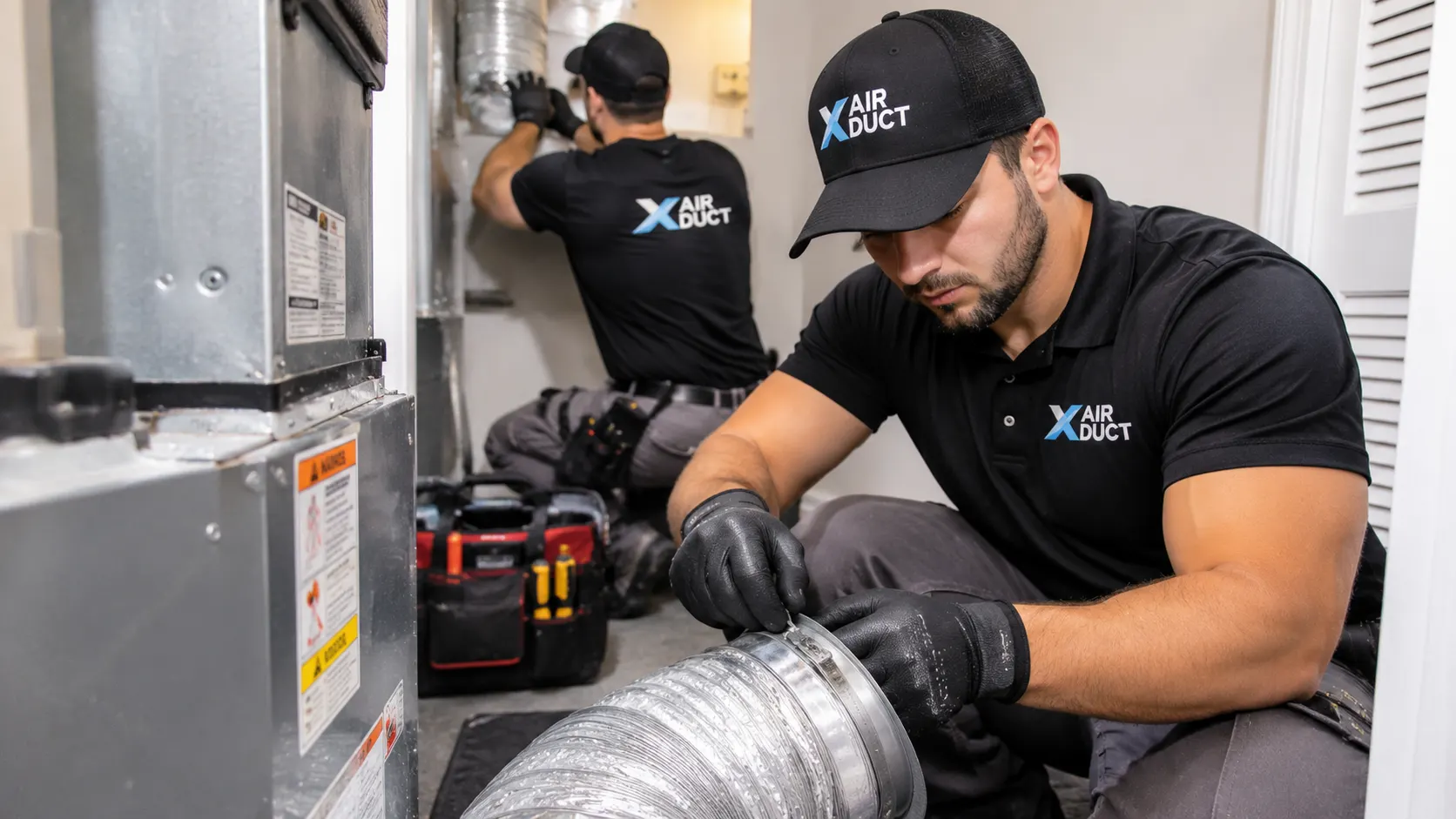
Photography is illustrative of the type of work we perform. It does not depict specific completed jobs or named employees.