The short answer
A vent needs repair rather than cleaning when it is crushed, disconnected, damaged, made of unsuitable material, routed beyond manufacturer limits, or terminates improperly. Cleaning cannot correct those conditions.
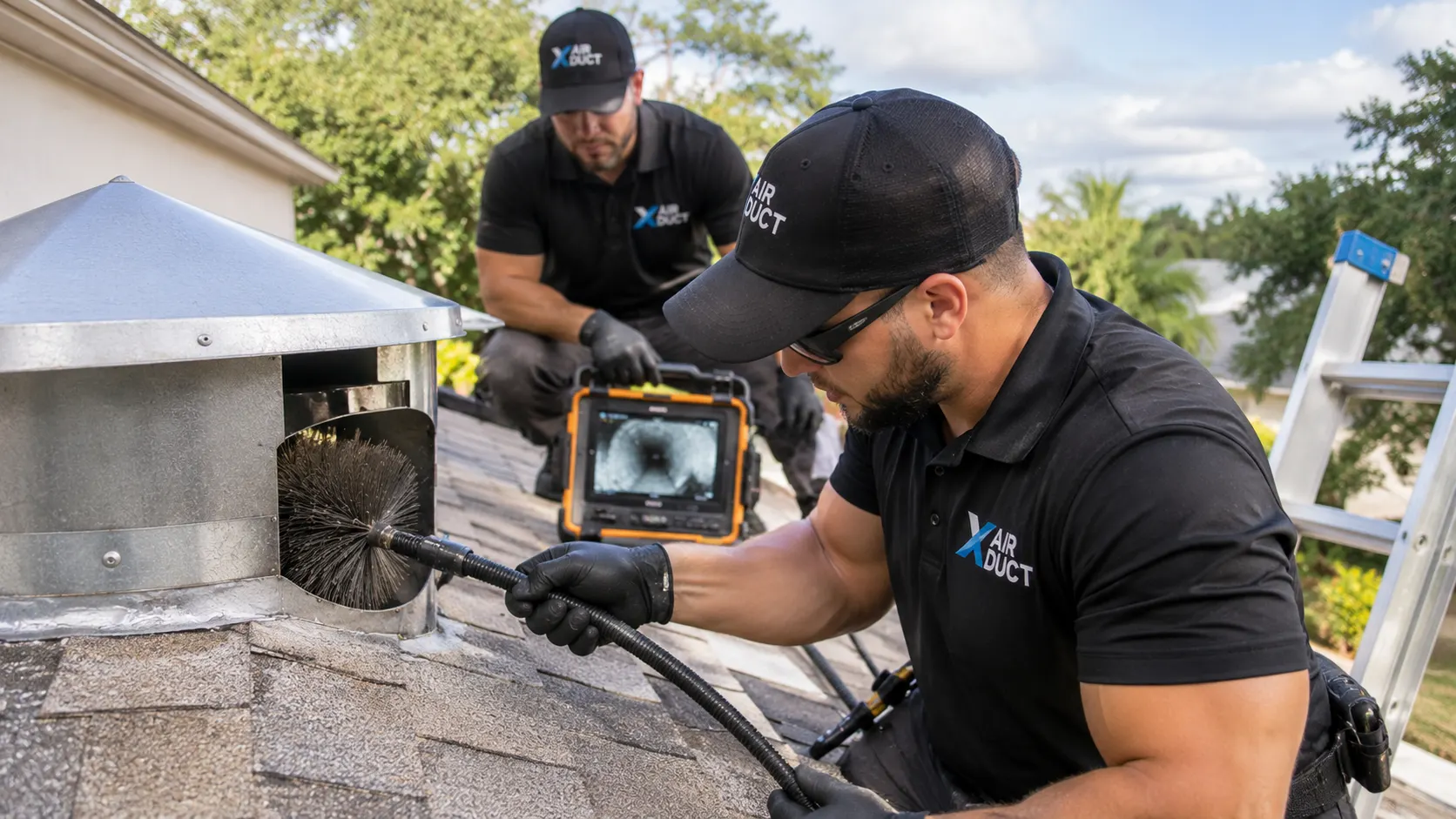
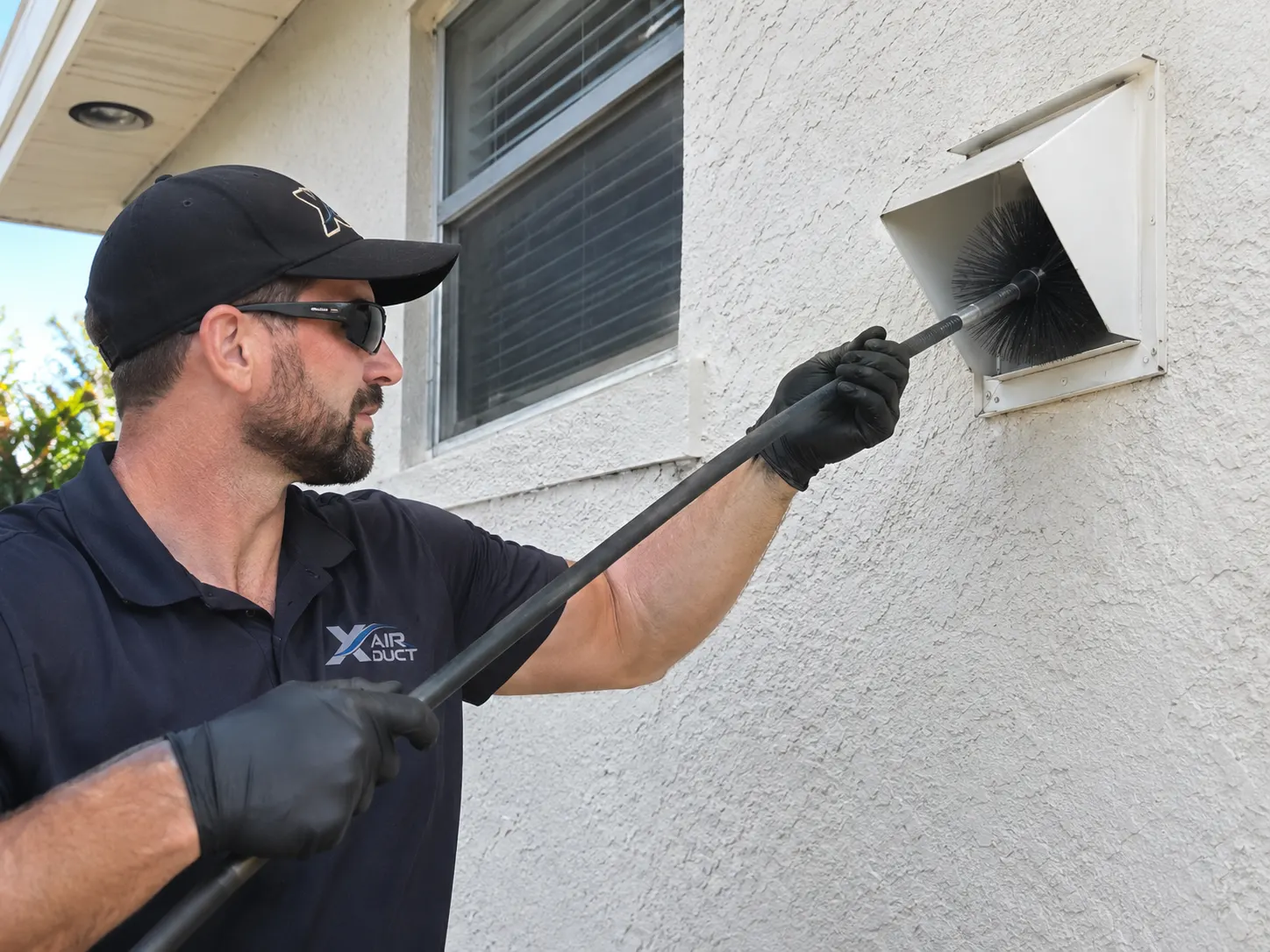
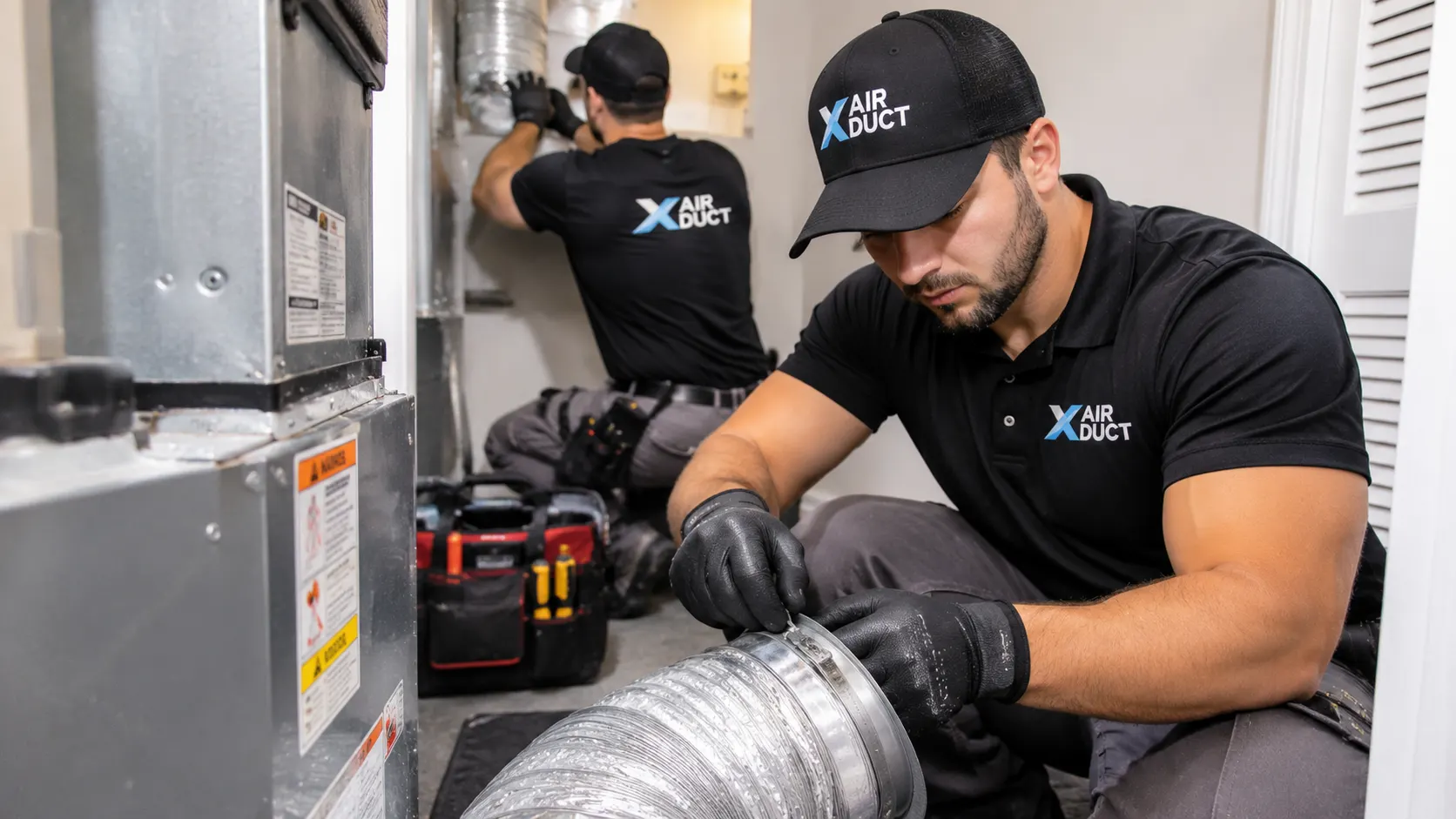
Photography is illustrative of the type of work we perform. It does not depict specific completed jobs or named employees.
Signs that point to repair
Look for these:
- Lint or heat in a wall cavity or attic.
- A separated joint visible in a garage ceiling.
- A hood that is broken or missing its flap.
- Persistent poor drying after cleaning.
Who handles repairs
A qualified dryer vent installer or contractor. X Air Duct does not perform repairs, but we explain what we observe during inspection.
Cleaning cannot fix damage
Cleaning removes lint. It does not restore a crushed duct, reconnect a separated joint, or replace a hood with a broken flap. When an inspection finds physical damage or improper materials, the solution is repair or replacement by a qualified installer. X Air Duct does not perform dryer vent repair, so we document the issue and refer it.
Findings that usually mean repair
These conditions generally go beyond cleaning:
- Disconnected or separated joints inside walls or ceilings, allowing lint into cavities.
- Crushed, kinked, or torn sections, including flexible ducts pinched behind walls.
- Plastic or vinyl venting, which the USFA flyer advises against in favor of metal.
- A vent terminating indoors, in an attic, or in a garage.
- Rust-through or corrosion, more common at coastal terminations.
- A hood flap that is broken, missing, or permanently stuck.
- Evidence of heat damage or scorching anywhere along the path.
What to do in the meantime
If the finding suggests a safety concern, such as a disconnection inside a wall or signs of overheating, stop using the dryer until the vent is repaired. For less urgent issues, such as a sticking flap, ask an installer to address it soon and keep watching drying times.
Who to call
Depending on the issue, the right professional may be a dryer vent installer, an HVAC contractor, an appliance technician, or, in a condominium, the association’s maintenance team. A written description of what was observed, ideally with photos from the inspection, helps them quote and plan the repair accurately.
Example: the inspection that found a separation
During an inspection, the camera shows lint packed around a joint inside a wall, with a gap where two sections separated. Cleaning would remove lint from the run, but exhaust would keep escaping into the wall cavity. The right recommendation is to stop using the dryer and have an installer reconnect or replace the section. Documenting the finding with an image helps the installer plan the repair.
After a repair
Once repairs are complete, check airflow at the termination on the first load, confirm the transition is not crushed, and note the repair date. A short follow-up inspection can confirm the path is clear.
Repair or replace?
Isolated problems such as a crushed transition or a stuck flap are usually simple fixes. Widespread issues like plastic venting throughout, multiple separations, or a vent ending indoors often call for replacing or rerouting the run. An installer can explain the options after reviewing the inspection findings.
Insurance and documentation
Keep records of inspections and repairs. They are useful when selling a home, answering an association, or discussing a claim, and they show the vent has been maintained.
Signs you may notice before an inspection
Lint appearing on the floor or wall near the dryer connection, a hot or humid laundry closet, a hood with no airflow even after cleaning, or lint visible at ceiling or wall seams along the vent path can all suggest a separation or damage. Report these when you request an inspection so the technician can focus on them.
Limitations to keep in mind
Some damage is hidden behind finished surfaces and cannot be confirmed without opening them.
Takeaway
If cleaning does not restore performance, the vent itself may be the issue.
Related reading and services
Have a question about your own system? X Air Duct brings 18 years of industry experience.
Request an estimate