The short answer
The most common signs are longer drying times, clothes that come out hot but damp, a laundry area that gets unusually warm, a hood flap that does not open fully, lint around the exterior termination, and a burning smell. A burning smell means stop using the dryer until it is checked.
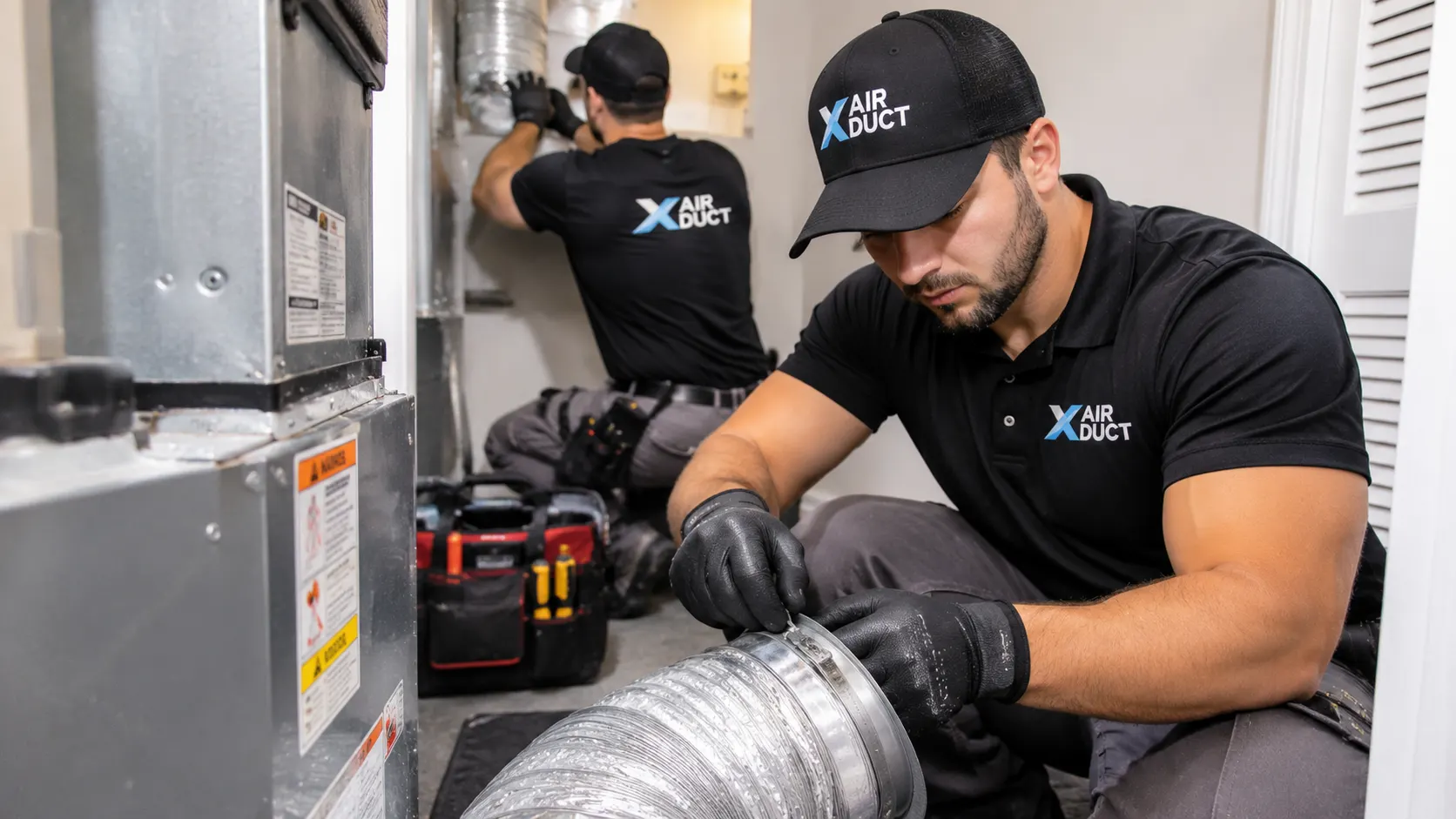
Photography is illustrative of the type of work we perform. It does not depict specific completed jobs or named employees.
Inside the home
Pay attention to drying time trends. If a normal load once took one cycle and now needs two, airflow may be restricted. A hot dryer cabinet top is another clue.
Outside the home
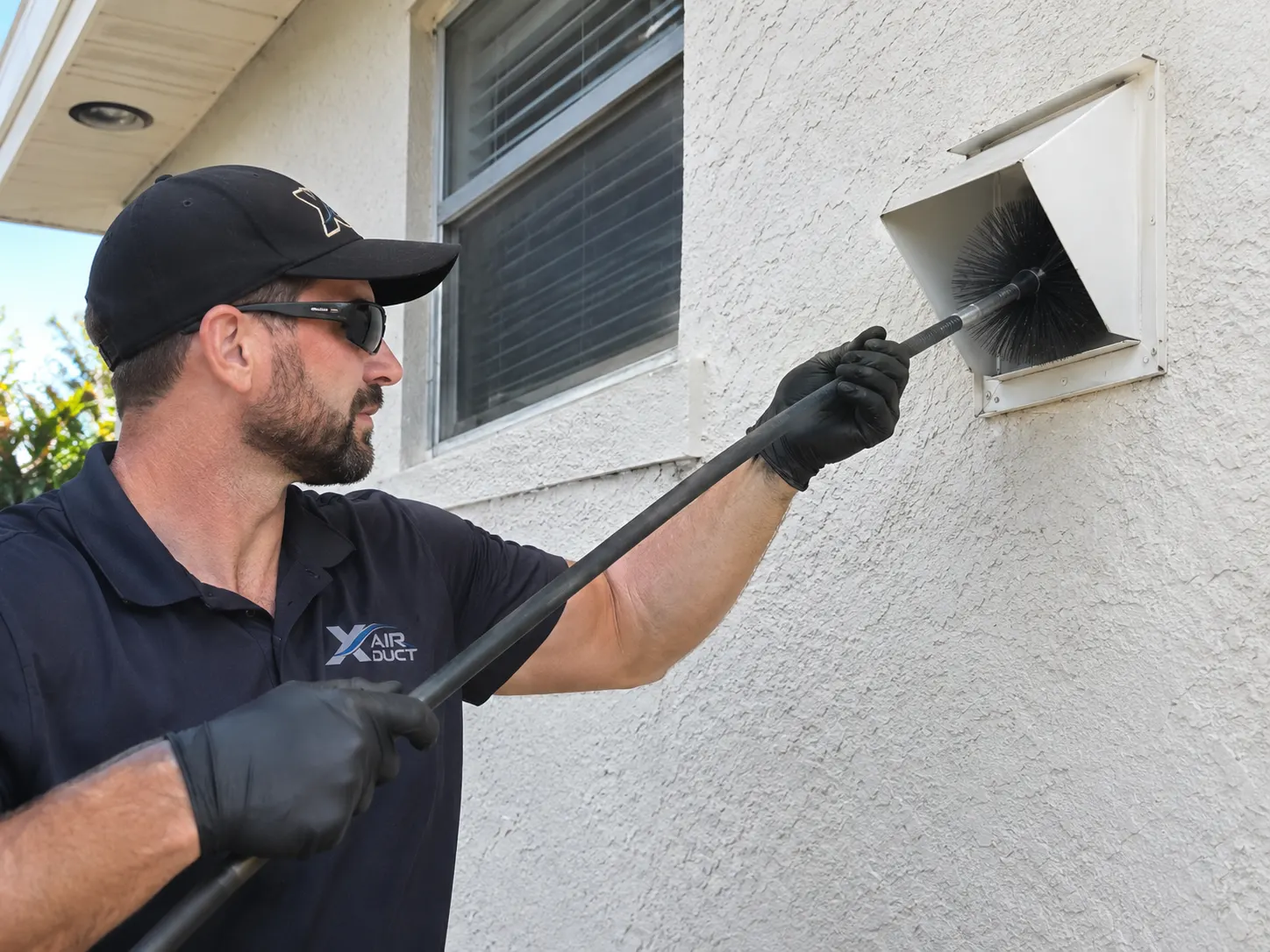
The exterior hood tells you a lot. Lint caught on the louvers or screen, a stuck flap, or weak airflow with the dryer running all indicate restriction somewhere in the run.
Behind the dryer
Crushed transition hoses are one of the most common causes. Pull the dryer out carefully and look for kinks or flattening.
Early signs versus urgent signs
Not every symptom carries the same weight. Early signs suggest it is time to schedule an inspection. Urgent signs mean stop using the dryer until it is checked:
- Early: clothes needing an extra cycle, the laundry room feeling warmer than usual, lint around the door seal or behind the dryer.
- Early: the exterior hood flap barely moving during a cycle.
- Early: musty or damp smell in clothes after a full cycle.
- Urgent: a burning smell, the dryer exterior or clothes becoming very hot, or the dryer shutting off on high-temperature protection.
- Urgent: visible damage to the transition hose or lint escaping into a wall cavity.
A quick test you can do
With a load running on high heat, go outside and hold your hand near the exterior hood. You should feel a steady stream of warm air and see the flap open. If the flow is weak or the flap stays shut, the vent may be restricted somewhere along its path. Also pull the dryer out carefully and check whether the transition hose is kinked or flattened behind the machine. Those two observations solve a surprising number of cases.
Why restrictions matter
A dryer works by pushing hot, moist air out of the drum. When the exhaust path is restricted, the air moves more slowly, moisture lingers, and the dryer runs longer at temperature. Lint collects in the slower-moving areas. The USFA identifies failure to clean as a leading cause of dryer fires, which is why these signs deserve attention rather than another cycle.
What a technician checks next
An inspection traces the full path from the dryer outlet to the termination, checks the transition hose, looks inside the vent with a camera where possible, and confirms the hood functions. If the problem is a damaged section, poor routing, or an improper material, that is reported as something for a qualified installer, since X Air Duct does not perform vent repair or rerouting.
Signs often mistaken for something else
A laundry room that feels humid can be blamed on the climate, and slow drying on an aging dryer. Lint on the floor behind the dryer can look like ordinary dust. Each of these can be a vent problem in disguise. If two or more appear together, check the vent before replacing the dryer.
Should I keep using the dryer until the appointment?
For early signs such as slightly longer drying, clean the lint screen, check the transition, and avoid overloading until the inspection. For urgent signs such as a burning smell or an unusually hot dryer, stop using it until it has been checked. When in doubt, wait.
Limitations to keep in mind
These signs can also come from dryer appliance issues such as a failed heating element or sensor. If cleaning does not help, an appliance technician may be needed.
Takeaway
Rising drying times are the earliest and most reliable signal.
Related reading and services
Have a question about your own system? X Air Duct brings 18 years of industry experience.
Request an estimate