The short answer
Clean the lint filter before or after every load, as the U.S. Fire Administration advises. For the full vent run, frequency depends on how much you use the dryer, how long and complex the run is, and whether drying times are increasing. Heavy-use households and long runs need attention more often.
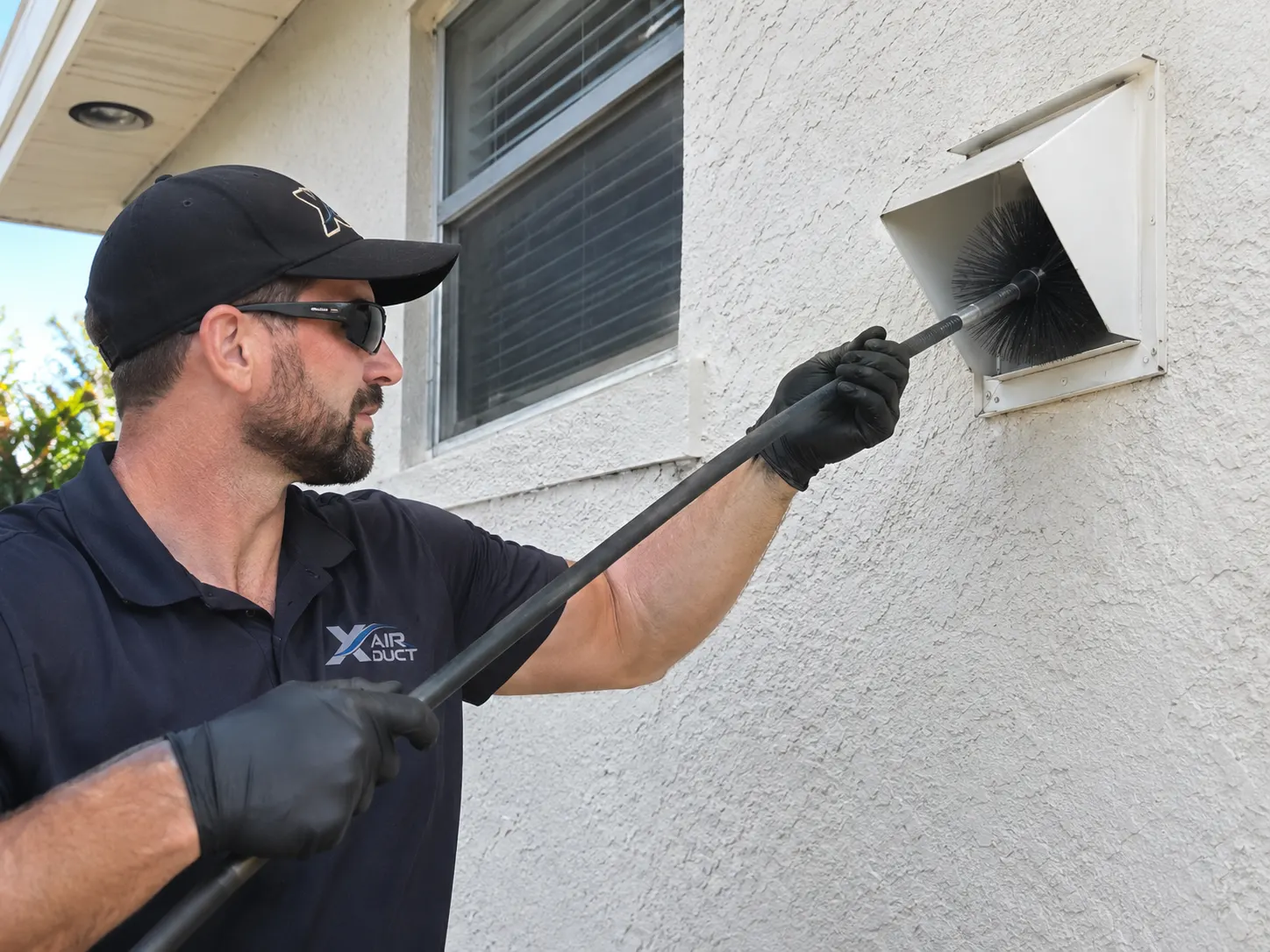
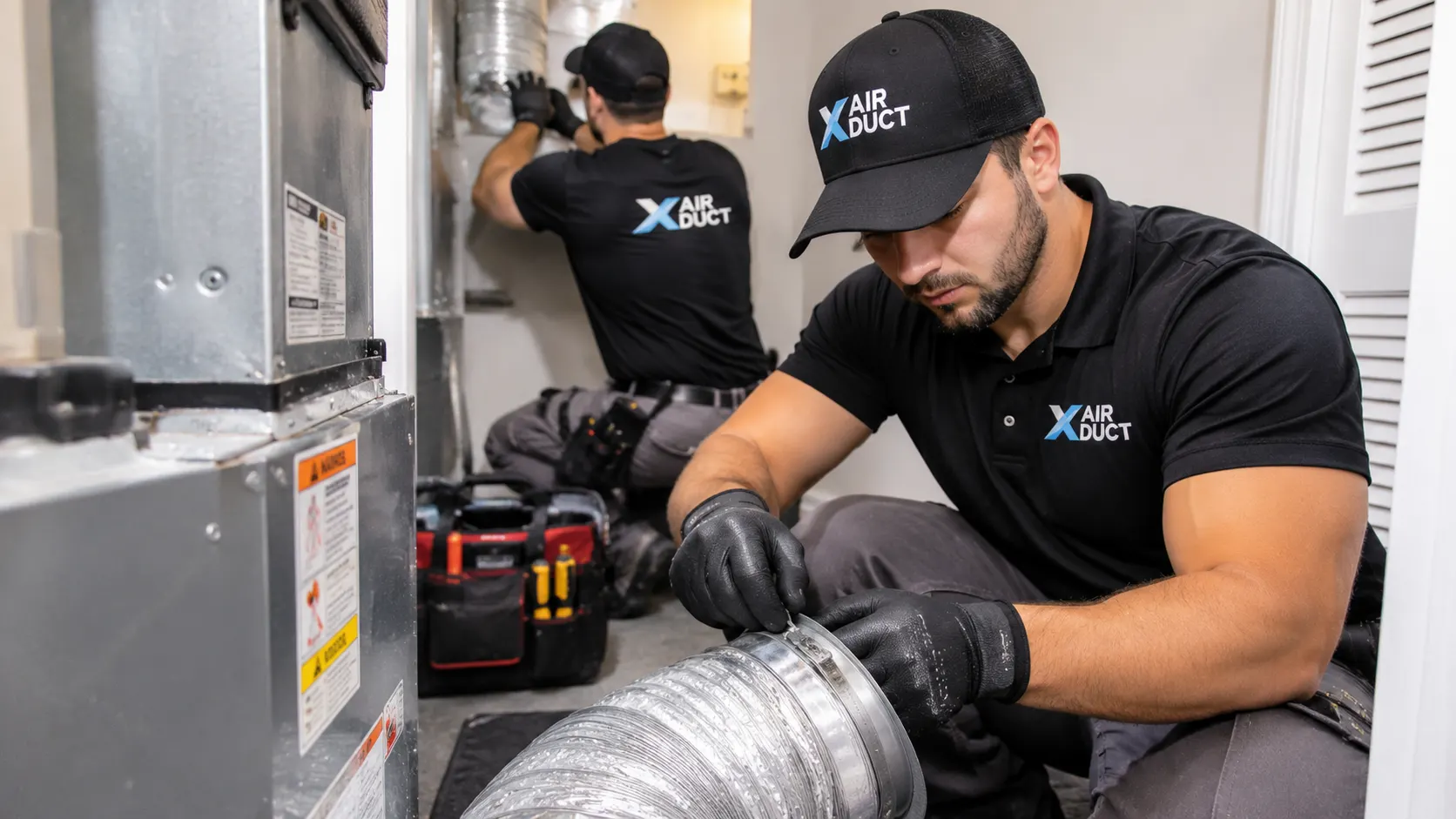
Photography is illustrative of the type of work we perform. It does not depict specific completed jobs or named employees.
Factors that change the interval
Consider these variables:
- Household size and loads per week.
- Vent length and number of bends.
- Roof versus wall termination.
- Pets that shed heavily.
- Whether the vent has ever been cleaned.
Simple monthly check
With the dryer running, step outside and look at the hood. The flap should open and you should feel warm air. Lint on the hood or a flap that barely moves are signs to schedule a check.
What the U.S. Fire Administration emphasizes
The USFA clothes dryer fire safety flyer focuses on habits rather than a single interval. It advises cleaning the lint filter before or after each load, never running the dryer without the filter, cleaning lint out of the vent pipe periodically, making sure the outdoor vent flap opens when the dryer runs and is not blocked, and having dryers installed and serviced by a professional. It also identifies failure to clean as a leading factor in dryer fires.
Factors that shorten the interval
How quickly lint builds up depends on the household and the vent path. Expect to check more often when several of these apply:
- Large household or daily laundry loads.
- Bedding, towels, and pet blankets washed frequently.
- A long vent run, several elbows, or a vent that rises through a ceiling or roof.
- A vent that runs horizontally through a condominium to an exterior wall.
- A history of crushed or plastic transition hoses.
- An exterior hood with a sticking flap or screen.
A practical rhythm for most homes
Clean the lint screen every load and wash it occasionally if fabric softener residue builds up. Look at the exterior hood monthly while the dryer is running. Watch drying times; when a normal load starts needing a second cycle, have the vent inspected. Many households settle into a professional check on a yearly basis, but your own vent path and usage should decide, not a calendar alone.
Record-keeping
Write the date of each vent cleaning or inspection on a label inside the laundry closet, along with notes such as the vent length or any parts replaced by an installer. If drying times change sooner than expected next time, that record helps identify a new problem rather than ordinary buildup.
Example: same dryer, different homes
Two households own the same dryer model. One lives in a single-story house with the laundry on an exterior wall and a vent only a few feet long. The other lives in a condominium with the dryer in an interior closet and a long horizontal run with several turns. Even with similar laundry habits, the condominium vent will usually need attention sooner. Vent path matters as much as laundry volume.
Seasonal households
For homes closed part of the year, check the exterior hood before the first load after returning, since birds and insects may have used it. Run a short cycle and confirm strong airflow outdoors before resuming normal laundry.
Does a newer dryer change the answer?
Some newer dryers display alerts about restricted airflow, which can be helpful. They do not remove the need to clean the lint screen or to watch drying times, and they cannot tell you why airflow is restricted. Treat an alert as a reason to check the transition and hood and to schedule an inspection if the problem persists.
Limitations to keep in mind
Manufacturer instructions for your dryer take priority over general guidance.
Takeaway
Lint screen every load; full vent when usage or symptoms say so.
Related reading and services
Have a question about your own system? X Air Duct brings 18 years of industry experience.
Request an estimate