The short answer
Lint trap cleaning is a quick routine task you do every load. Dryer vent cleaning clears the duct that carries exhaust outdoors and is done periodically. The screen catches most lint; the vent collects what passes through.
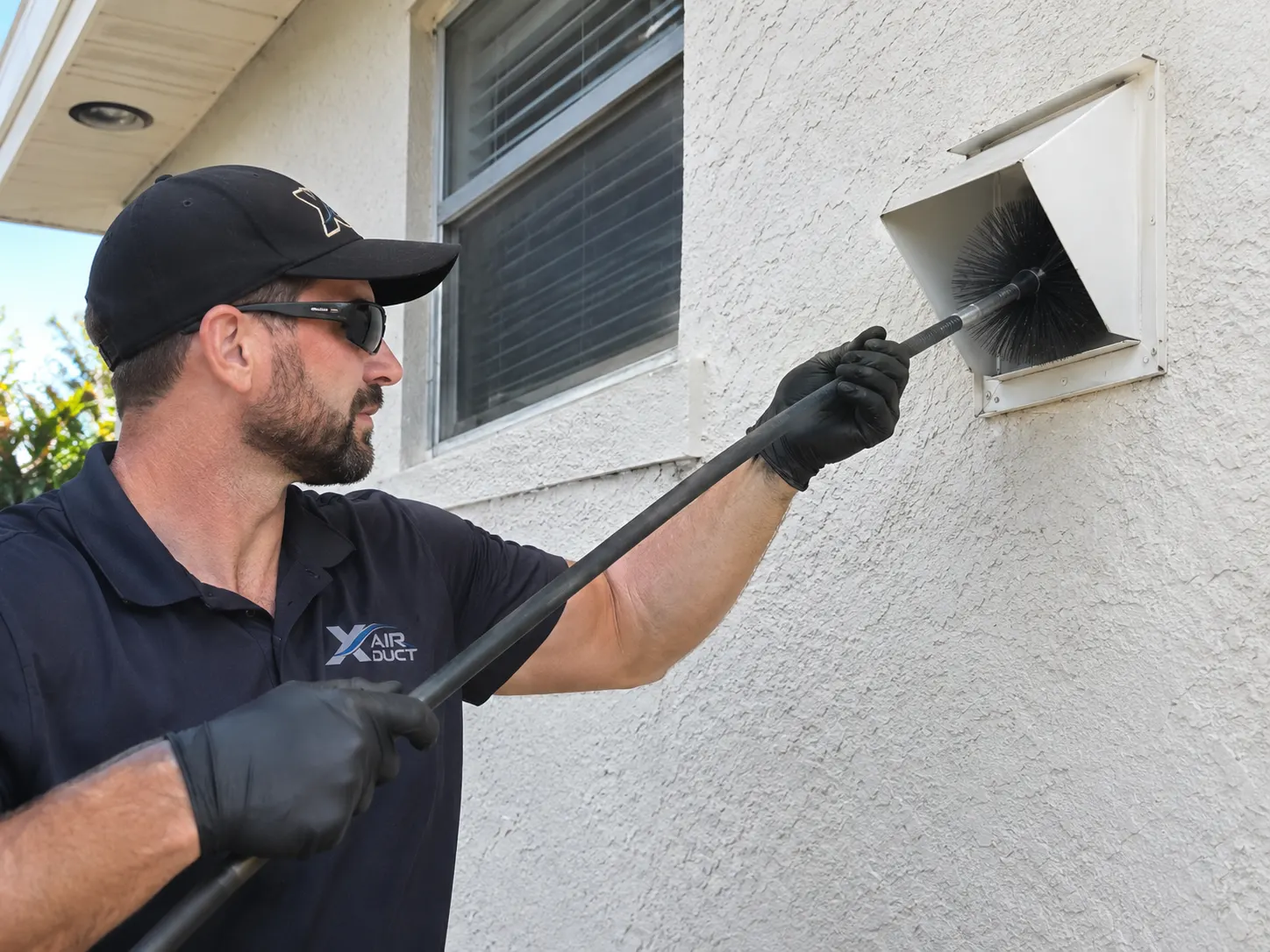
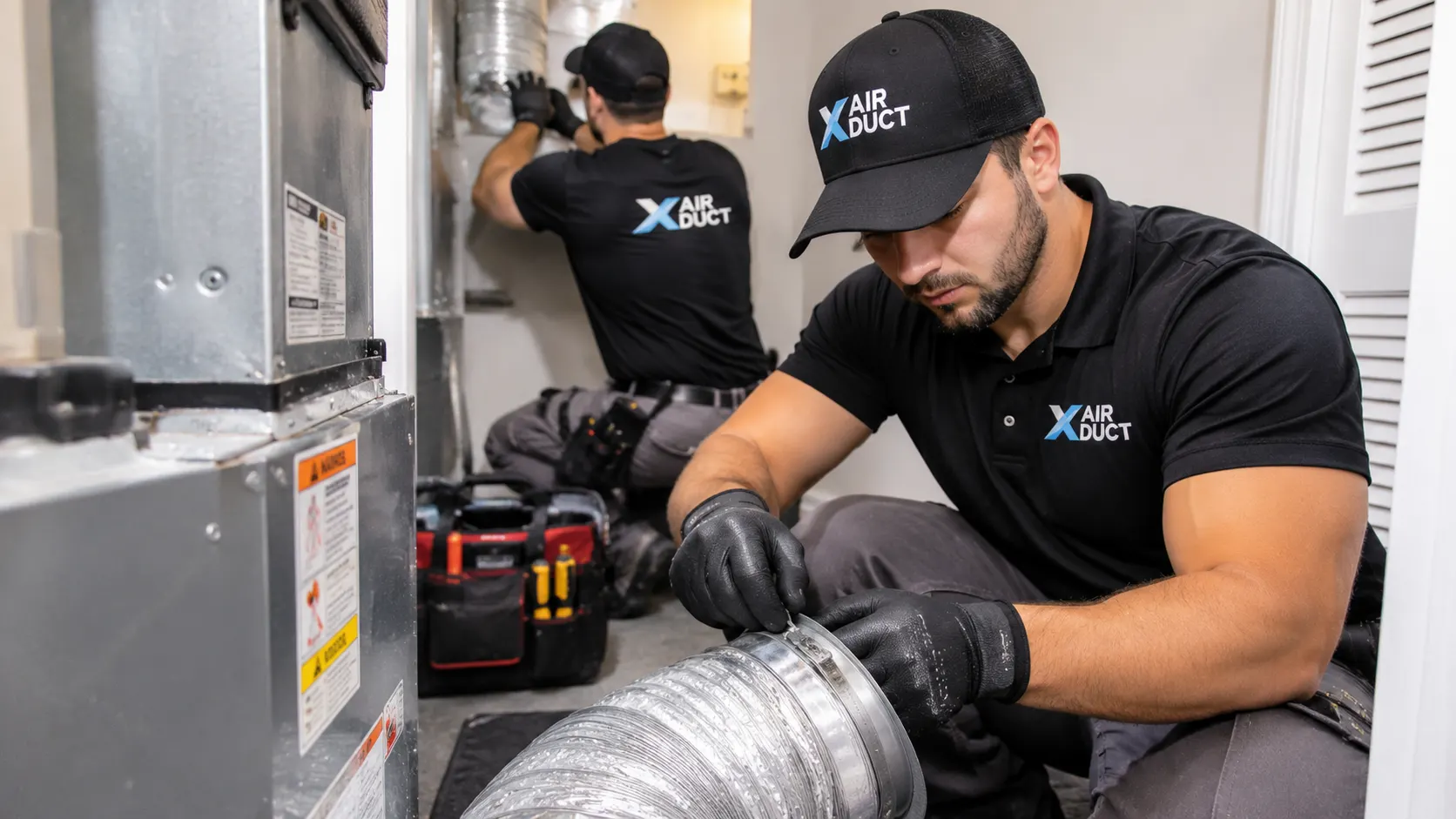
Photography is illustrative of the type of work we perform. It does not depict specific completed jobs or named employees.
The lint trap
Pull the screen, remove the lint layer, and return it. Occasionally wash the screen if fabric softener residue builds up, following your manual.
The vent
The duct runs from the back of the dryer to the exterior. It is hidden, so problems build unnoticed. Cleaning requires disconnecting the dryer and working through the full length.
Why both matter
A clean screen does not mean a clean vent, and a clean vent cannot compensate for a neglected screen.
Two different parts of the system
The lint trap, or lint screen, is the removable filter inside the dryer. It is the first line of defense, and cleaning it is a user task done every load. The dryer vent is the duct that carries exhaust from the back of the dryer through walls, floors, or ceilings to the outdoors. Cleaning the vent requires pulling the dryer out, disconnecting the transition, and working the full length of the duct to the termination.
What each task accomplishes
A clean lint screen keeps most lint out of the vent. A clean vent removes the lint that got past the screen over time. Doing one does not replace the other:
- Clean lint screen, dirty vent: the dryer still struggles because the exhaust path is restricted.
- Clean vent, neglected screen: the vent fills again quickly.
- Both maintained: the dryer can move air the way it was designed to.
Washing the screen
Fabric softener sheets can leave a waxy film on the mesh that lint does not reveal. To check, run water over the clean screen. If water pools instead of passing through, wash the screen gently with warm water and a soft brush, let it dry completely, and reinstall it. This is a simple habit that keeps airflow at its best.
When the vent needs a professional
Homeowners can often clean a short, straight vent with a suitable kit if the manufacturer allows it. Long runs, vents rising to the roof, condominium runs into building chases, and vents hidden behind finished walls are better handled by a professional who can inspect the path and work it safely. If the vent is shared with a building system, the association should be involved.
Lint around the drum and housing
The USFA flyer also advises removing lint that has collected around the drum. Some lint escapes the screen housing and collects inside the cabinet. Cleaning inside the cabinet should follow the manufacturer’s instructions or be done by an appliance technician, since it can involve disconnecting power or gas.
Quick comparison
Who does it, how often, and why:
- Lint screen: homeowner, every load, keeps most lint out of the vent.
- Screen wash: homeowner, every few months, removes softener residue.
- Transition check: homeowner, after moving the dryer, prevents crushing.
- Vent run cleaning: professional for long or concealed runs, when drying slows or periodically.
- Cabinet interior: appliance technician or per manufacturer instructions.
Is a vacuum attachment enough?
A narrow vacuum attachment can remove loose lint from the screen slot. It does not reach the vent run. Brush kits can help with short, straight vents. Long, vertical, or concealed runs need professional tools and inspection to confirm the full path is clear.
Example: the spotless screen, the slow dryer
A homeowner cleans the lint screen religiously yet drying still takes two cycles. The vent had never been cleaned in eight years, and lint had packed the first elbow and the exterior hood. After cleaning, airflow at the hood was strong again. The screen habit was right; it simply could not do the vent’s job.
Limitations to keep in mind
Neither task addresses appliance malfunctions.
Takeaway
Screen every load; vent on a usage-based schedule.
Related reading and services
Have a question about your own system? X Air Duct brings 18 years of industry experience.
Request an estimate