
The short answer
Fine fibers pass through the lint screen and travel with warm, moist exhaust air. As the air slows at bends, long runs, and the exterior hood, lint drops out and sticks to duct walls, especially where moisture is present.
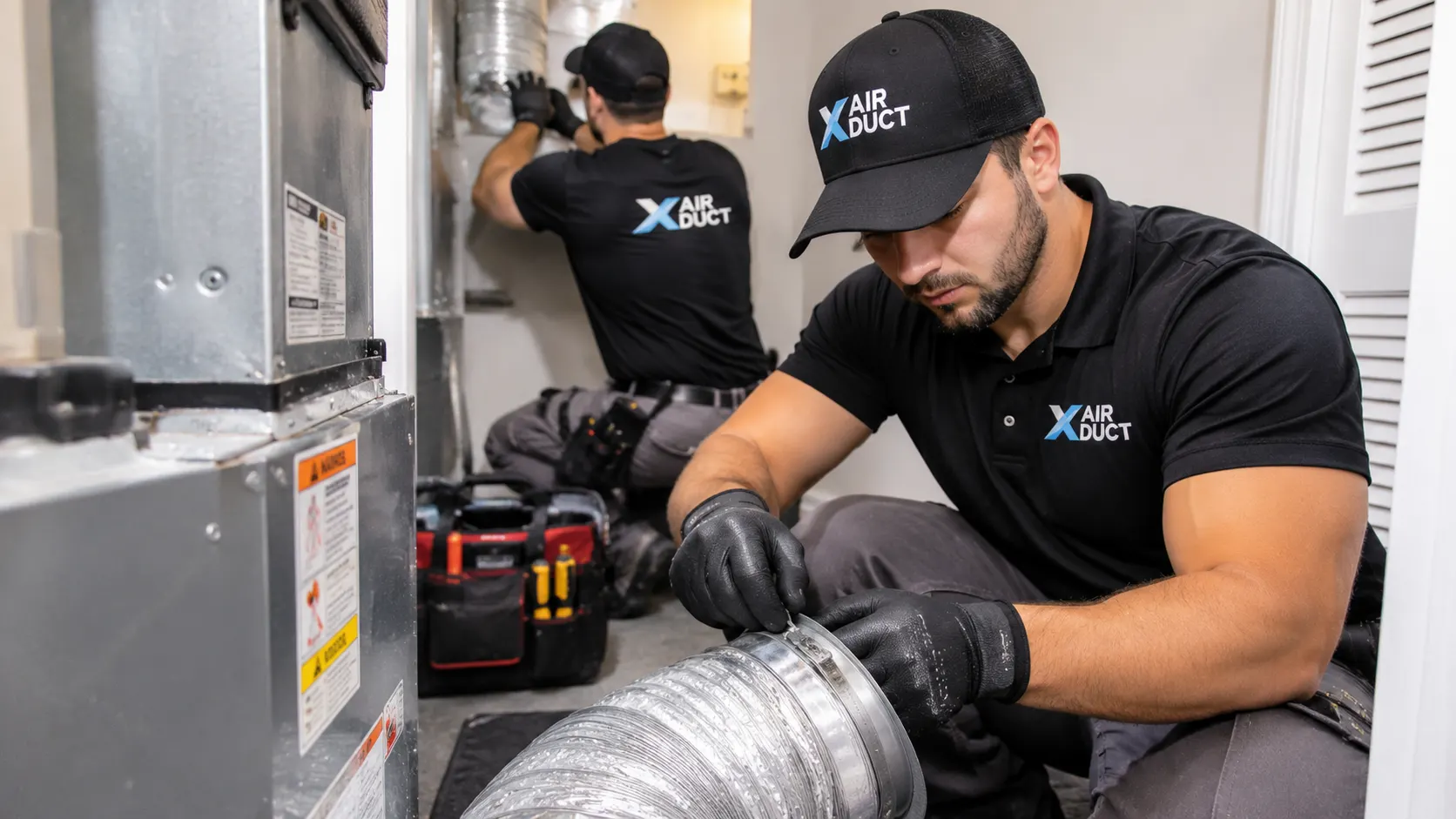
Photography is illustrative of the type of work we perform. It does not depict specific completed jobs or named employees.
Where lint settles
The usual collection points:
- Elbows and bends.
- Low spots or sagging sections.
- Crushed portions of the transition hose.
- Exterior hoods, especially those with screens.
Moisture makes it worse
Exhaust air carries water evaporated from clothes. If the duct is long or passes through cooler spaces, moisture can condense and make lint cling to the walls.
How to slow it down
Clean the screen every load, keep the transition short and uncrushed, and follow the manufacturer venting instructions for length and material.
Where lint comes from
Lint is made of fibers released from fabric as it tumbles and dries: cotton from towels, synthetic fibers from clothing, hair from pets. The lint screen catches much of it, but not all. The finest fibers pass through the screen with the exhaust air and travel down the vent. Over hundreds of loads, those fibers settle wherever the air slows down.
Where it collects in the vent
Lint does not distribute evenly. It gathers in predictable places:
- The transition hose directly behind the dryer, especially if it is ridged or kinked.
- Each elbow, where airflow changes direction and slows.
- Low points or sags in a horizontal run, where moisture can also settle.
- Joints fastened with screws that protrude into the duct and snag fibers.
- The exterior hood, particularly behind screens, which should not be used on dryer terminations.
- Long vertical rises where air loses speed before reaching a roof termination.
How exhaust moisture binds lint
Dryer exhaust carries water vapor. In a long or cool run, some of that moisture condenses, and damp lint clings to duct walls more stubbornly than dry lint. In South Florida, vents routed through air-conditioned interiors or attics can see this effect. A vent that is the right length, properly sloped, and free of sags helps moisture leave instead of settling.
Reducing the rate of buildup
Clean the lint screen every load, as the USFA advises, and never run the dryer without it. Avoid overloading the drum, which reduces airflow. Keep the transition short and use the type of connector your dryer manufacturer specifies; the USFA flyer recommends rigid or flexible metal venting. Ask an installer about reducing unnecessary elbows if the path seems excessive.
Laundry habits that add lint
New towels, fleece, and pet bedding shed heavily. Overloaded drums tumble less efficiently and push more fibers into the exhaust. Fabric softener sheets can coat the lint screen so more fibers pass through. None of these are reasons to change how you live, but they explain why some households need vent cleaning more often.
Example: the hidden low point
In one common pattern, a vent crosses a ceiling and sags between supports. Moist exhaust cools at the sag, lint settles in the damp spot, and the restriction grows until drying slows. Cleaning removes the lint, but an installer should correct the sag to prevent a repeat.
Does the dryer type matter?
Gas and electric dryers both produce lint and moist exhaust, so both need vent maintenance. Gas dryers also produce combustion byproducts that must be exhausted outdoors, which makes a clear, properly connected vent especially important. Ventless dryers work differently and should be maintained per the manufacturer’s instructions.
What a technician looks for first
When lint buildup is suspected, the first places checked are the transition behind the dryer, the first elbow inside the wall, and the termination. Those three points account for most restrictions. The camera then follows the run to find sags, protruding screws, or separations. Knowing where lint tends to settle lets the inspection focus on the points most likely to explain your symptoms.
Limitations to keep in mind
Even well-installed vents accumulate some lint over time.
Takeaway
Shorter, straighter, properly supported runs collect less lint.
Related reading and services
Have a question about your own system? X Air Duct brings 18 years of industry experience.
Request an estimate