
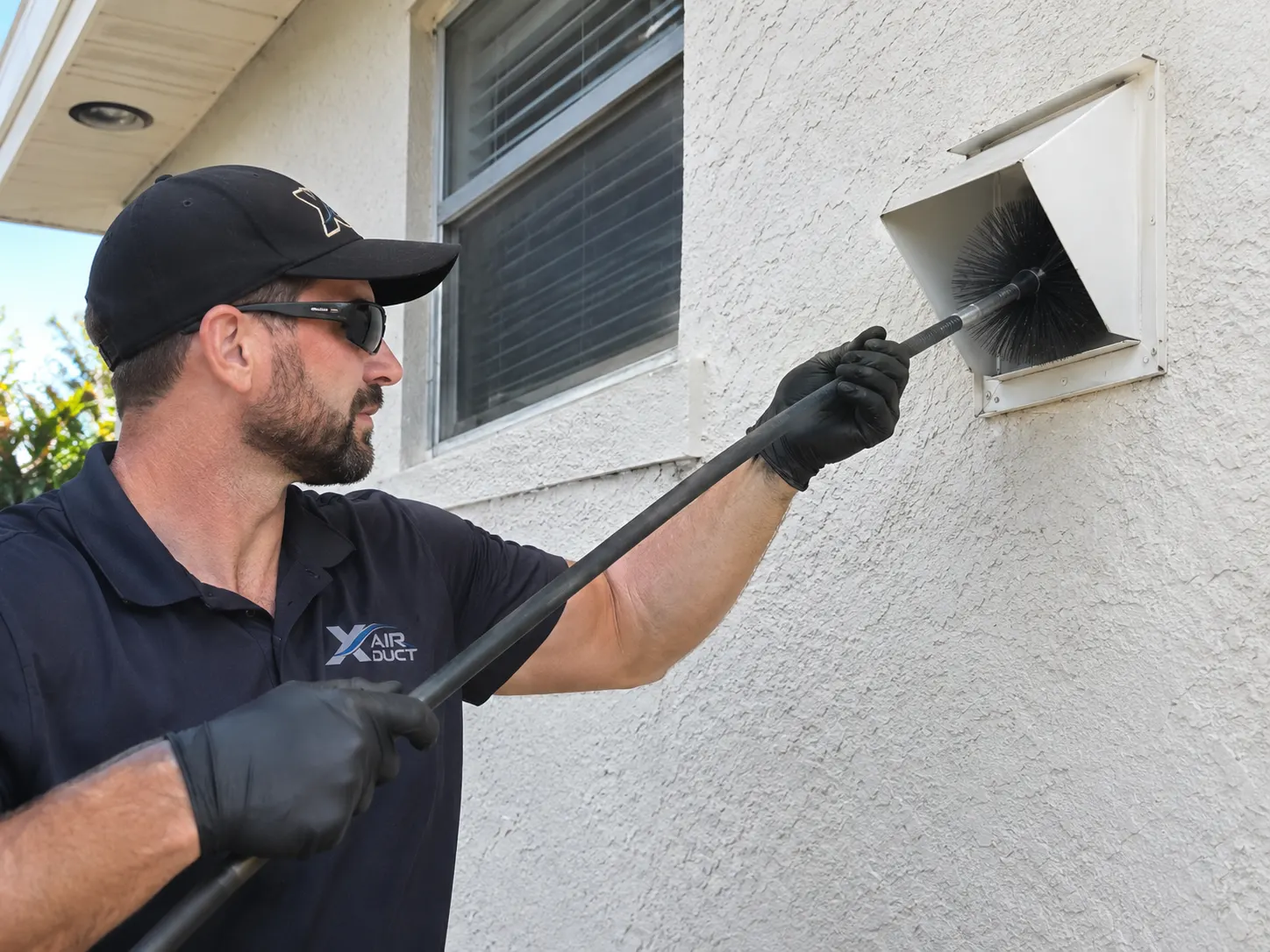
A clothes dryer is a heat source paired with a fan that pushes hot, humid, lint-laden air outside. When that path is restricted, the dryer works harder, clothes take longer to dry, and lint, which is combustible, accumulates. The U.S. Fire Administration recommends keeping the lint filter, vent, and exhaust clear.
This guide covers how dryer vents are routed, why they clog, what symptoms to watch for, and how inspection and cleaning fit together.
Anatomy of a dryer vent
A transition connector links the dryer to a fixed duct, which runs through a wall, floor, garage ceiling, or roof to an exterior hood with a damper flap. In condominiums, the duct may join a building chase.
How lint builds up
Fine fibers pass the screen, slow at bends and long runs, and stick to duct walls, especially where moisture condenses. Exterior hoods with screens trap lint quickly.
Routing in South Florida properties
Block construction often means short wall vents in single-story homes, while two-story homes and townhouses may route through ceilings or roofs. High-rise units often have long horizontal runs.
Symptoms of restriction
Longer drying times, damp clothes, a hot laundry area, lint at the hood, and a stuck flap. A burning smell means stop using the dryer.
Inspection, cleaning, and repair
Inspection finds out what is happening. Cleaning removes lint. Repair corrects crushed, disconnected, or improper ducts and is done by a qualified installer. X Air Duct offers inspection and cleaning, not repair.
Homeowner maintenance
Clean the screen every load, keep the transition short and uncrushed, check the hood periodically, and follow manufacturer instructions.
The four parts of the exhaust path
A dryer exhaust system has four parts. The lint screen inside the dryer catches most fibers. The transition connects the back of the dryer to the wall or floor. The vent run carries exhaust through walls, floors, ceilings, or attics. The termination, usually a wall hood or roof cap, releases exhaust outdoors and keeps pests and weather out with a flap. Problems can occur at any of the four, and a useful inspection checks all of them.
What the U.S. Fire Administration recommends
The USFA clothes dryer fire safety flyer summarizes the essentials: have the dryer installed and serviced by a professional; do not use it without a lint filter; clean the lint filter before or after each load and remove lint that collects around the drum; use rigid or flexible metal venting; make sure the exhaust pipe is not restricted and the outdoor vent flap opens when the dryer runs; clean lint out of the vent pipe periodically, and more often if drying takes longer than normal; keep the area around the dryer clear of combustibles; and turn the dryer off when leaving home or going to bed. The flyer also identifies failure to clean as a leading factor in home dryer fires.
Warning signs, ranked
Slow drying is the most common and most useful warning sign, because it shows up before anything else. Other signs include a hot laundry room, lint around the door seal, a flap that barely opens, a musty smell in dried clothes, and a dryer that shuts off on its thermal protection. A burning smell or unusually hot dryer exterior is urgent: stop using the dryer and have it checked before the next load.
Routing and length
The shorter and straighter the vent, the better it performs. Each elbow adds resistance and gives lint a place to settle. Dryer manufacturers specify maximum vent lengths and elbow allowances for each model, and those instructions govern the installation. Vents that rise through a ceiling to the roof or run horizontally through a condominium tend to need attention more often. If your vent is long or complicated, inspection frequency should reflect that.
What professional cleaning involves
A professional visit typically begins with tracing the path and checking airflow at the termination. The dryer is moved carefully, gas connections are treated with caution, and the transition is disconnected. The run is cleaned with rotary brushes or air tools sized for the duct, working toward the termination while collection equipment captures loosened lint. The hood is cleared, and airflow is checked again with the dryer running. Findings that involve damage, improper materials, or poor routing are reported for a qualified installer.
Inspection versus cleaning
Inspection tells you what condition the vent is in and whether there are installation problems. Cleaning removes lint. Many visits combine both, but if you only need to know whether your vent is safe to keep using, start with inspection. If the vent is in poor condition or improperly installed, cleaning alone may not be the right next step.
Homeowner maintenance routine
Every load: clean the lint screen. Monthly: watch the exterior hood flap while the dryer runs. Every few months: wash the lint screen if softener residue builds up, and pull the dryer out to check the transition. When drying slows: have the vent inspected. After a new dryer is installed: check the transition and hood on the first load. Keep a dated record near the dryer.
Limits and boundaries
Cleaning cannot repair crushed or disconnected ducts, replace plastic venting, or fix a dryer that is not heating. X Air Duct does not perform dryer vent repair, rerouting, or appliance service. We inspect and clean, explain findings clearly, and refer repairs to the right professional.
Special situations
Roof terminations require safe access and are not attempted in unsafe conditions. Condominium vents that connect to building chases are cleaned only on the unit-owned portion, with shared-path findings reported to management. Gas dryers are moved with care, and work stops if a gas connection looks damaged. Vents hidden behind finished walls may be only partly visible, and the inspection report should say so plainly.
A note on new construction and remodels
A new home or a remodeled laundry room is a good time to check the vent path once. Confirm that the vent ends outdoors, that the transition is metal and short, and that the hood flap opens freely. Problems introduced at installation are easier to correct early than after years of lint buildup.
Questions to ask a dryer vent provider
Will you trace and inspect the full path before cleaning? How will you handle my gas dryer? Can you safely reach a roof termination? What tools will you use on my vent material? Will you tell me about installation problems even though you do not repair them? Clear, specific answers indicate a provider who will treat the vent as a system rather than a hose to brush out.
| Task | Who | When |
|---|---|---|
| Lint screen cleaning | Homeowner | Every load |
| Exterior hood check | Homeowner | Periodically |
| Full vent cleaning | Professional | Based on use, length, symptoms |
| Inspection | Professional | After install, move-in, symptoms |
| Repair or reroute | Qualified installer | When damaged or improperly installed |
Common questions
01Why does a dryer vent become blocked?
Fine lint passes the lint screen and settles in the duct, especially at bends, low spots, and the exterior hood. Long runs, crushed transition hoses, and hoods with screens accelerate buildup. Occasionally birds or pests nest in the termination.
Why dryer vent lint accumulates02What are the warning signs of restricted dryer exhaust?
Longer drying times, clothes that are hot but damp, a hot laundry room, a hood flap that barely opens, lint around the exterior termination, or a burning smell. If you notice a burning smell, stop using the dryer until it is checked.
Signs of a restricted dryer vent03How often should a dryer vent be inspected or cleaned?
Clean the lint screen with every load, as the U.S. Fire Administration advises. For the full vent run, usage drives the schedule: heavy-use households and long runs need more frequent attention. Check whenever drying times increase.
How often should you clean your dryer vent?04Is a plastic or thin foil transition hose acceptable?
Many manufacturer instructions call for rigid or semi-rigid metal duct. Thin plastic or foil hoses crush easily and can trap lint. Check your dryer manual; if your hose does not match, a qualified installer can replace it.
05Can I clean my dryer vent myself?
Homeowners can clean the lint screen, vacuum the area behind the dryer, and clear the exterior hood. Short, straight vents can sometimes be brushed with a kit. Long, concealed, or rooftop runs are where professional equipment and experience help.
Supporting articles
- How Often Should You Clean Your Dryer Vent?
- Signs of a Restricted Dryer Vent
- Why Dryer Vent Lint Accumulates
- Dryer Vent Cleaning vs. Lint Trap Cleaning
- Why Is My Dryer Taking Longer to Dry Clothes?
- What Happens During Dryer Vent Inspection?
- Common Dryer Vent Installation Problems
- When Might a Dryer Vent Need Repair?
- Dryer Vent Safety: What Homeowners Should Know
- Dryer Vent Maintenance in Fort Lauderdale