The short answer
An inspection traces the exhaust path: checking the transition hose behind the dryer, viewing the concealed run with a camera where possible, and examining the exterior termination. The result is an explanation of lint levels and any visible routing or material concerns.
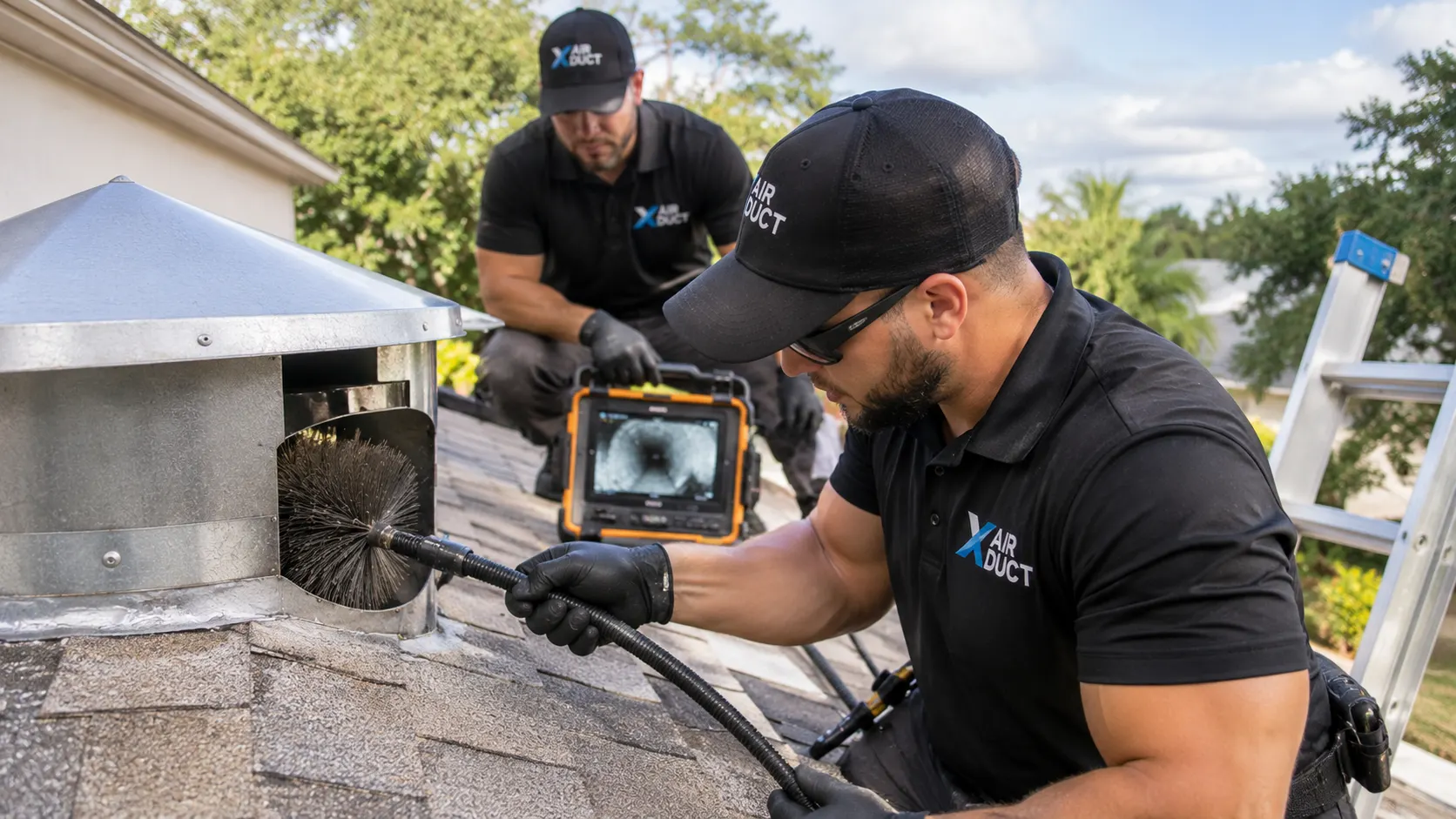
Photography is illustrative of the type of work we perform. It does not depict specific completed jobs or named employees.
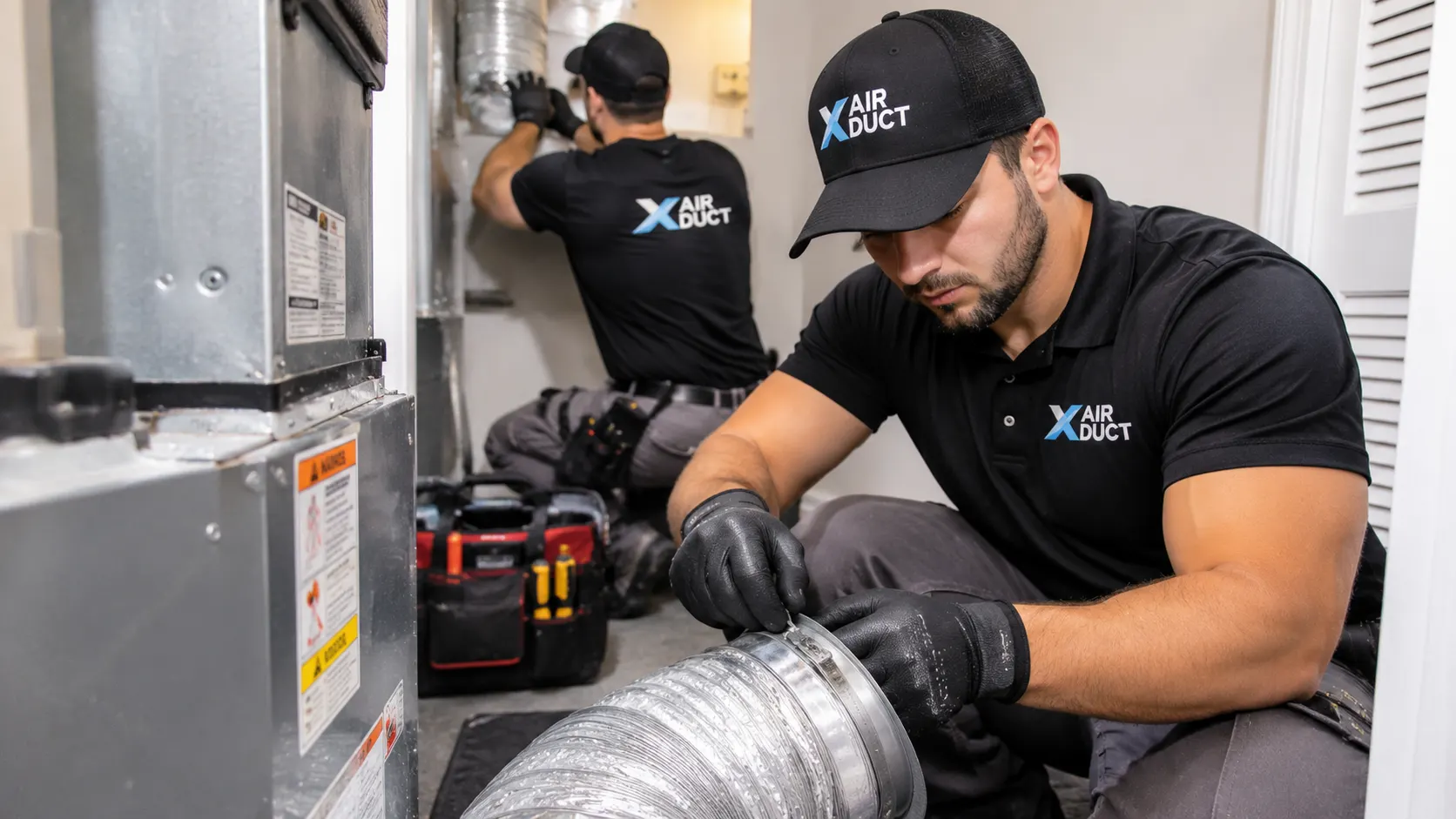
Behind the dryer
The technician checks the transition material, its length, and whether it is kinked or crushed.
Inside the run
A camera shows lint accumulation and, in some cases, disconnected joints or sagging sections.
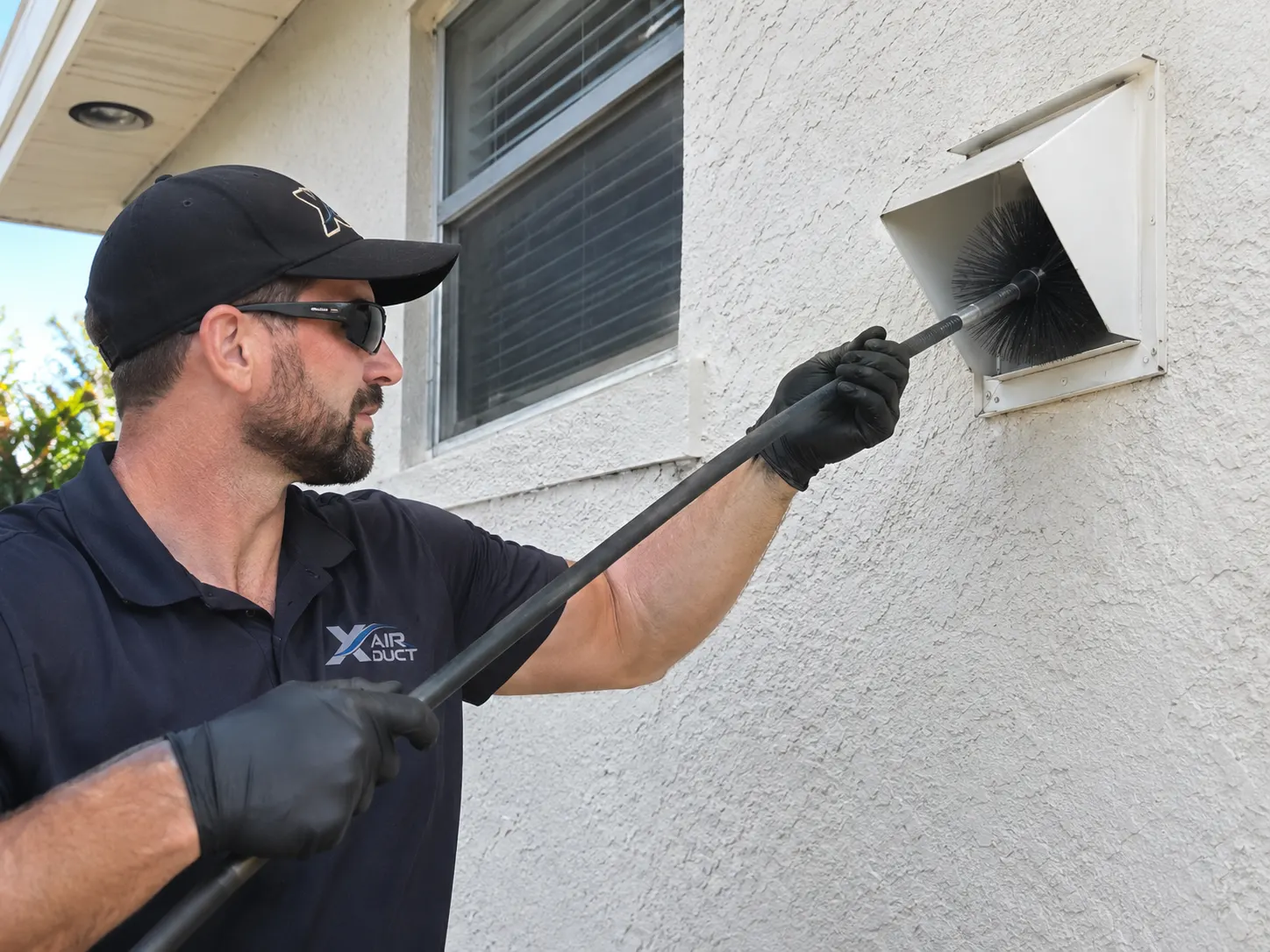
At the termination
The hood is checked for lint, damage, a working flap, and nests. Roof terminations are only accessed when it is safe.
Tracing the path
The first step is understanding where the vent goes. The technician locates the dryer connection, identifies the route through walls, floors, or ceilings, and finds the termination, which might be a wall hood, a soffit, a roof cap, or a connection to a building chase. In some homes, the termination is not where the owner expects, especially after renovations.
What gets examined
A thorough inspection covers each part of the path:
- The transition between the dryer and the wall: material, length, kinks, and connections.
- The wall or floor connection, checking for gaps where lint can escape.
- The interior of the run, using a camera where accessible, to see lint, damage, or separations.
- Elbows, joints, and fastening method, noting screws protruding inside the duct.
- The termination hood: flap movement, screens that should not be there, debris, and nests.
- Airflow at the termination with the dryer running.
How results are explained
At the end, you should hear what was found in plain terms: whether the vent needs cleaning, whether anything looks damaged or improperly installed, and which parts could not be seen. If an issue involves materials, routing, or damage, it is noted as a matter for a qualified installer, since X Air Duct does not perform repairs. If cleaning is warranted and the path is accessible, it can often be discussed for the same visit.
Special cases
Roof terminations are accessed only when it is safe to do so. Gas dryers are moved with care, and if a gas connection appears damaged, work stops and you are advised to contact a qualified professional. In condominiums, the inspection covers the unit-owned portion, and findings in a shared chase are reported for the association.
How to prepare
Clear space around the dryer so it can be moved, empty the drum, and note where you think the vent exits. If the termination is on the roof, mention it. In a condominium, provide building access details and any information management has given you about the vent path. Tell the technician about any symptoms, such as slow drying or odors, and when they started.
What you will receive
Expect a description of the path, the condition of each part, photos or monitor views where available, and a recommendation: no action, cleaning, or referral for repair. Keep it with your home records.
Can inspection and cleaning happen the same day?
Often, yes, when the path is accessible and no repairs are needed first. If the inspection reveals damage, disconnection, or improper materials, cleaning may be postponed until an installer corrects the problem, because cleaning a damaged vent does not make it safe.
What if the vent path is unknown?
After remodels, the termination may not be where anyone expects. The technician traces the path from both ends where possible. If part of it is hidden, the report says so, and you may need an installer or building maintenance to locate it.
Limitations to keep in mind
Concealed sections behind finished walls may not be fully visible.
Takeaway
An inspection tells you whether to clean, monitor, or call an installer.
Related reading and services
Have a question about your own system? X Air Duct brings 18 years of industry experience.
Request an estimate