
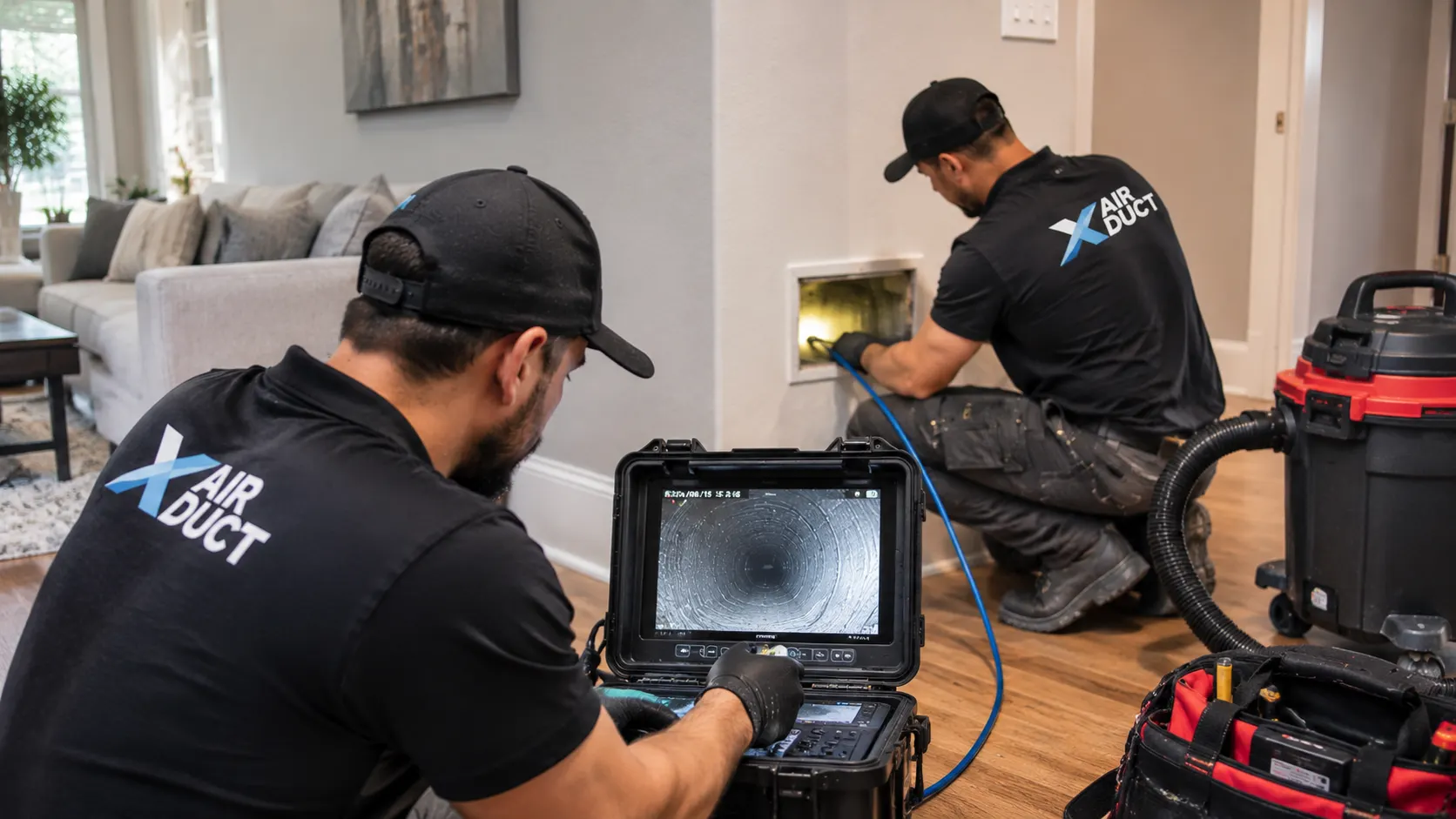
If you live or manage property in Fort Lauderdale, FL, X Air Duct can help you understand the condition of your ducts and dryer vent and decide what, if anything, needs to be done. We bring 18 years of hands-on industry experience and a commitment to plain explanations.
Fort Lauderdale combines a busy downtown, a dense network of residential canals, high-rise condominiums, and a large rental market. Properties here often sit close to salt water, and many owners juggle building rules, tenants, or seasonal occupancy alongside routine maintenance.
Canal homes and outdoor living
Fort Lauderdale’s residential canals mean many homes open onto docks, pool decks, and patios. Sliding doors that stay open for breezes bring in humid air and outdoor particulates, which puts more load on filters and makes indoor humidity worth watching. The EPA recommends keeping indoor relative humidity below 60 percent, and a simple hygrometer near the main living area tells you quickly whether the air conditioning is keeping up.
Downtown and high-rise living
Residential towers downtown and along the beach typically involve building management, certificates of insurance, elevator reservations, and defined work hours. Ducts are often concealed in soffits, so we discuss which registers and sections are reachable before committing to a scope. Dryer exhaust in towers frequently runs horizontally for some distance, which is why drying-time changes deserve attention sooner here than in a house with a short wall vent.
A large rental market
Landlords and managers with Fort Lauderdale units get the most value from turnover routines: new filter, a glance at registers, a check of the dryer transition after appliances are moved, and a note of anything a tenant reported. If several units in a building report similar dryer symptoms, that can point to a shared exhaust issue for the association to evaluate.
Separate a ventilation concern from a building-access problem
A Fort Lauderdale property manager arranging service for several spaces should start with a simple system list. Identify which air handler serves each space, whether tenants control their own filters, and who can authorize entry above ceilings. A shared address does not mean all occupants share the same ventilation equipment.
For dryer exhaust, ask whether an exterior termination is accessible from ground level, a balcony, a roof, or another controlled area. Do not climb onto a roof to take a photograph. Describe the known route and let the appointment discussion establish safe access. This prevents a quote for an accessible unit connection from being mistaken for approval to work on a whole-building exhaust system.
Services available in Fort Lauderdale
Residential property considerations in Fort Lauderdale
Fort Lauderdale housing includes canal-front homes, downtown high-rises, and a deep stock of rental units. Each type brings different access, layout, and maintenance considerations.
Canal-front and Intracoastal homes often have outdoor living spaces, docks, and doors that open toward the water. Moisture-laden air entering through open doors, along with salt exposure, makes humidity awareness and exterior component checks important.
High-rise and mid-rise condominium units typically have a closet air handler, ducts concealed above a dropped ceiling or inside soffits, and limited access panels. That means part of the system may not be reachable without opening finished surfaces. We discuss accessible components openly before any work is scheduled.
Residents living near busy commercial corridors often see more traffic dust and construction activity nearby. Keeping filters well-seated and doors closed during nearby construction helps limit what enters the system.
Rental homes and apartments change hands more often, and tenants may not know maintenance history. Turnover is the natural moment to replace the filter, look at registers, and check the dryer vent.
Commercial property considerations in Fort Lauderdale
Condominium associations and building managers sometimes need help understanding common-area ventilation and the boundaries between unit-owned and building-owned components. Clear written scope helps everyone.
Offices, medical suites, and retail spaces here benefit from scoped, zone-by-zone duct work scheduled around business hours. We coordinate with property managers on access above ceilings, occupant notices, and written summaries of what was done.
Landlords and property managers with multiple units benefit from a consistent turnover checklist and records of each unit’s ventilation inspections.
How we approach a Fort Lauderdale appointment
- 01Discuss the property, system, access, and any building or HOA rules.
- 02Examine accessible registers, returns, and vent paths, often with a camera.
- 03Protect floors and furnishings along the work path.
- 04Clean with tools matched to the duct or vent material, when warranted.
- 05Explain what was cleaned and what could not be reached.
- 06Recommend maintenance habits and a sensible re-check window.
Dryer vent cleaning in Fort Lauderdale
Waterfront homes frequently vent dryers toward the yard or a side wall. Hoods facing prevailing breezes can be pushed shut or collect debris; checking the flap is a simple monthly habit.
In towers, dryer exhaust often travels through a long horizontal run to an exterior wall or into a shared vertical chase managed by the building. Before scheduling, confirm with your association which part of the vent belongs to your unit. Long runs collect lint faster and are worth checking when drying times creep up.
Whatever the route, the U.S. Fire Administration recommends cleaning the lint filter with every load and keeping the vent and exterior exhaust clear. X Air Duct cleans and inspects dryer vents; if we find crushed, disconnected, or improperly installed ducts, we explain what we see so you can contact a qualified installer.
Ventilation care for Fort Lauderdale properties
Waterfront owners should watch indoor humidity closely. The EPA recommends keeping it below 60 percent, ideally 30 to 50 percent, and a simple hygrometer makes that easy to monitor.
Condominium owners should keep a copy of association rules for contractors, including insurance requirements, permitted work hours, and elevator reservation procedures.
Across Fort Lauderdale, as everywhere in South Florida, air conditioning runs much of the year. That makes filter discipline, condensate drain maintenance by a licensed HVAC contractor, and indoor humidity control (the EPA recommends below 60 percent, ideally 30 to 50 percent) the foundation of good ventilation care. Duct cleaning complements those habits; it does not replace them.
Questions from Fort Lauderdale property owners
01Does X Air Duct serve Fort Lauderdale, FL?
Yes. Fort Lauderdale is part of our service area in Broward County. Email info@xairduct.com or use the estimate request page to share your address details and the service you are interested in.
02Should waterfront homes worry about humidity in ducts?
Humidity is a whole-home issue rather than a duct-only issue. Keep indoor relative humidity below 60 percent, per EPA guidance, fix leaks and drainage problems, and have a licensed HVAC contractor check equipment if levels stay high. Duct cleaning does not control humidity.
03Can you clean ducts in a high-rise condo unit?
Yes, where access allows and the association approves. Many condo ducts are partially concealed, so we explain which components are reachable before work begins and coordinate elevator and insurance requirements with building management.
04Can you work after business hours for an office?
Scheduling is discussed during the initial conversation. Phased or off-hours work can often be arranged so occupants are not disrupted, subject to building access rules.
05How often should Fort Lauderdale homeowners clean their air ducts?
There is no fixed interval. Following EPA guidance, consider cleaning when inspection shows substantial buildup, after renovations, or after pest activity has been resolved. Many homes need it infrequently.