The short answer
Coastal properties face salt air that corrodes metal, wind that drives sand and debris into openings, and storms that can damage exterior terminations. Inspect dryer vent hoods and exterior openings more often than inland homes would.
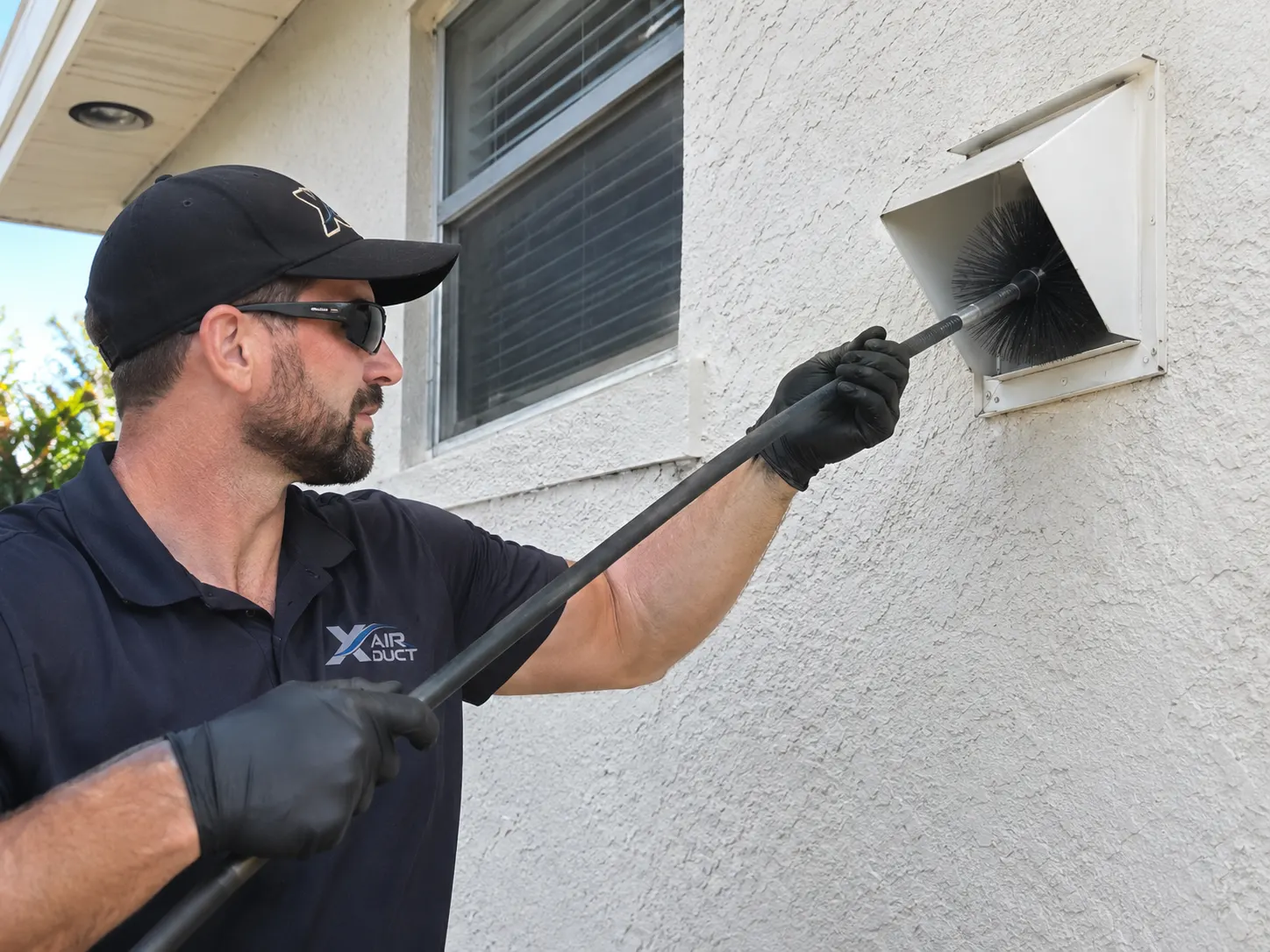
Photography is illustrative of the type of work we perform. It does not depict specific completed jobs or named employees.
Exterior terminations
Hood flaps can corrode or stick. Check that they open with the dryer running and close when it stops.
After storms
Look for debris, crushed hoods, or loose fittings after strong weather.
High-rise coastal buildings
Exterior terminations may only be reachable by building maintenance. Report problems to the manager.
What salt air does to vent hardware
Within a short distance of the ocean, salt carried by wind settles on exterior surfaces. Metal hood flaps, screws, and louvers can corrode, causing flaps to stick open or shut. Painted hoods may blister. Sand driven by wind can collect inside louvers. These are exterior problems, but they affect how exhaust leaves the building and how well pests are kept out.
Coastal inspection checklist
Every few months, and after strong storms, walk the exterior and check:
- Each dryer hood: does the flap open with the dryer running and close afterward?
- Bathroom and kitchen exhaust terminations for blockage or corrosion.
- Signs of nests or debris inside louvers.
- Caulking and seals around penetrations through stucco or siding.
- For condominiums, report problems at building-owned terminations to management.
Inside the home
Open balcony doors and windows bring humid, salty air indoors. Return filters and grilles may load faster. Keep doors closed when the air conditioning is running, watch indoor humidity, and check filters monthly. Salt residue can also accumulate on register faces near open doors; wiping them occasionally keeps them working smoothly.
When to call a professional
Corroded or broken hoods should be replaced by a qualified installer, using materials appropriate for coastal exposure. If the dryer flap has been stuck and drying times have increased, have the vent inspected as well, since a partly blocked termination can lead to lint buildup in the run behind it.
Example: the flap that stuck open
An oceanfront unit’s dryer hood flap corroded and stuck partly open. Wind blew sand and debris into the vent, and a bird began nesting inside the louver. Drying slowed over a few weeks. Inspection found the nest and accumulated debris. The vent was cleaned, and the owner was advised to have the hood replaced with hardware suited to coastal exposure. Regular exterior checks would have caught the stuck flap early.
Hurricane-season additions
Before storms, note where every exterior termination is so you can check them afterward. After storms, look for bent or missing hoods, debris in louvers, and water stains near interior penetrations. Report damage at building-owned terminations to management promptly, and do not resume dryer use if the hood is blocked or missing.
Do coastal homes need more duct cleaning?
Not automatically. Salt mainly affects exterior hardware. Indoors, the same EPA conditions apply: visible growth on hard surfaces, pests, or excessive debris. Coastal homes may need more frequent filter checks if doors stay open, but cleaning decisions should still follow inspection.
Choosing replacement hardware
When hoods corrode, ask an installer about materials suited to salt exposure and about louver or flap designs that resist sticking. Avoid screens on dryer terminations, which catch lint.
A coastal maintenance calendar
Monthly: check filters and glance at the dryer hood. Quarterly: walk the exterior and inspect every termination. Before and after storm season: document hood condition and clear debris. Yearly: HVAC maintenance and a dryer vent inspection for long or exposed runs. Adjust frequency to how close you are to the water and how often doors stay open.
Limitations to keep in mind
Corroded or damaged components require repair or replacement, which we do not perform.
Takeaway
On the coast, the outside end of the vent deserves as much attention as the inside.
Related reading and services
Have a question about your own system? X Air Duct brings 18 years of industry experience.
Request an estimate