The short answer
In South Florida, air conditioning is a year-round system rather than a seasonal one. That makes filter changes, condensate drain maintenance, and duct integrity especially important, and it means problems show up faster when maintenance slips.
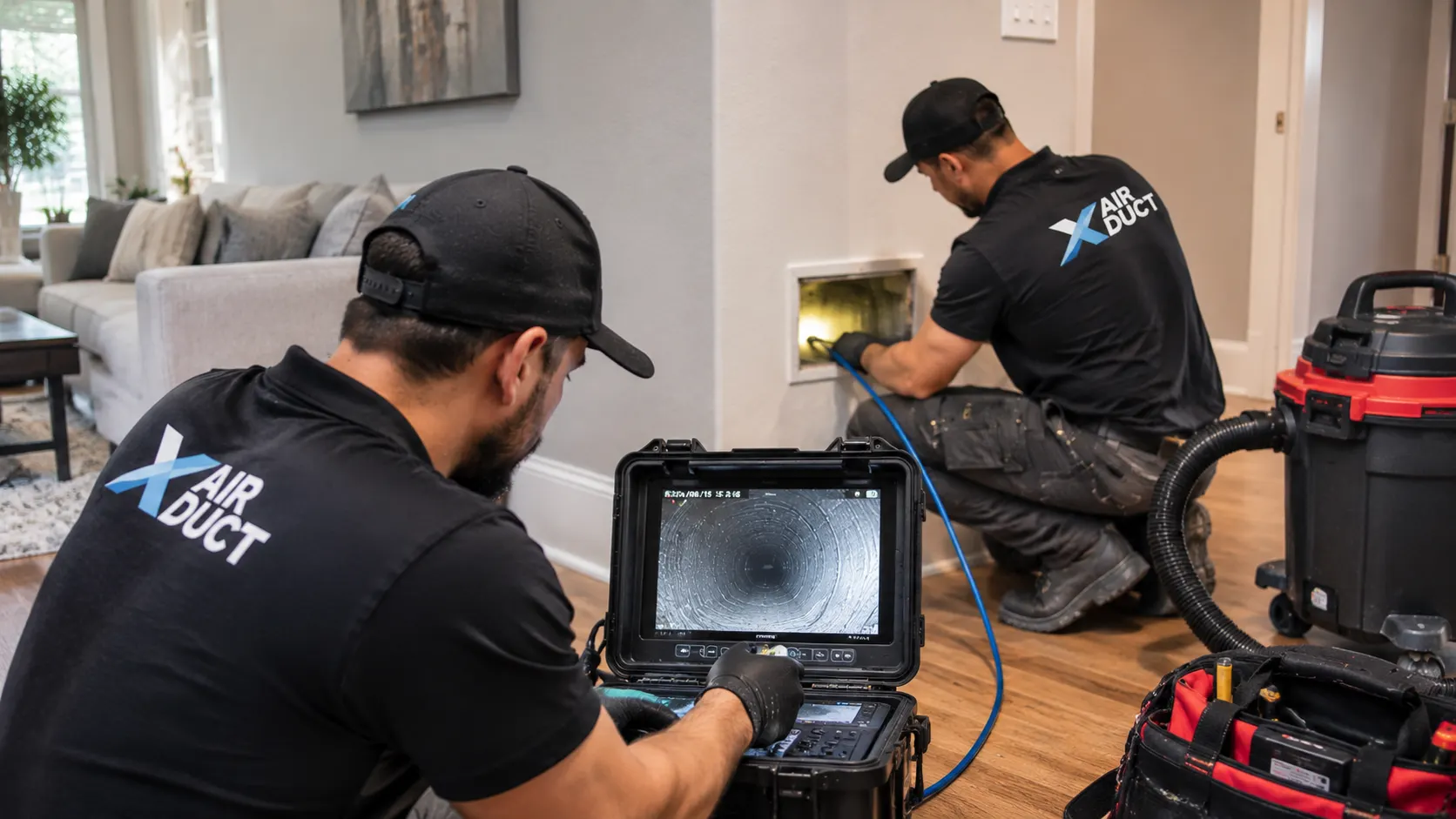
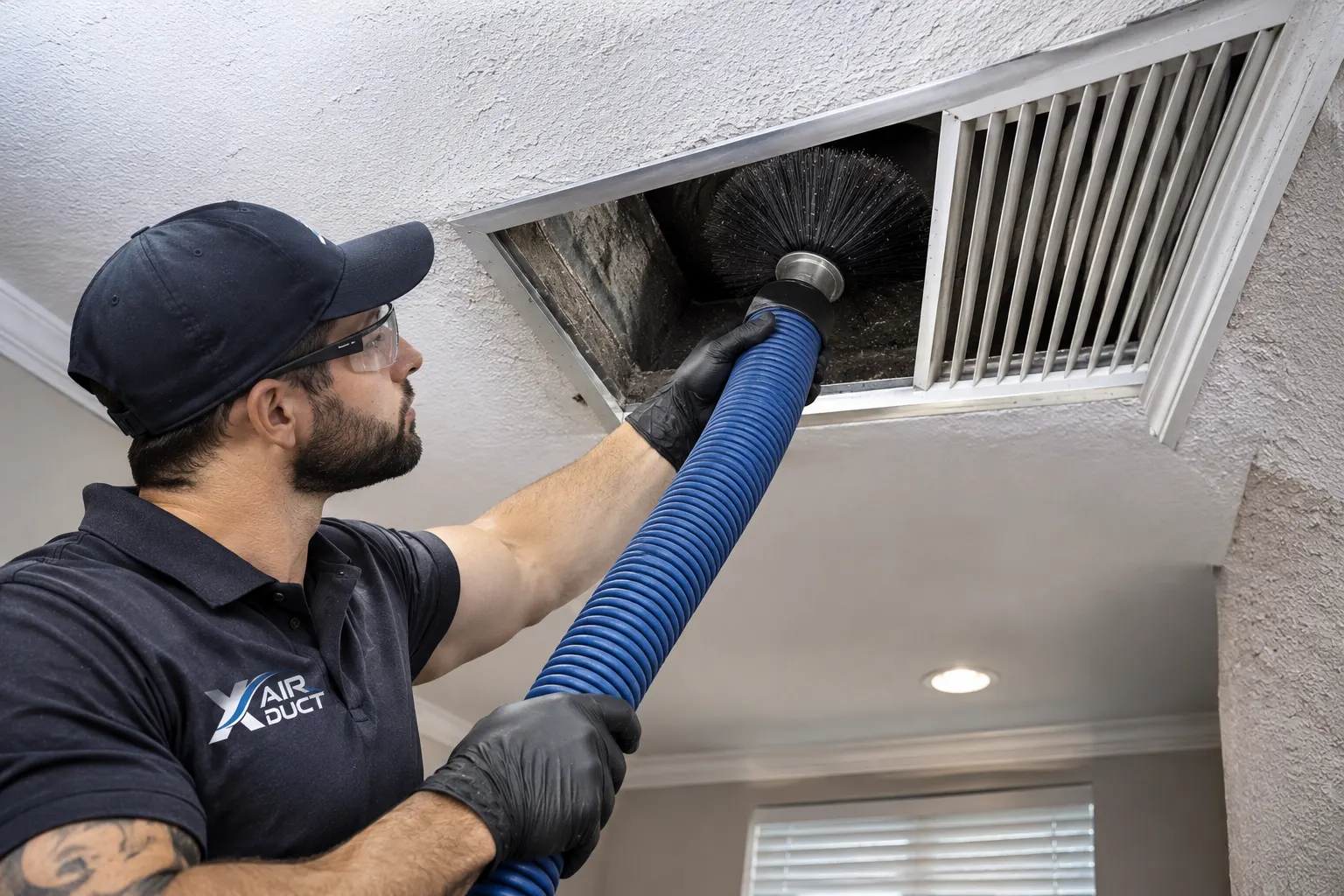
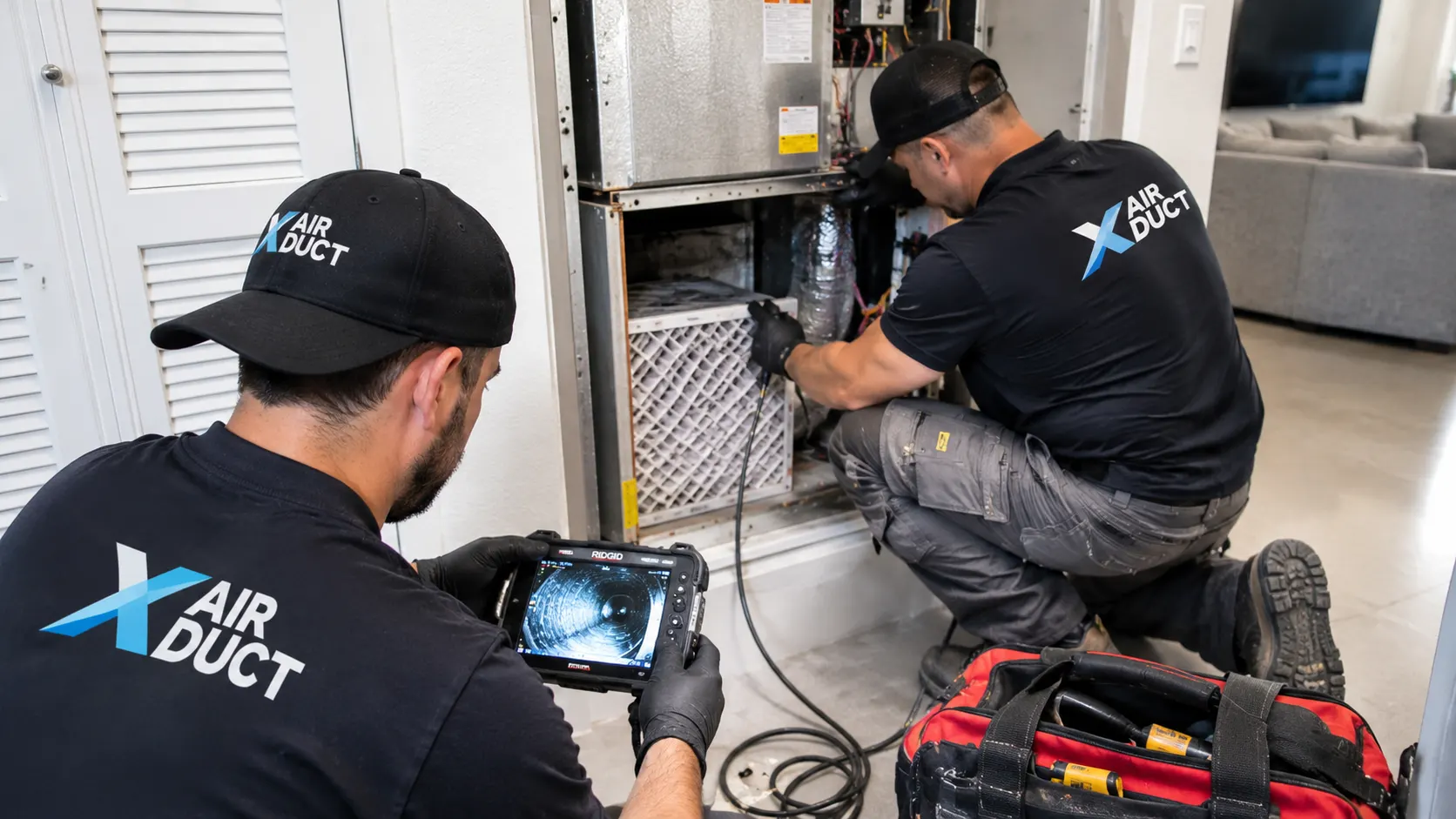
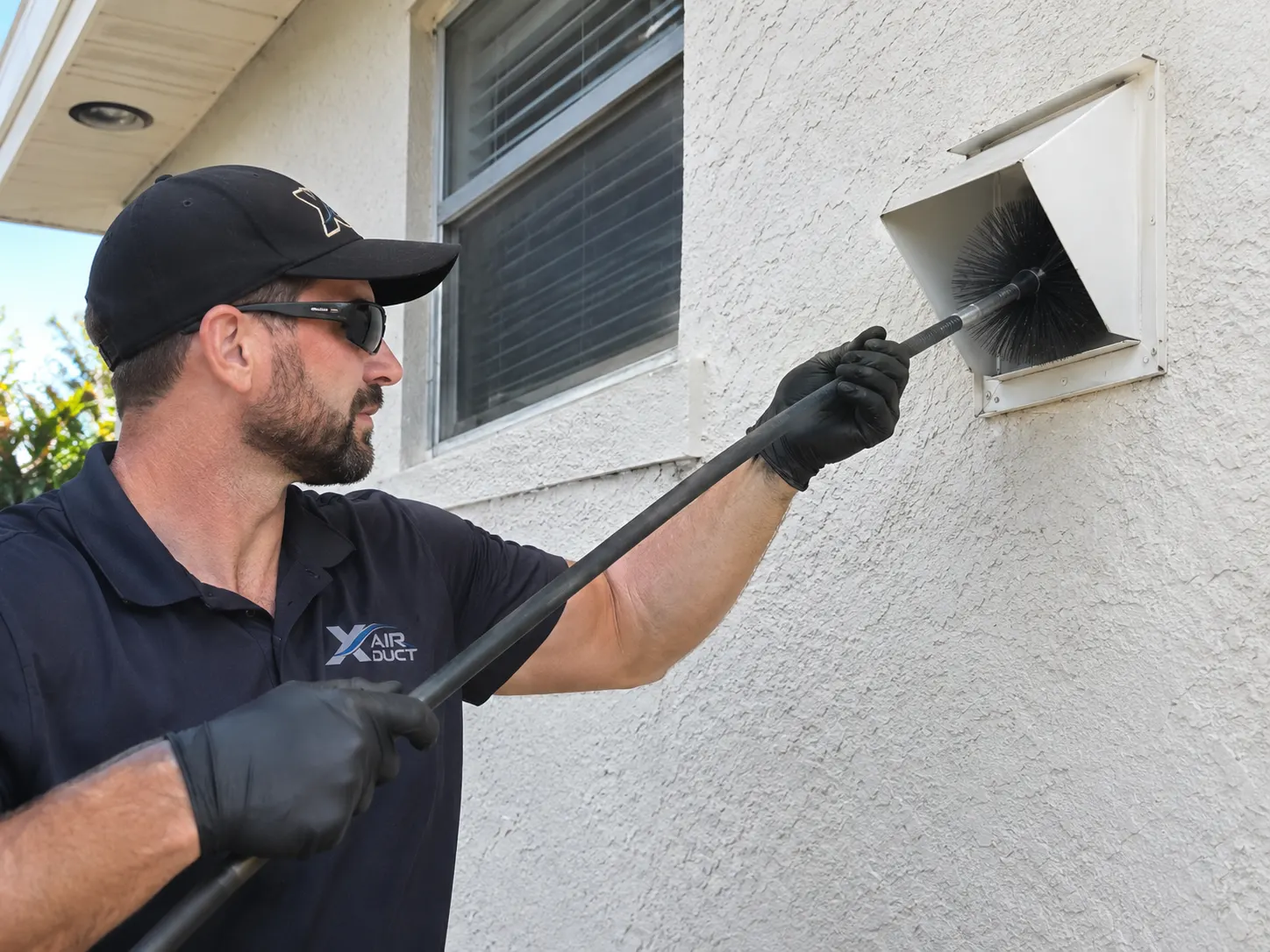
Photography is illustrative of the type of work we perform. It does not depict specific completed jobs or named employees.
Air handler locations
Closets, garages, and attics are common. Garage and attic locations expose returns to dust and heat, so sealing and filter fit matter.
Return air paths
Homes with one central return depend on open doors or transfer grilles. Closed bedroom doors can reduce circulation.
Maintenance rhythm
Filters more often in summer, annual HVAC service by a licensed contractor, and duct inspection when conditions change.
Cooling, ventilation, and filtration are different things
Air conditioning cools and dehumidifies indoor air. Ventilation exchanges indoor air with outdoor air, through exhaust fans, open windows, or dedicated ventilation equipment. Filtration captures particles as air recirculates. A typical South Florida home relies heavily on the first, uses exhaust fans for the second, and depends on the return filter for the third. Understanding which job each component does makes troubleshooting much simpler.
The return side deserves attention
The return grille and filter are where the system breathes in. A filter that does not fit its slot lets unfiltered air bypass it, carrying dust into the coil and ducts. Gaps around a return plenum in a garage or closet can pull in dust and humid air. Sealing those gaps and choosing the right filter size are among the most effective maintenance steps a homeowner can take.
Thermostat and fan settings
Many thermostats offer fan settings of Auto and On. In humid climates, running the fan continuously can return moisture from the coil to the house between cycles, so many contractors recommend Auto. Settings vary by equipment, so ask your HVAC contractor what fits your system.
A seasonal checklist
Before the hottest months and after hurricane season, run through these items:
- Replace the filter and confirm the size.
- Check the condensate drain line for blockage, or have an HVAC contractor do it.
- Look around the air handler for water or rust.
- Walk through rooms and note any with weak airflow.
- Check exterior dryer and exhaust hoods for debris.
- Schedule HVAC maintenance with a licensed contractor.
Exhaust fans: the underused ventilation tool
Bathroom and kitchen exhaust fans remove moisture and odors at the source. Run bathroom fans during showers and for a while afterward, and use the range hood when cooking. Check that each fan actually vents outdoors and that its exterior flap opens. A fan that vents into an attic adds moisture where you least want it.
Example: a two-system home
A two-story home has one system downstairs and one upstairs. Upstairs runs longer and works harder because of roof heat. Each system has its own filter, which may load at different rates. Keeping separate records for each system helps spot which one needs attention, whether that is filter frequency, an HVAC service call, or a duct inspection.
Limits of this overview
Equipment sizing, refrigerant, controls, and dehumidification are matters for a licensed HVAC contractor. This article explains general concepts so you can ask better questions; it does not replace an evaluation of your system.
Should I open windows on mild days?
On genuinely dry, mild days, fresh air can be pleasant. During humid periods, opening windows brings moisture indoors that the air conditioner then has to remove. Watch your hygrometer and close up when humidity rises.
When the system cannot keep up
If indoor humidity stays high or the home never reaches the set temperature on hot afternoons, the cause is usually equipment, sizing, insulation, or duct leakage rather than dirty ducts. An HVAC contractor can measure performance and recommend changes. Duct inspection can then confirm whether debris plays any role.
Limitations to keep in mind
X Air Duct does not service HVAC equipment.
Takeaway
Treat AC as year-round equipment and maintain it that way.
Related reading and services
Have a question about your own system? X Air Duct brings 18 years of industry experience.
Request an estimate