The short answer
Severe blockages such as construction debris, collapsed sections, or nesting material can restrict airflow. Ordinary dust films rarely do. When a room feels weak on airflow, a clogged filter, blocked registers, disconnected ducts, or equipment issues are usually more likely causes.
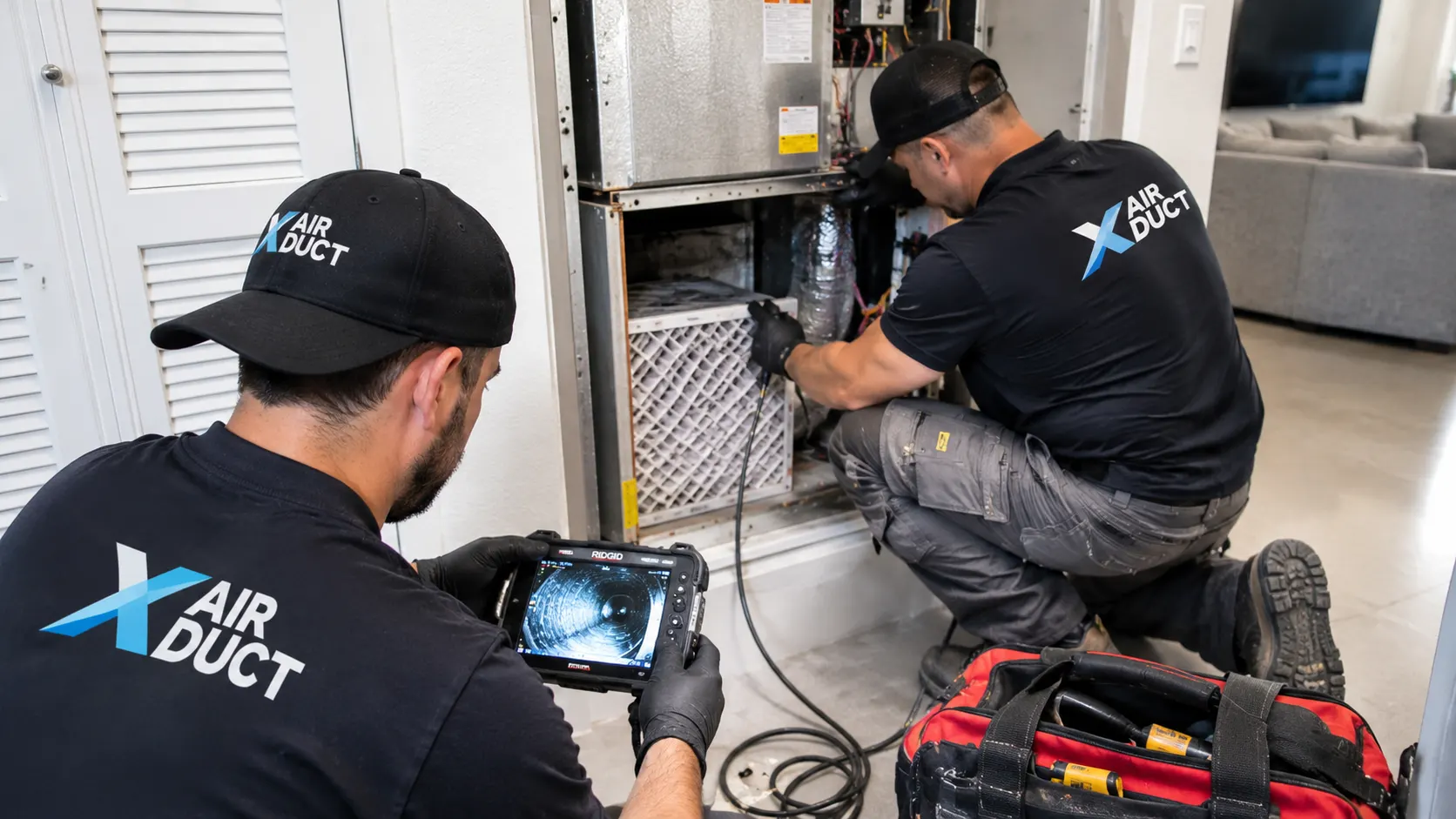
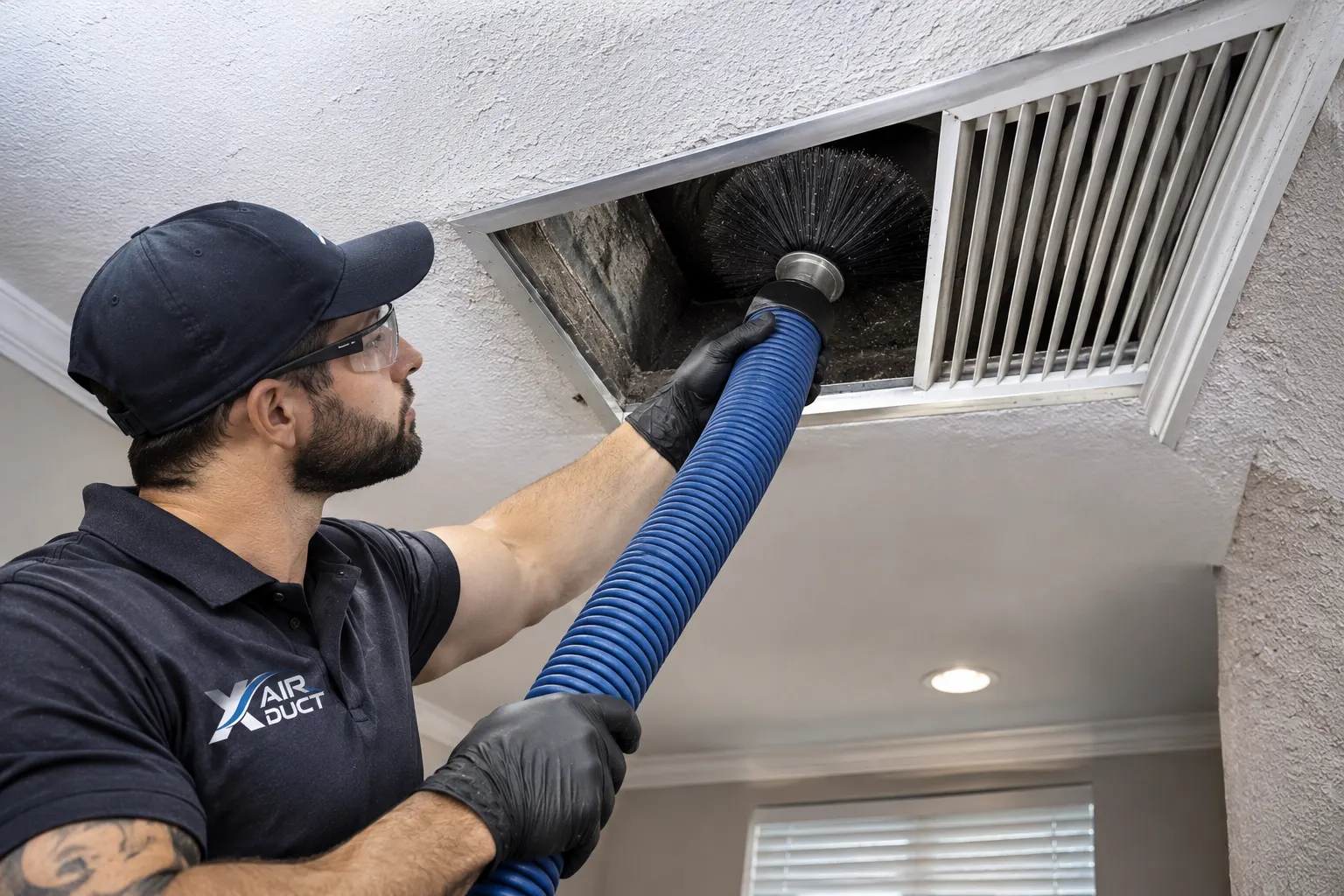
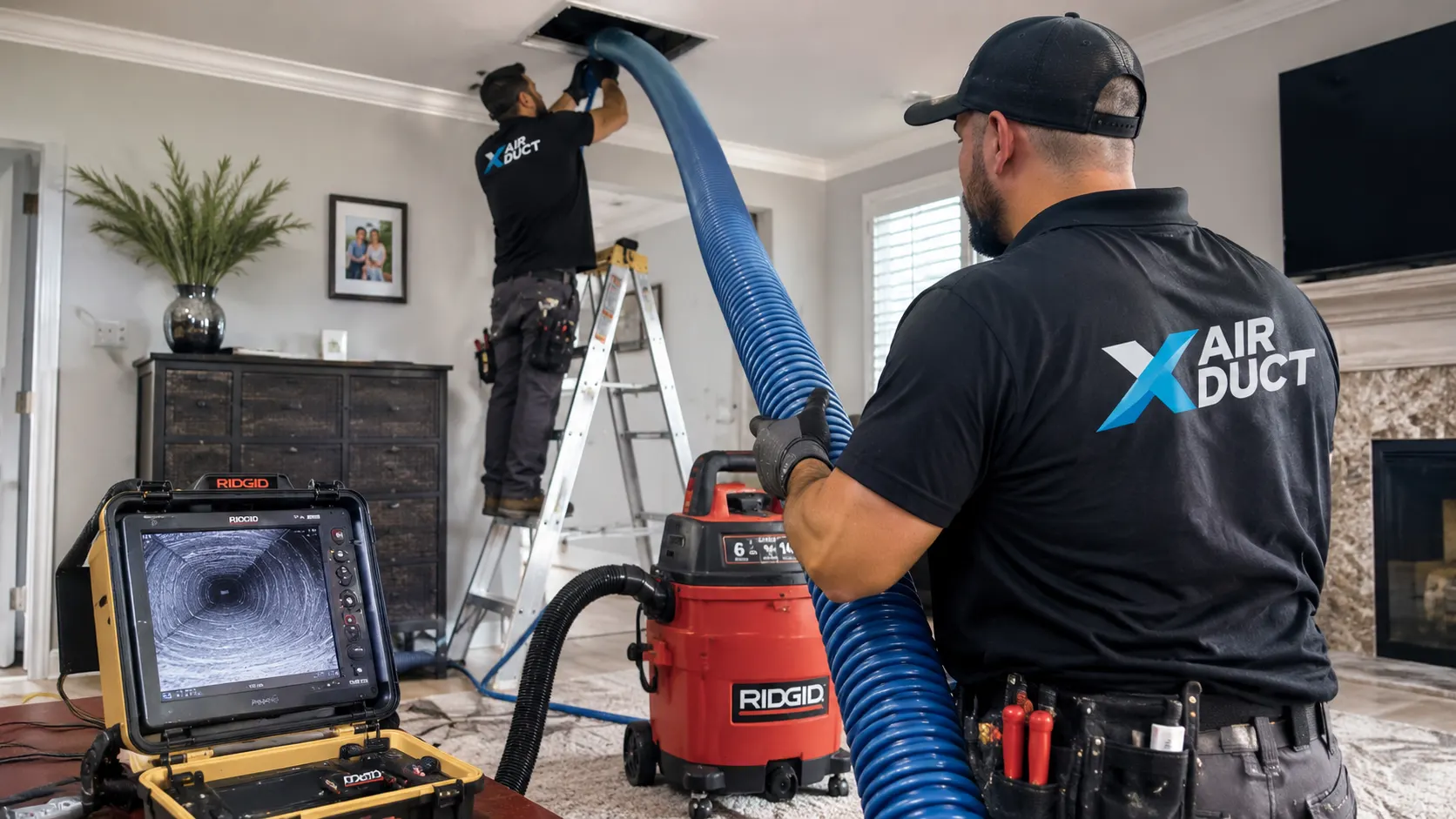
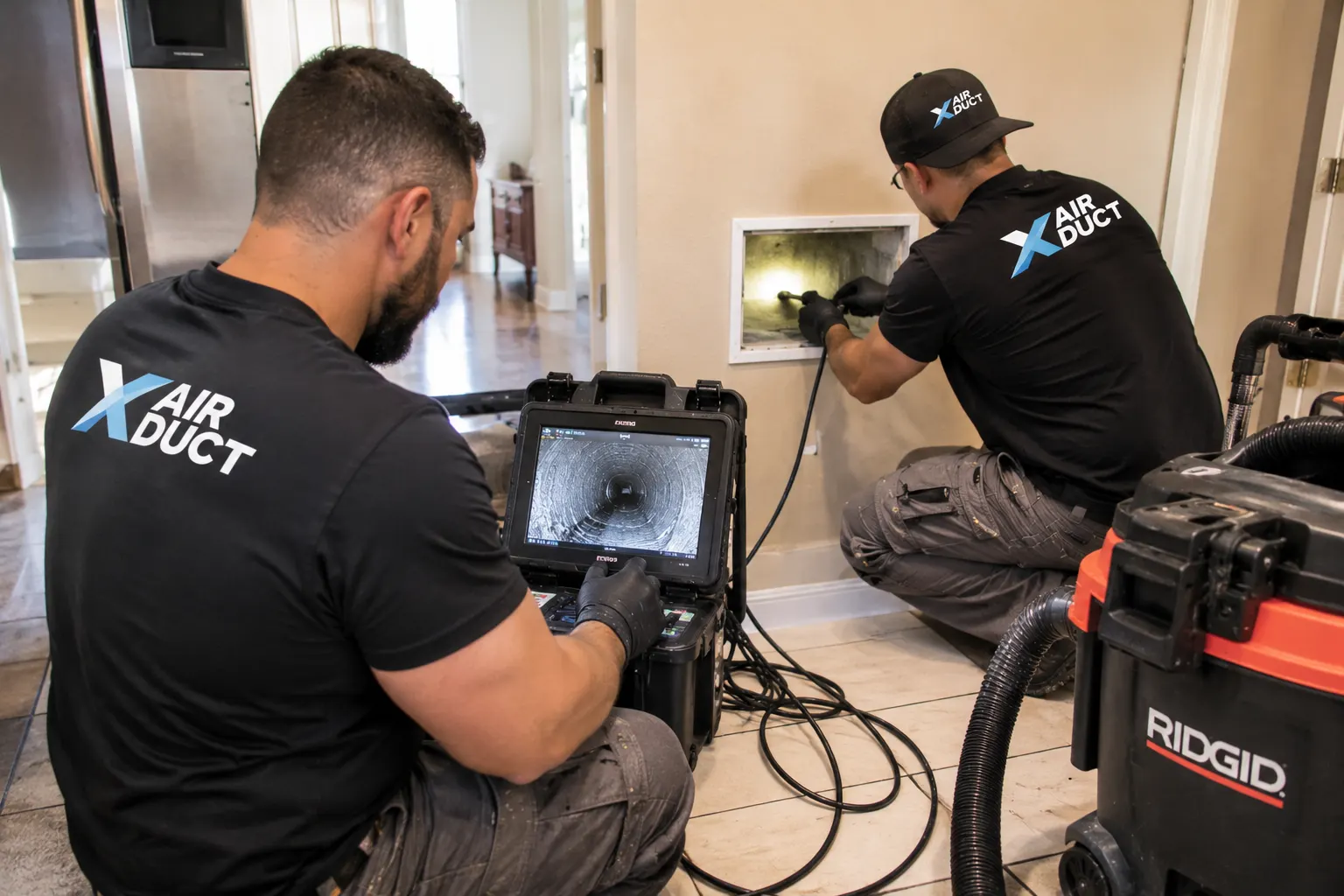
Photography is illustrative of the type of work we perform. It does not depict specific completed jobs or named employees.
Start with the simple checks
Before assuming the ducts are the problem, rule out the easy causes:
- Is the filter clogged or the wrong size?
- Are registers closed or covered by furniture or rugs?
- Are interior doors closed to rooms that lack a return path?
- Is the blower running at all, or only intermittently?
When ducts are the cause
Ducts restrict airflow when something physically blocks or deforms them: a crushed flexible run in the attic, a disconnected joint dumping air into a ceiling space, or a significant pile of debris. Inspection with a camera can reveal blockages; disconnections often need an HVAC contractor.
Equipment issues
A dirty blower wheel, a frozen evaporator coil, or a failing motor reduce airflow throughout the home. These are HVAC service items and fall outside duct cleaning.
What actually restricts airflow
Airflow in a duct system is a balance between what the blower can push and the resistance it meets. Resistance comes from the filter, the coil, the length and shape of the ducts, the registers, and anything inside the ducts. Ordinary dust lining a duct wall adds very little resistance. Real restrictions tend to be more dramatic: a filter packed solid, a collapsed or kinked flexible run, a disconnected branch dumping air into the attic, a closed damper, or a large obstruction such as construction debris or a nest.
A practical diagnosis order
If a room is weak, work from the cheapest explanation outward:
- Replace the filter and check that it is the correct size and type for the system.
- Make sure the register in that room is open and not blocked by furniture or rugs.
- Check that interior doors are not cutting the room off from the return path.
- Compare with other rooms on the same branch; a single weak room suggests a branch issue.
- Have an inspection look for disconnected, crushed, or obstructed ducts.
- If all rooms are weak, ask an HVAC contractor to check the blower, coil, and equipment.
When cleaning does help
Cleaning restores airflow when the restriction is debris. That happens most often after construction, after a filter was left out or failed, or when an object fell into a register. In those cases, removing the debris can make a noticeable difference. When the cause is a crushed duct or a failing blower, cleaning will not help, and a responsible technician should say so instead of performing work that cannot change the result.
An example from a two-story home
Upstairs bedrooms in two-story homes are often the warmest rooms, and owners sometimes assume dirty ducts are to blame. Often the explanation is heat gain through the roof, long attic runs, or a system that serves both floors without zoning. Inspection may show the ducts are reasonably clean. In that case, the next conversation is with an HVAC contractor about balancing, insulation, or zoning, not with a duct cleaner.
Questions to ask before paying for cleaning to fix airflow
If someone proposes cleaning to fix weak airflow, ask them to show the restriction on camera. Ask which rooms are affected and why cleaning would change them. Ask whether they checked for disconnected or crushed flexible duct in the attic. If the answers rely on general statements about dirty ducts rather than specific findings in your system, get a second look before committing.
Limitations to keep in mind
Duct cleaning will not improve airflow problems caused by equipment, leaks, or design. Diagnosis by a licensed HVAC contractor may be needed.
Takeaway
Check the filter and registers first, inspect second, and clean only when debris is actually the restriction.
Related reading and services
Have a question about your own system? X Air Duct brings 18 years of industry experience.
Request an estimate