The short answer
Inspection is worth considering when you see debris blowing from supply registers, thick buildup past the register opening, signs of pests, renovation dust in the system, or an unexplained musty odor. Light dust on a return grille is not, by itself, a sign that ducts need cleaning.
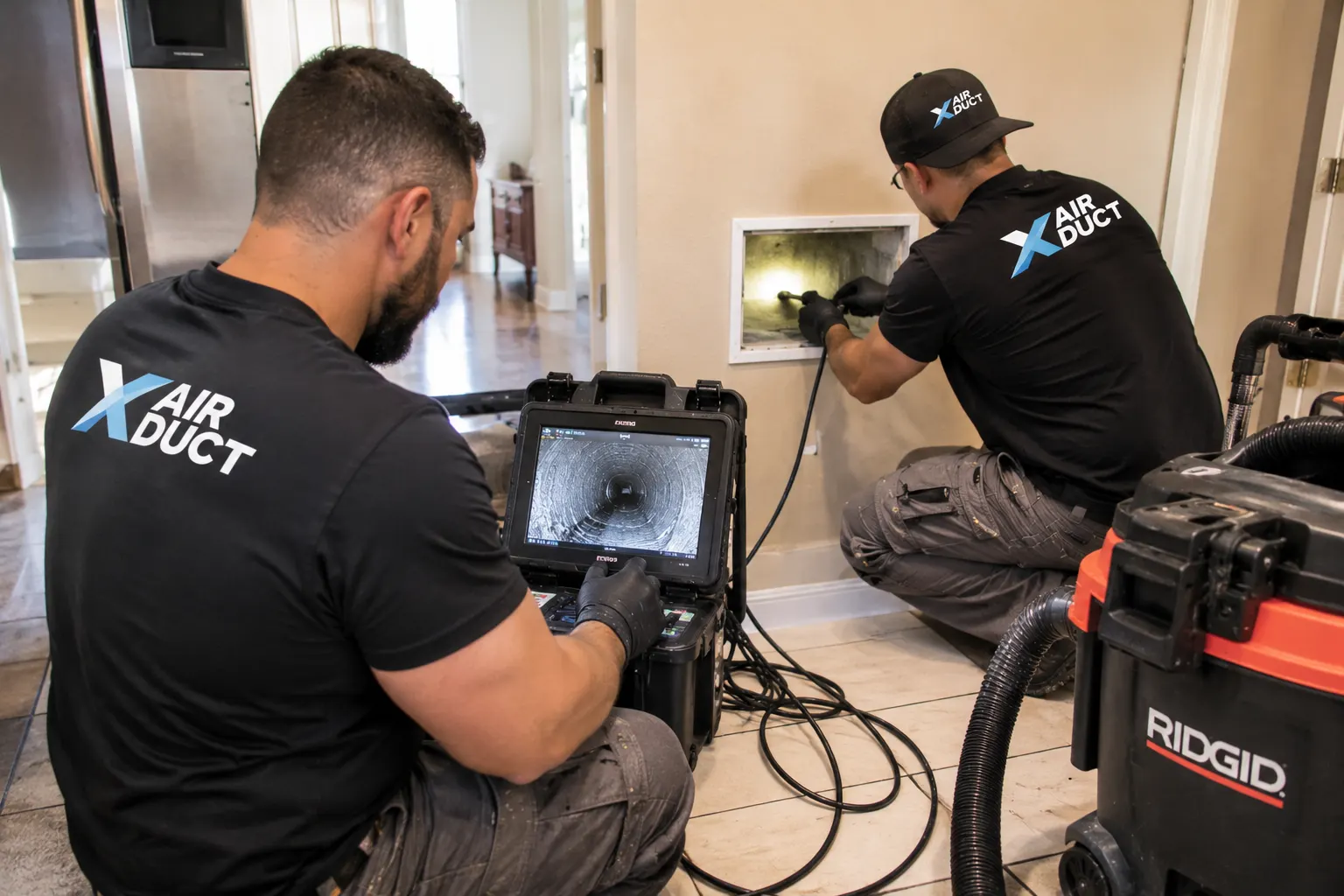
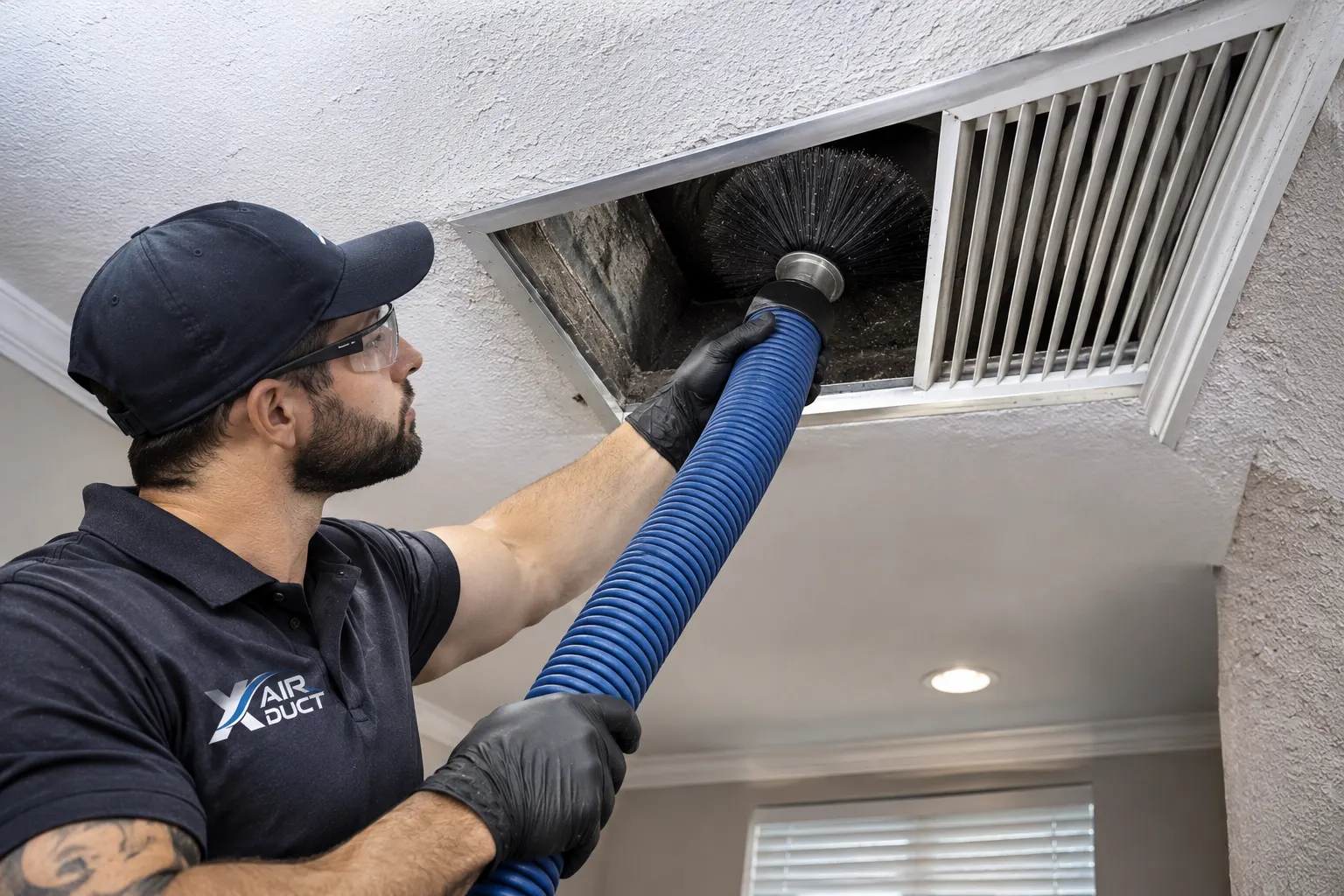
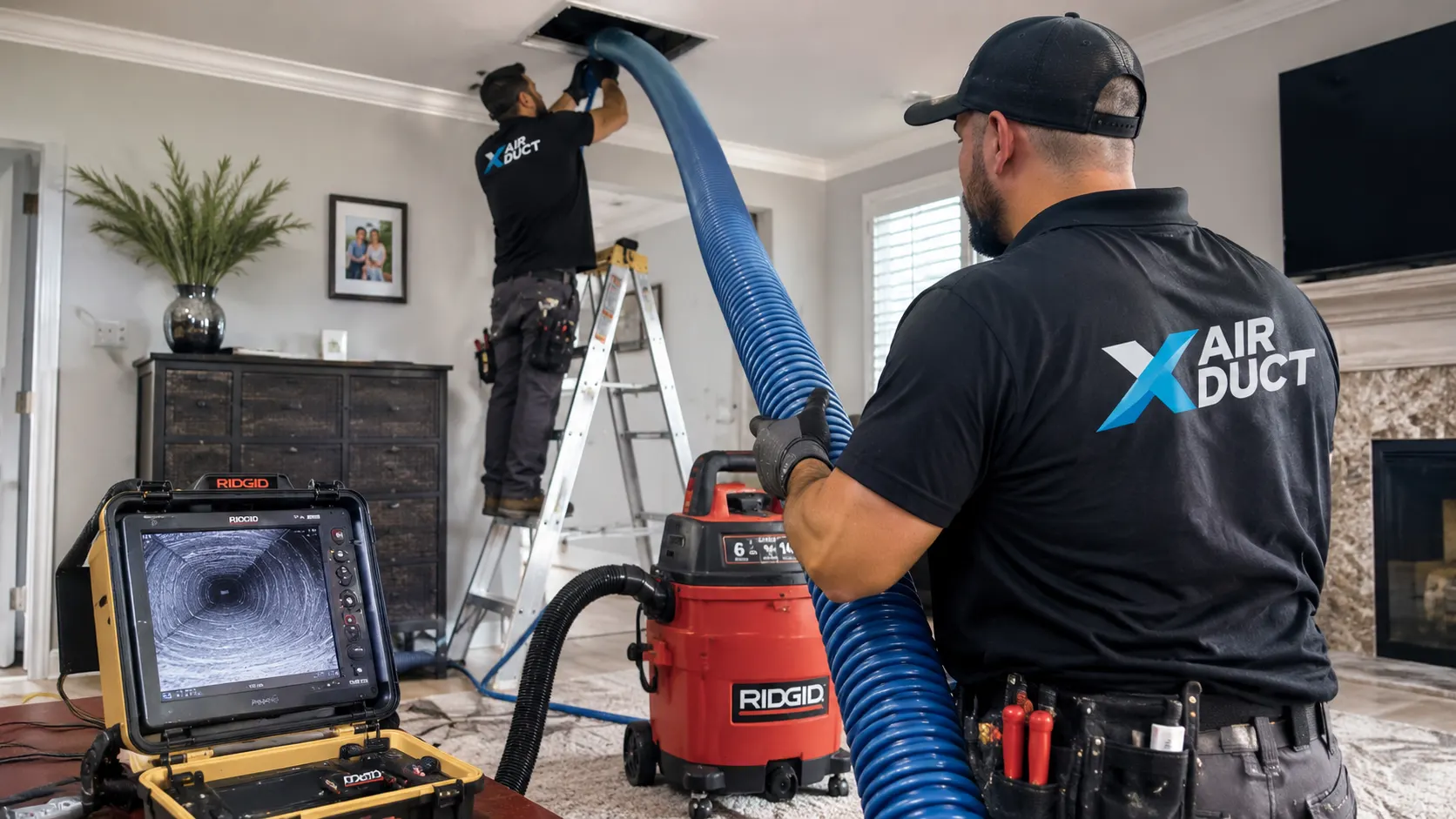
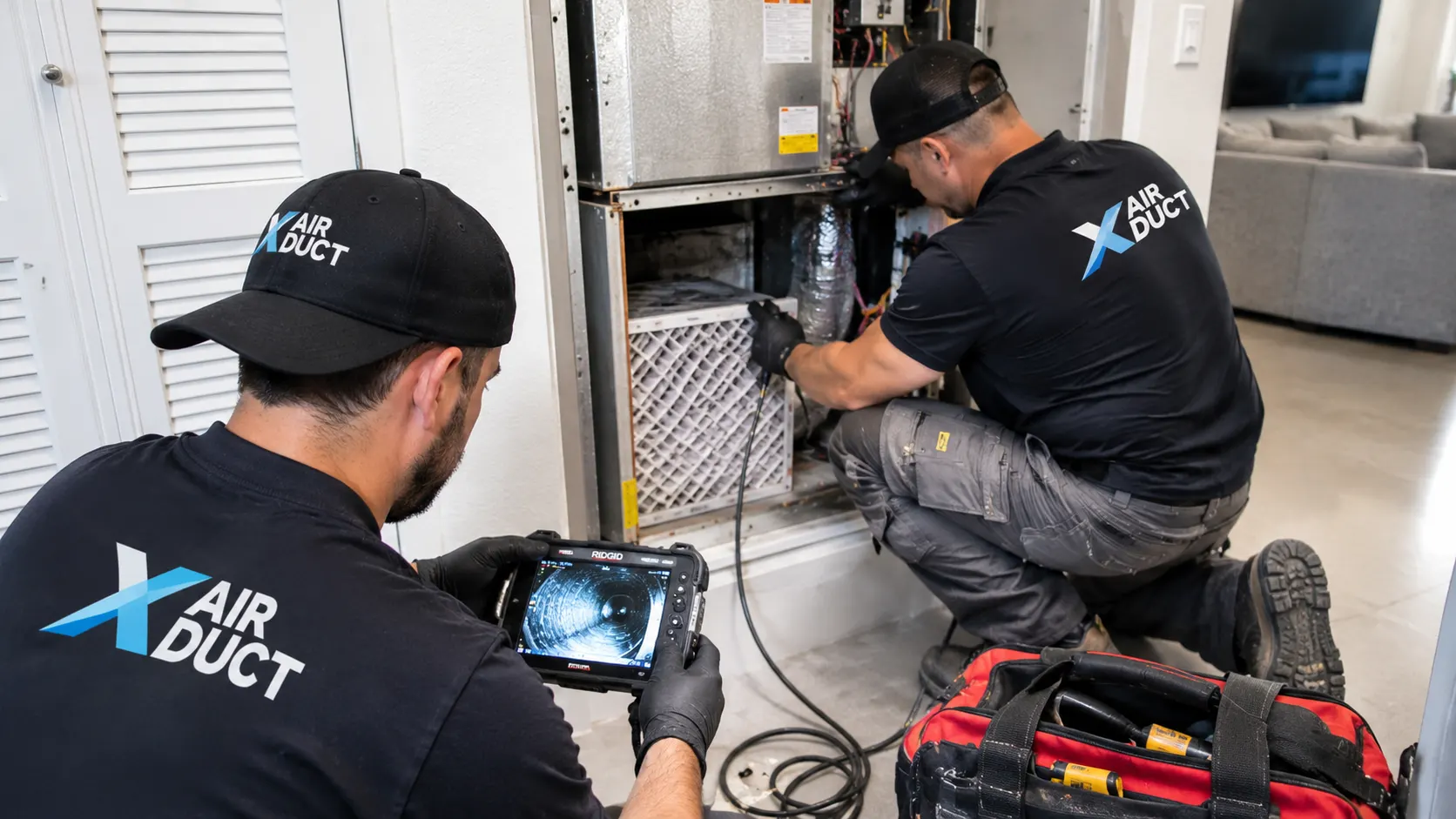
Photography is illustrative of the type of work we perform. It does not depict specific completed jobs or named employees.
Signs worth acting on
These observations point to something inside the system rather than on its surface:
- Particles or clumps puffing from registers at startup.
- Buildup visible a foot or more inside a supply duct.
- Droppings, nesting material, or insect debris near registers.
- Drywall or sawdust residue appearing after renovation.
- A musty odor near supply registers.
Common false alarms
A gray film on the return grille, dust on furniture, or dust visible in a sunbeam are everyday household dust and do not by themselves indicate dirty ducts. Wiping the grille and checking the filter is the right first step.
Odor and moisture need a different first step
A musty smell can indicate moisture. The EPA states that moisture problems must be corrected before cleaning, and that wet or moldy duct insulation may need to be replaced. In that case, the first call may be to an HVAC contractor to find the water source.
Separating normal dust from a real signal
Every home has dust, and a little gray film on a register face is not evidence of a duct problem. The signs worth acting on are changes and patterns: dust that suddenly increases after a project, debris that blows out when the blower starts, or a smell that appears only when the system runs. Inspection is the tool that turns these observations into facts.
A homeowner self-check
Before calling anyone, a ten-minute walk-through can tell you a lot. Use a flashlight and do not disassemble anything beyond a register cover held by visible screws:
- Remove one supply register and look a foot or two into the boot. Note whether you see light dust, heavy matting, debris, or anything unexpected.
- Look at the return grille and the filter behind it. Is the filter seated without gaps? Is the area behind it unusually dirty?
- Turn the fan on and hold a tissue near each register. Note any rooms with noticeably weak flow.
- Check the air handler closet for droppings, nesting material, or water.
- Notice whether odors appear only when the system starts.
Signs that point to another trade first
Some symptoms look like duct issues but start elsewhere. Water stains on a ceiling near a register, sweating registers, or a musty smell combined with high indoor humidity usually call for an HVAC contractor to check drainage, insulation, and equipment sizing. Weak airflow in one room can be a disconnected or crushed flexible duct in the attic. Cleaning will not fix any of these, and an honest inspection should say so.
What an inspection report should answer
A useful inspection answers four questions: what condition the accessible ducts are in, whether that condition justifies cleaning under the EPA criteria, which parts of the system could not be seen, and whether anything was observed that needs a different professional. If the answer to the second question is no, the right result is a recommendation to keep maintaining the filter and check again later.
Example: the dust that kept coming back
A homeowner dusts the living room on Saturday and finds a gray film on the same shelves by Tuesday. The filter is new. On inspection, the return plenum in the garage shows a gap where the duct meets the air handler cabinet, and garage dust is being pulled straight past the filter. Cleaning the return is useful, but the lasting fix is sealing that gap, which is a job for an HVAC contractor. That is why inspection looks at how dust is getting in, not only how much is there.
Limitations to keep in mind
A visual or camera inspection shows surface conditions. It cannot identify substances or measure air quality.
Takeaway
Look inside before you spend. A camera inspection turns guesses into facts.
Related reading and services
Have a question about your own system? X Air Duct brings 18 years of industry experience.
Request an estimate