The short answer
There is no single interval that fits every home. The EPA recommends cleaning air ducts as needed: when there is substantial visible buildup inside the ducts, debris discharging from supply registers, evidence of pests, or contamination such as renovation dust. Many homes go years without needing it.
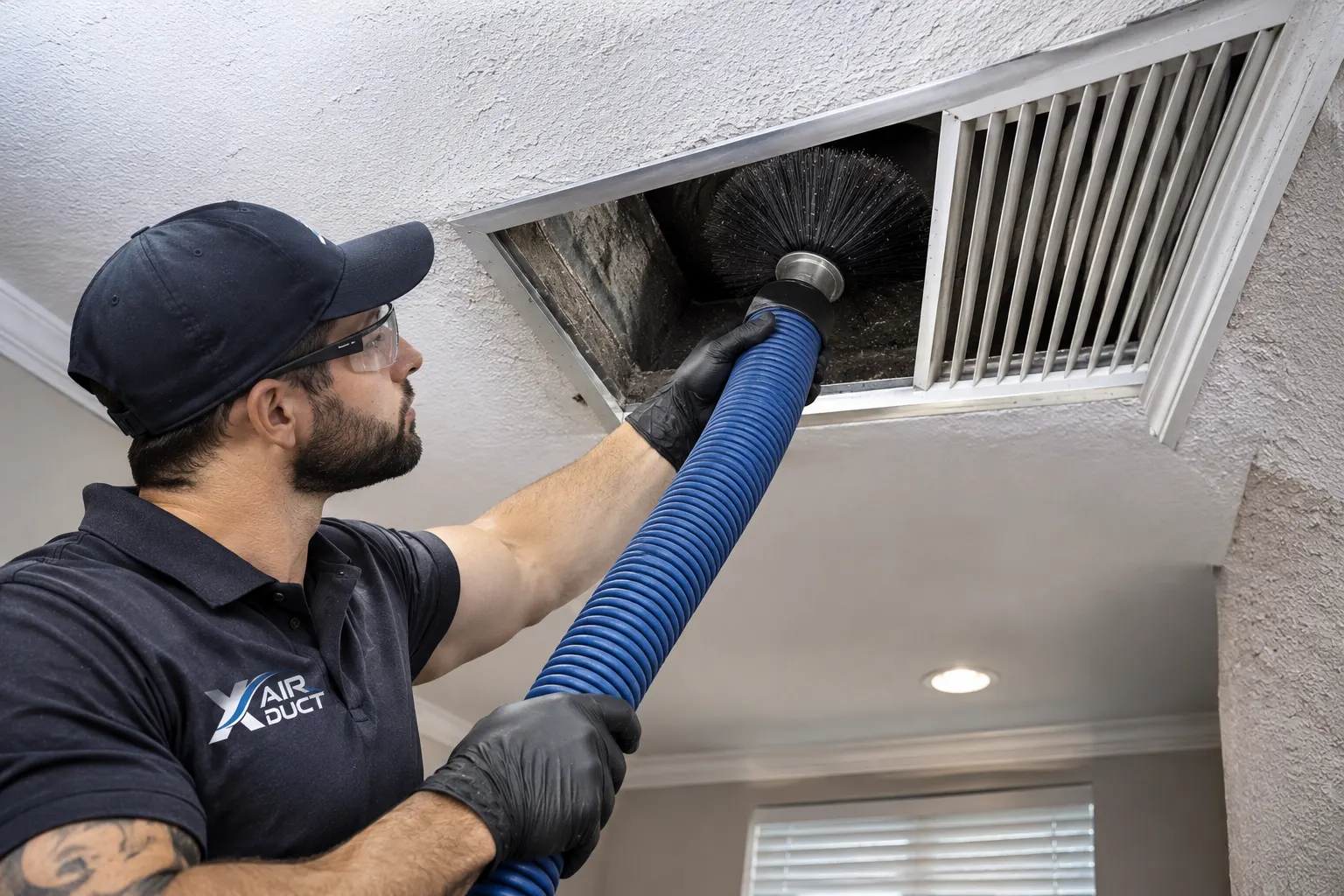
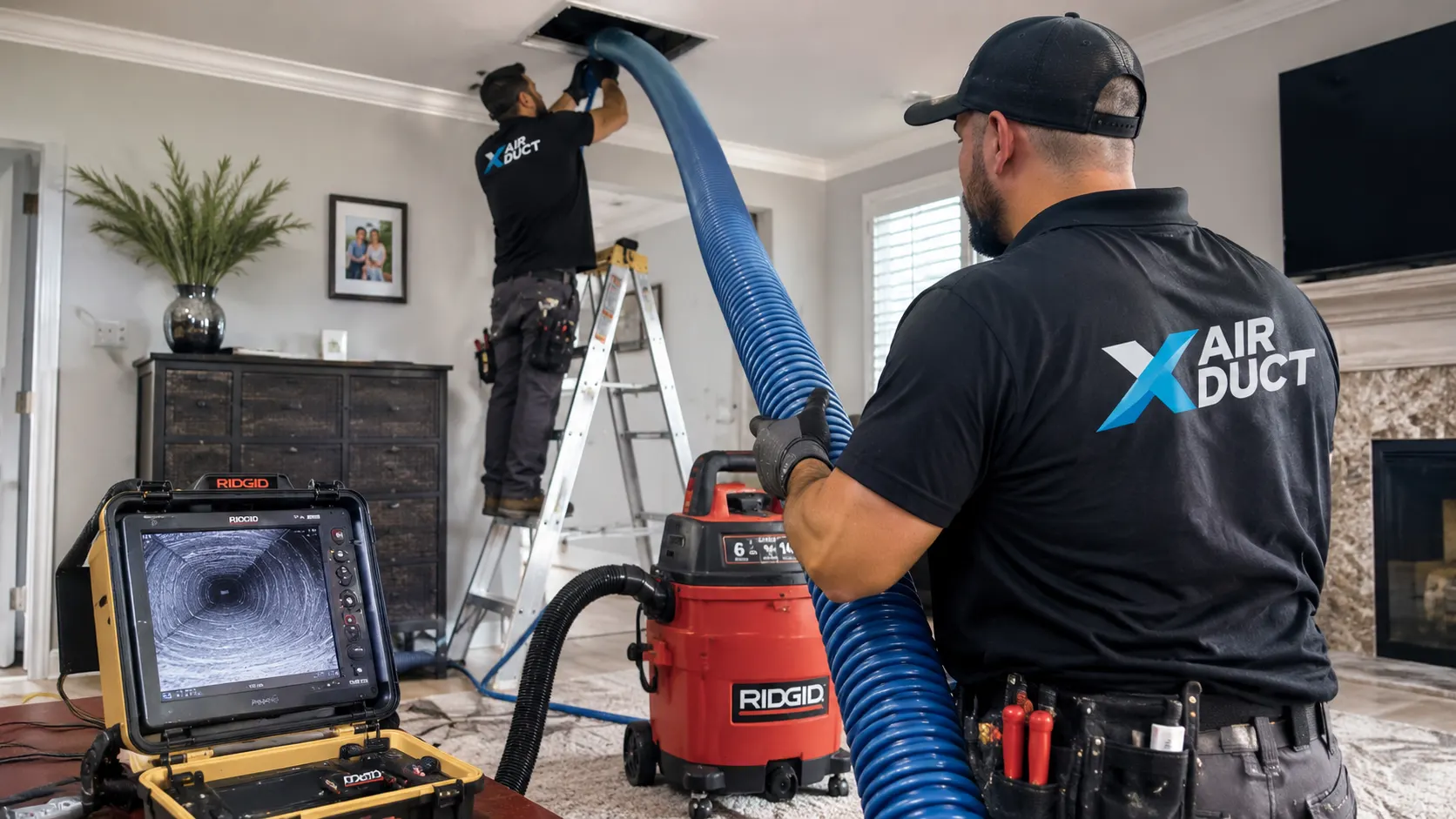
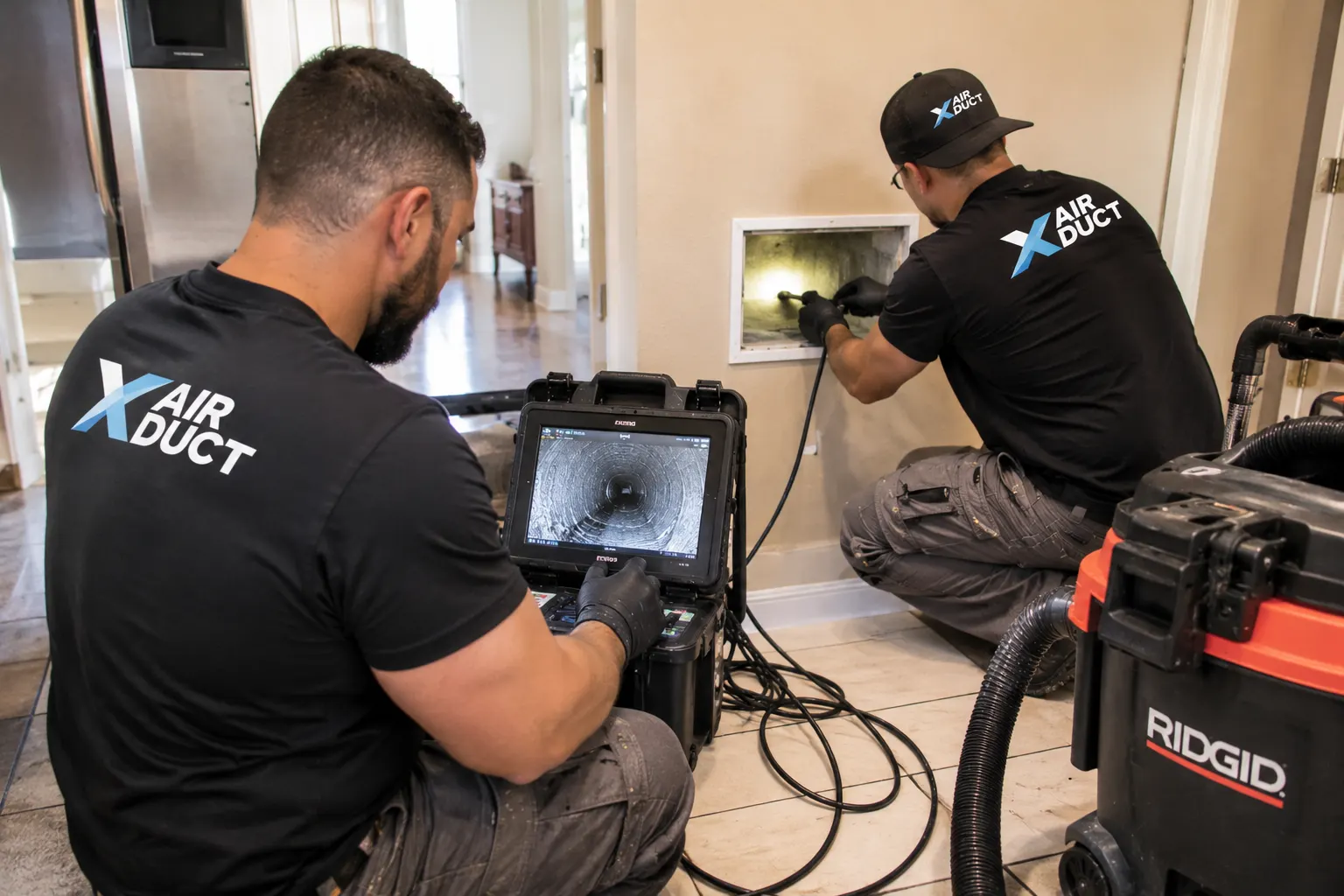
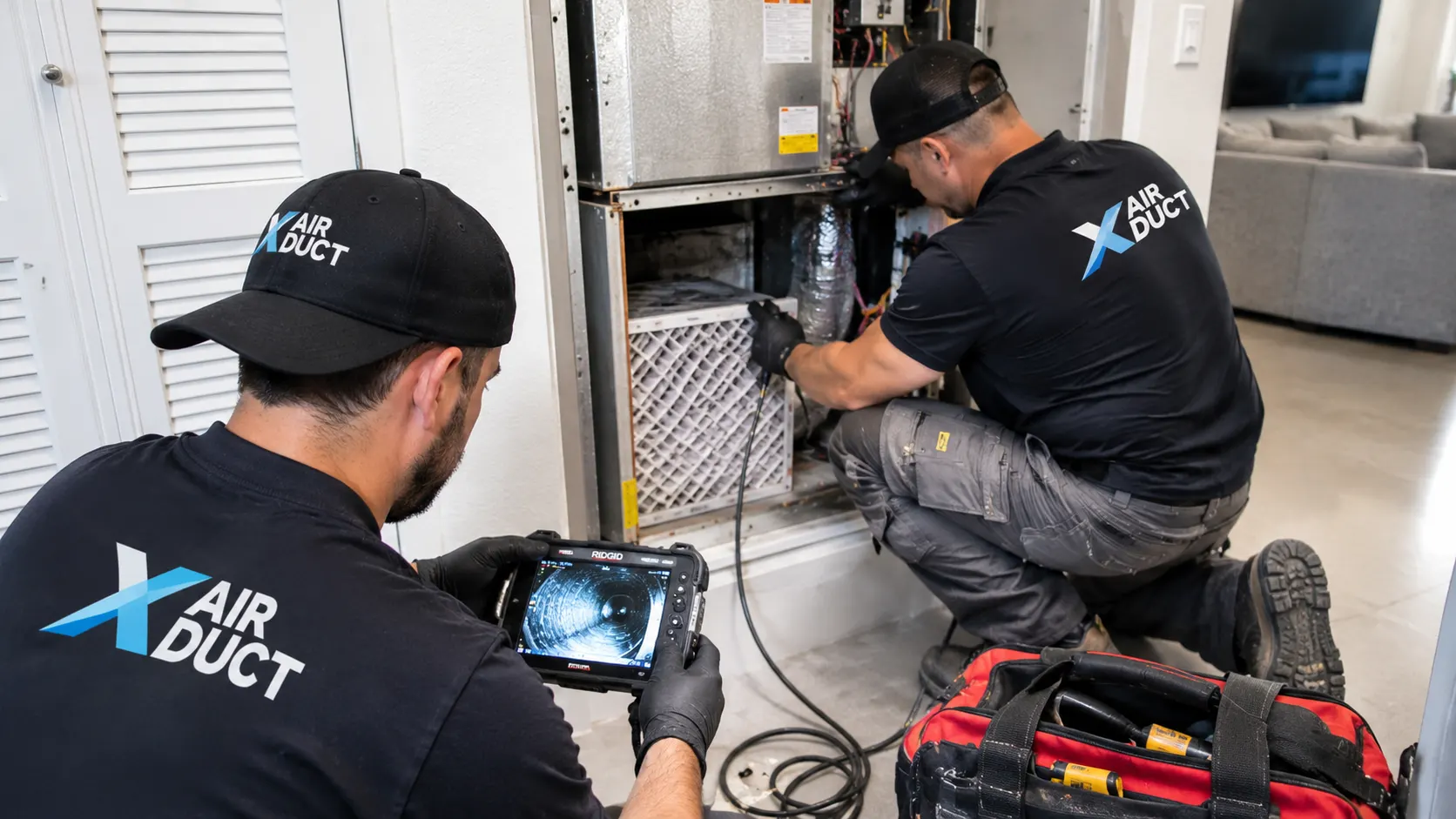
Photography is illustrative of the type of work we perform. It does not depict specific completed jobs or named employees.
Why a calendar schedule does not work
Two houses cleaned on the same date can be in completely different condition three years later. One may have had a kitchen remodel with open returns pulling in drywall dust, while the other had a well-fitted filter changed on time. Dust accumulation depends on what enters the system, not on how many months have passed.
Some companies advertise fixed intervals because they create repeat business. A better approach is to look first, then decide.
Conditions that justify a closer look
These are the situations where checking the ducts makes practical sense:
- Remodeling, flooring, or drywall work while the system was running.
- Debris or dust clumps blowing out of supply registers.
- Visible buildup when a register is removed and you look inside with a flashlight.
- Evidence of rodents or insects in the system, after the pest issue itself is resolved.
- Moving into a property with no maintenance history.
What slows down accumulation
The most effective habit is the filter. Use the size and type your equipment manufacturer specifies, make sure it seats without gaps, and replace it on schedule. Keeping return grilles unobstructed, sealing obvious gaps around returns, and controlling construction dust during projects all help.
A dusty grille is not the same as dirty ducts
Return grilles collect household dust on their face because air moves through them constantly. The EPA notes that a dusty return grille alone does not mean ducts need cleaning. Wipe it, then look further before making a decision.
Why there is no universal calendar
Two houses on the same street can collect debris at very different rates. One has a tight return plenum, a filter that fits its slot exactly, and owners who change it on time. The other has a return grille that leaves a finger-width gap around the filter, two shedding dogs, and a garage air handler that pulls in whatever blows under the garage door. A fixed interval would over-serve the first home and under-serve the second.
That is the practical reasoning behind the EPA position that duct cleaning should be done on an as-needed basis. The agency names specific conditions that may justify cleaning: substantial visible mold growth inside hard-surface ducts or other system components, infestation by insects or rodents, and ducts clogged with excessive dust and debris, or debris actually being released into the room from supply registers.
Events that reset the clock
Rather than counting years, count events. Each of the following is a reasonable trigger to look inside the system, even if cleaning turns out to be unnecessary:
- A remodel involving drywall sanding, tile cutting, or demolition while the system was running.
- Moving into a home whose maintenance history you do not know.
- Evidence of rodents or insects near the air handler, return, or attic ducts.
- A water event, such as a clogged condensate line or roof leak, that wet duct insulation.
- Dust visibly puffing from supply registers when the blower starts.
- A long vacancy, after which the system is restarted in humid weather.
A worked example
Consider a Broward homeowner who replaced kitchen cabinets and flooring over three weeks while living in the house with the air conditioning on. The return grille sat in the hallway twenty feet from the work. Afterward, the filter was gray within days and fine dust settled on shelves faster than usual. In that situation, an inspection of the return plenum and the nearest supply branches is a sensible next step. If the camera shows a layer of fine construction dust, cleaning is warranted. If it shows only light, ordinary dust, a few filter changes may be all that is needed.
What to do between inspections
The cheapest way to stretch the time between cleanings is to keep debris out. Check the filter monthly, replace it when it looks loaded, and confirm the size printed on the frame matches the slot. Keep the area around a closet or garage air handler clean and free of stored items. During renovation, cover returns and registers and, where practical, shut the system off during the dustiest work. Those habits do more for duct cleanliness than any schedule.
Limitations to keep in mind
Duct cleaning has not been shown to prevent health problems, and it does not replace filter changes or HVAC equipment maintenance. If moisture is present in the ducts, the source must be corrected first.
Takeaway
Clean when there is a reason you can see, not because a calendar says so. Inspection is the way to find out.
Related reading and services
Have a question about your own system? X Air Duct brings 18 years of industry experience.
Request an estimate