The short answer
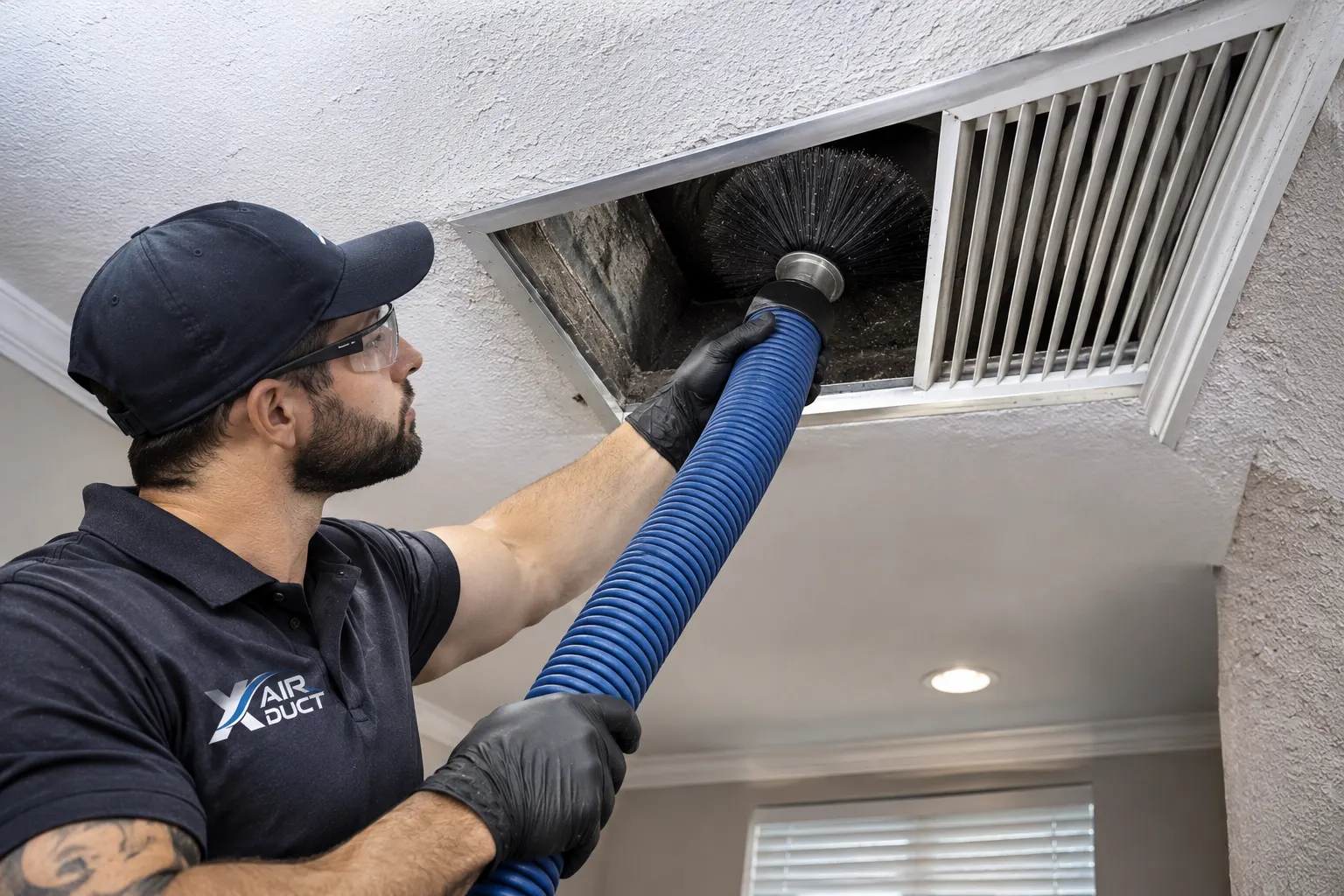
Professional air duct cleaning combines two actions: loosening debris inside the ducts with brushes or air tools, and capturing it with collection equipment that holds the system under negative pressure. Around that core, a good job includes an assessment, protection of the home, and a clear explanation of what was and was not reached.
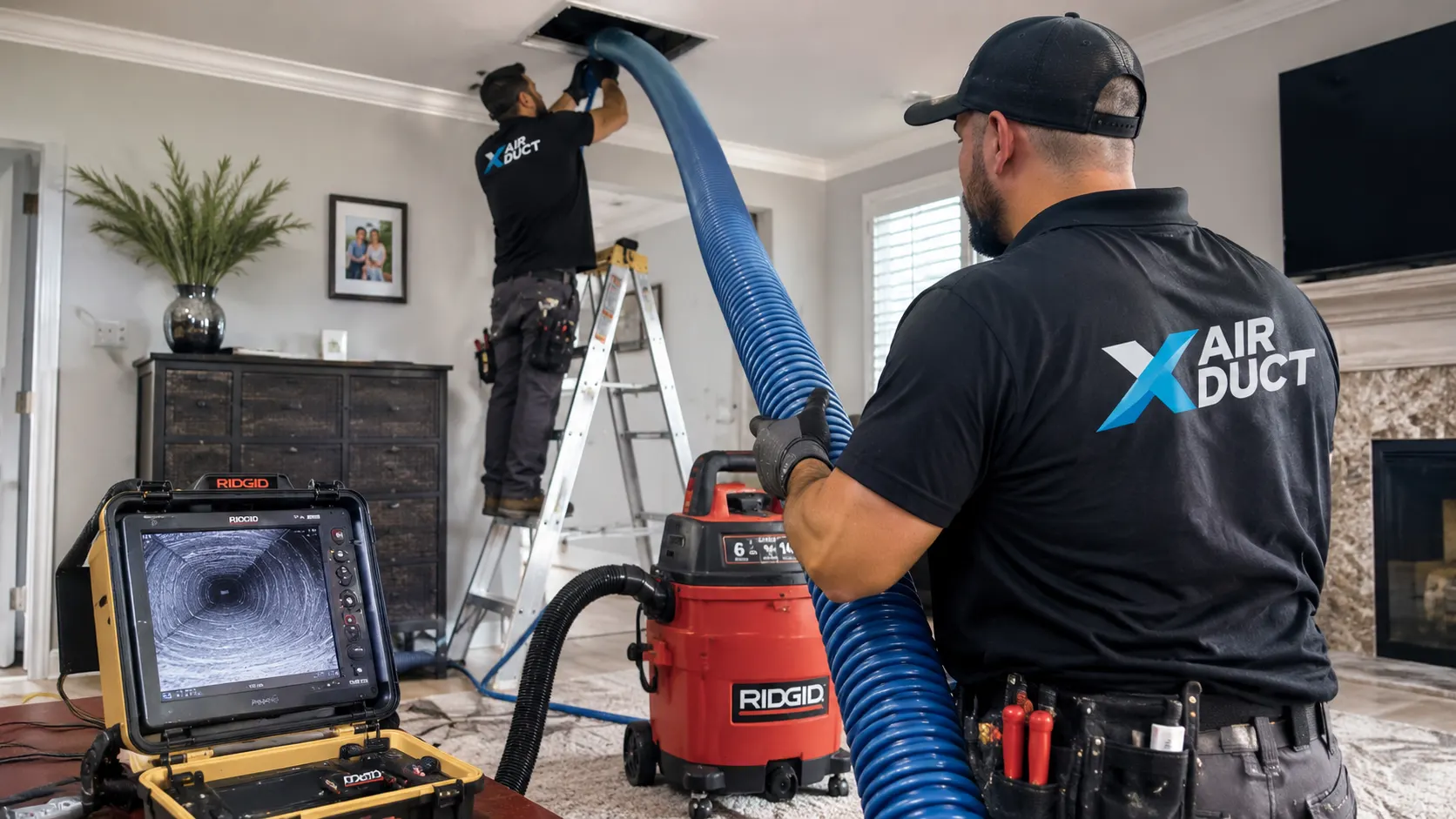
Photography is illustrative of the type of work we perform. It does not depict specific completed jobs or named employees.
Before any equipment comes in
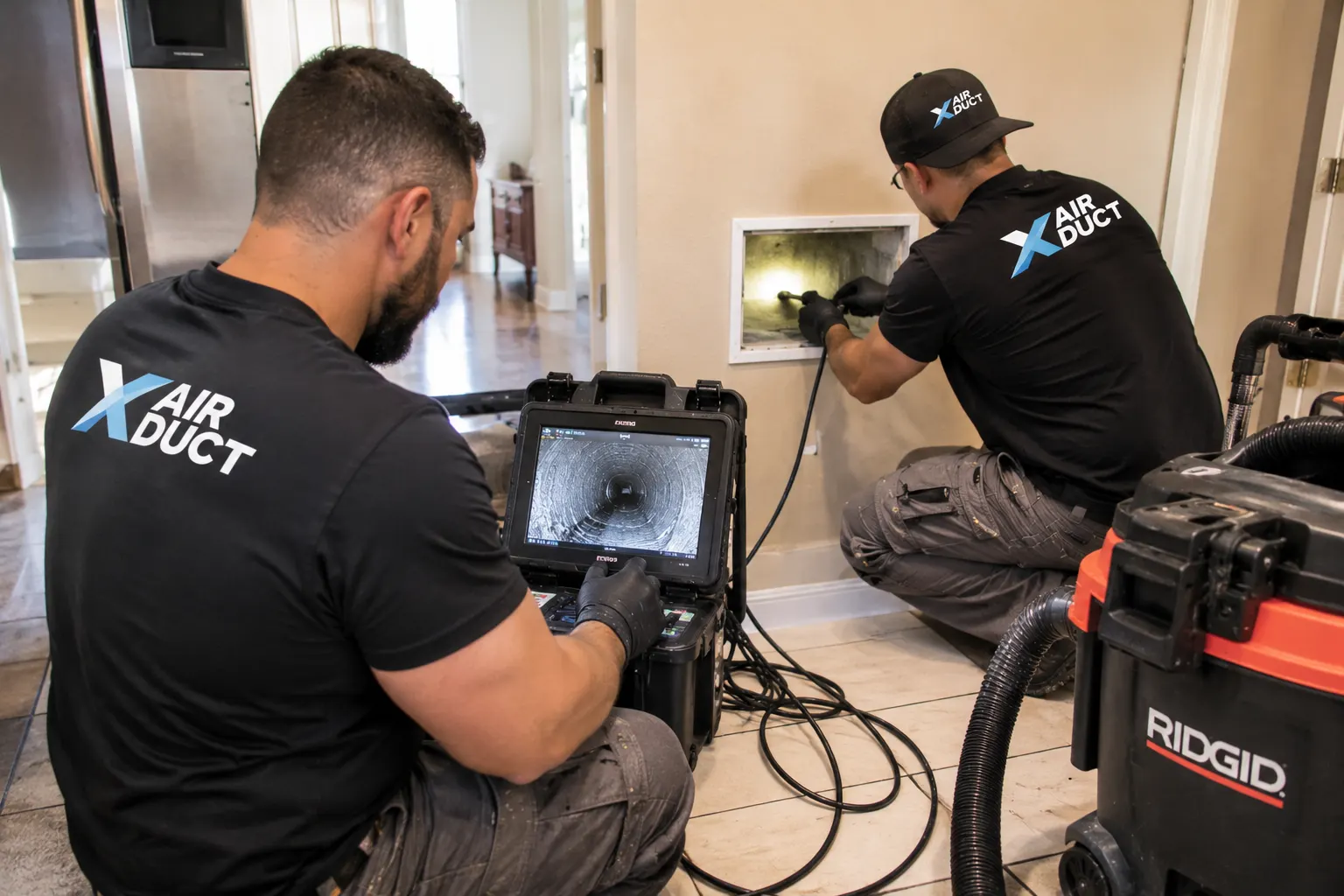
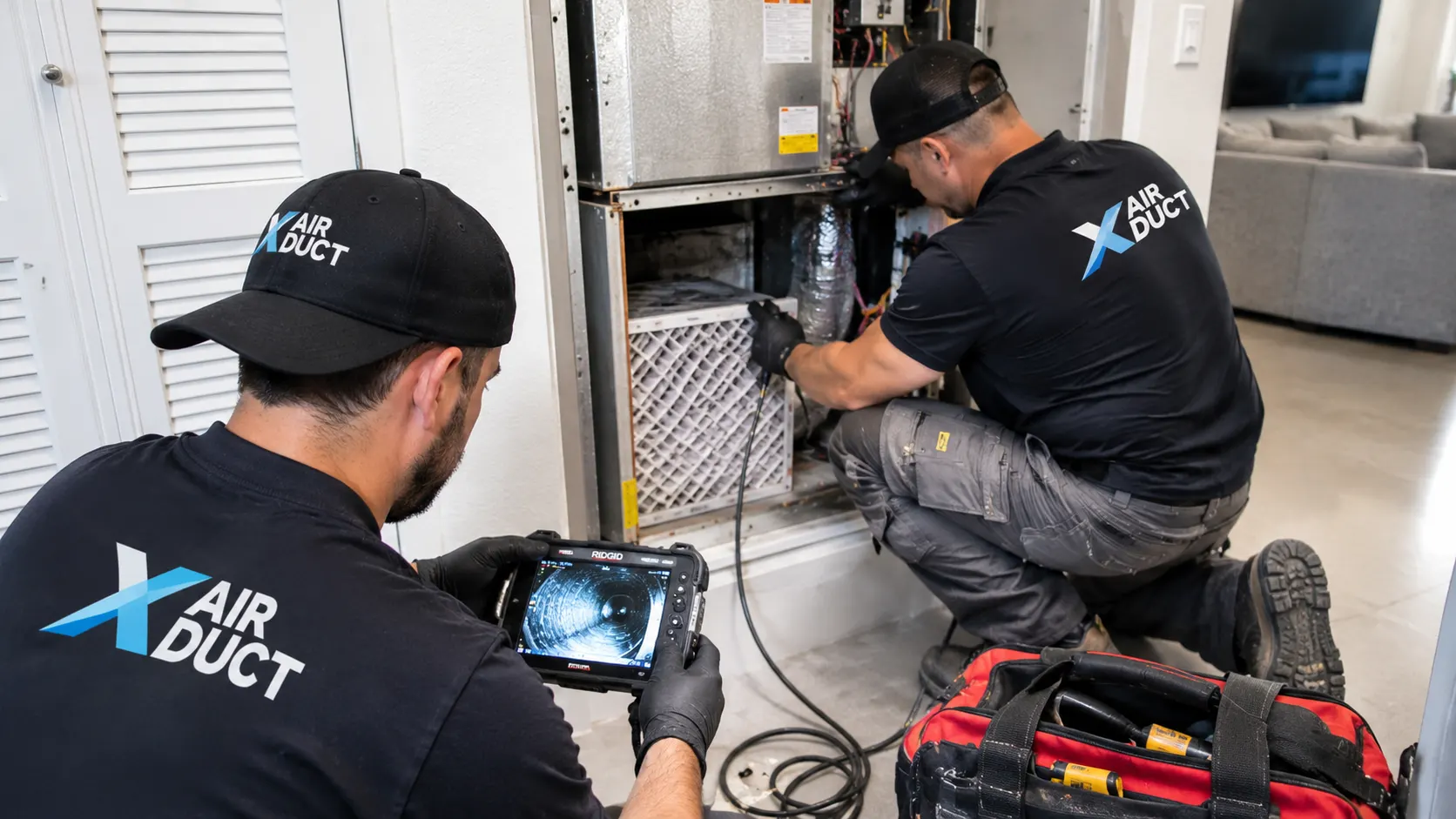
The technician should ask about the system, recent work on the home, pets, and areas you want protected. Then registers, returns, and accessible duct sections are examined, often with a camera, to confirm cleaning is warranted and define the scope.
Protecting the home
Drop cloths go down along the work path. The thermostat is set to off so the blower does not run. Hoses are routed to avoid trip hazards, and furniture near registers is noted or moved with your permission.
Negative pressure and agitation
A collection unit connects to the duct system and draws air outward, so loosened debris travels toward the collector instead of into the room. While that suction is held, the technician works through each branch with tools that dislodge debris. On sheet metal, firmer brushes can be appropriate; on flexible duct, gentler tools prevent tearing the inner liner.
Registers and grilles are removed and cleaned, and supply and return sides are both addressed.
The walkthrough
At the end, you should hear what was cleaned, what could not be reached, and anything that looked damaged or wet. If an issue falls outside cleaning, such as a disconnected duct or a moisture problem, the right next step is a referral, not an improvised fix.
Before the equipment comes in
A good visit begins with conversation, not hoses. The technician should ask where the air handler sits, how many systems the property has, whether there were recent renovations, and whether any rooms are off-limits. In a condominium, building rules about insurance, elevators, and hours are confirmed before arrival. Then the thermostat is switched off so the blower does not start mid-job, and floor protection goes down along the path between the entry, the air handler, and each register.
The order of work, step by step
Sequences vary with the layout, but a typical residential job follows a logical order:
- Inspect accessible registers, the return, and the air handler area, often with a camera, to set a baseline.
- Connect collection equipment to the system so air is drawn out and loosened debris travels toward the collector rather than into rooms.
- Seal or cover registers that are not being worked on to maintain negative pressure.
- Work each branch with agitation tools suited to its material: brushes for sheet metal, gentler tools for flexible duct and duct board.
- Clean the return side, which often holds more debris than supplies because it sits upstream of the filter.
- Remove, wash, or wipe registers and grilles and reinstall them.
- Re-inspect selected sections and review findings with you.
What you should see and hear
Collection equipment is loud, and you will hear brushes or air tools working inside walls and ceilings. That is normal. You should not see clouds of dust drifting through rooms; if you do, ask the technician to pause and check that the collection connection and register seals are holding. You are welcome to watch the monitor during inspection. Ask what normal dust looks like compared with significant buildup, so you can judge the findings yourself.
What the end of the visit should include
Before the crew leaves, expect a plain summary: which branches and components were cleaned, which could not be reached and why, and anything observed that belongs to another trade, such as a disconnected flexible run, damaged insulation, or water near the air handler. The EPA recommends that if a service provider cleans ducts, all components of the system be cleaned, and that you confirm the provider will protect your home and follow appropriate practices. Asking for that summary in writing is reasonable.
Limitations to keep in mind
Cleaning removes debris from accessible ductwork. It does not repair ducts, correct humidity, or guarantee a dust-free home.
Takeaway
Look for a process with assessment first, negative pressure plus agitation in the middle, and an honest walkthrough at the end.
Related reading and services
Have a question about your own system? X Air Duct brings 18 years of industry experience.
Request an estimate