The short answer
Air duct cleaning relies on three categories of equipment: collection units that hold the system under negative pressure and capture debris, agitation tools such as rotary brushes and air whips that loosen it, and inspection cameras that show conditions before and after.
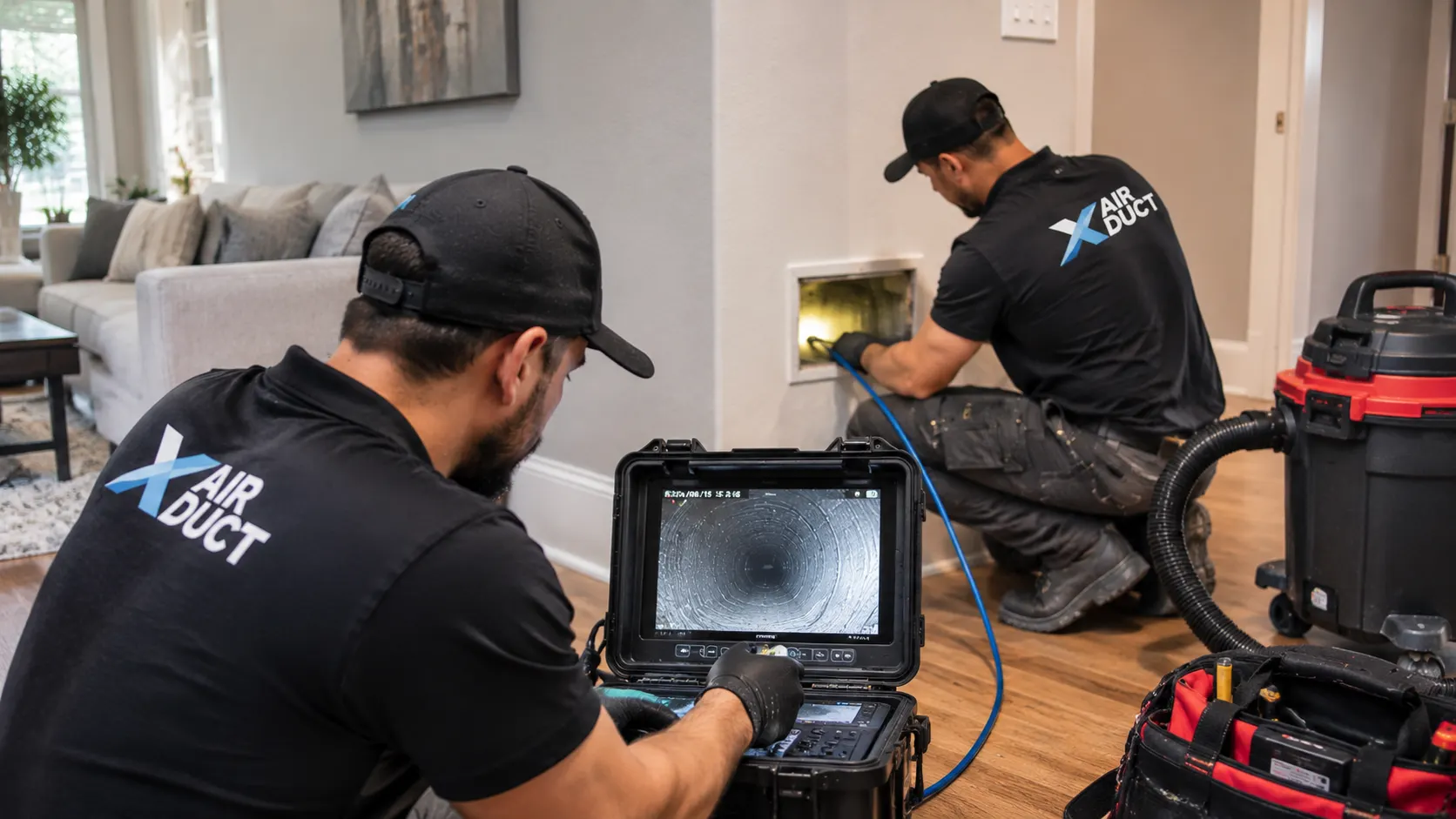
Photography is illustrative of the type of work we perform. It does not depict specific completed jobs or named employees.
Collection equipment
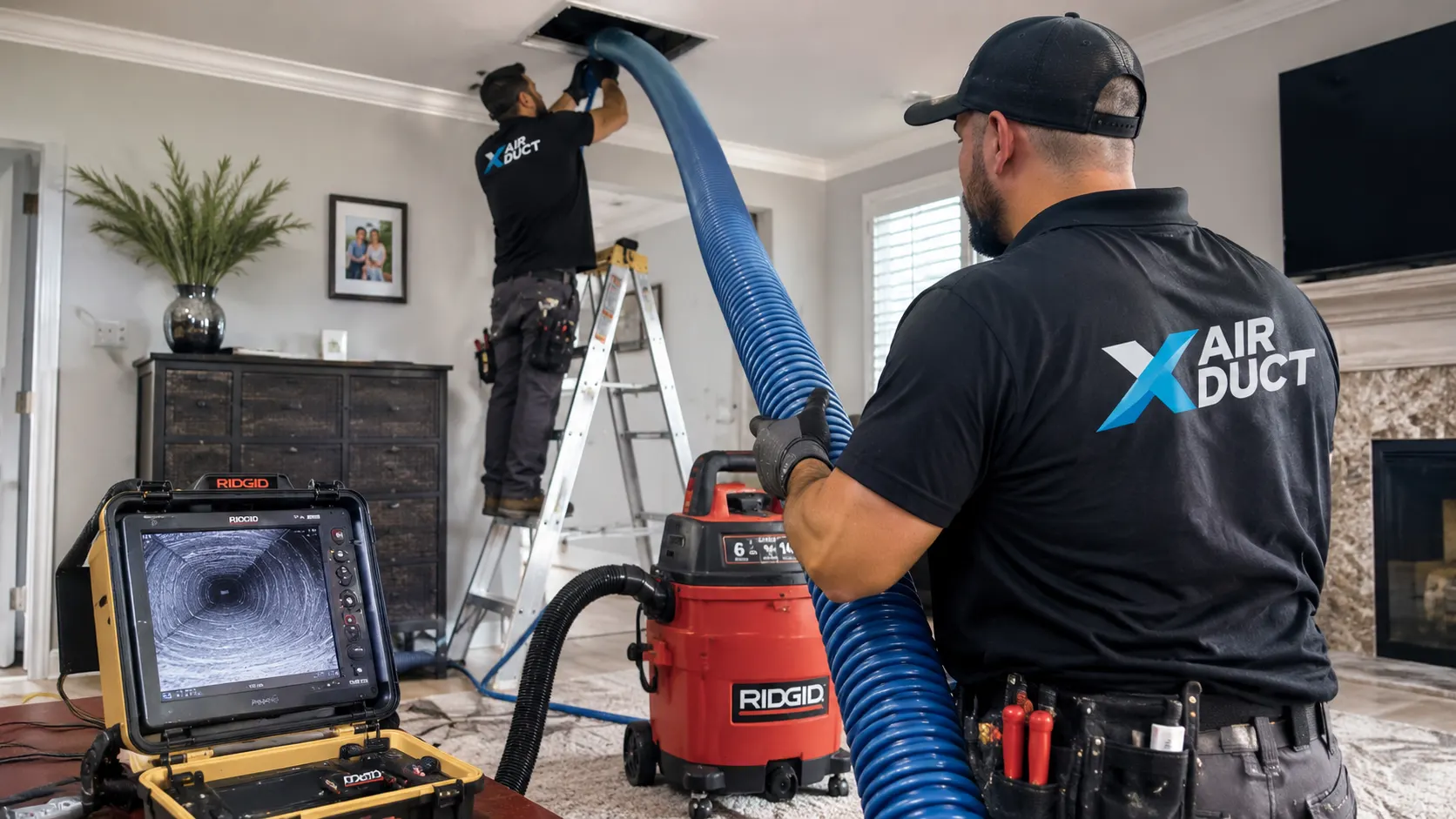
Portable or truck-mounted collection units connect to the duct system and pull air outward. Portable units with filtration are common in homes and condominiums where long hose runs from a truck are impractical.
Agitation tools
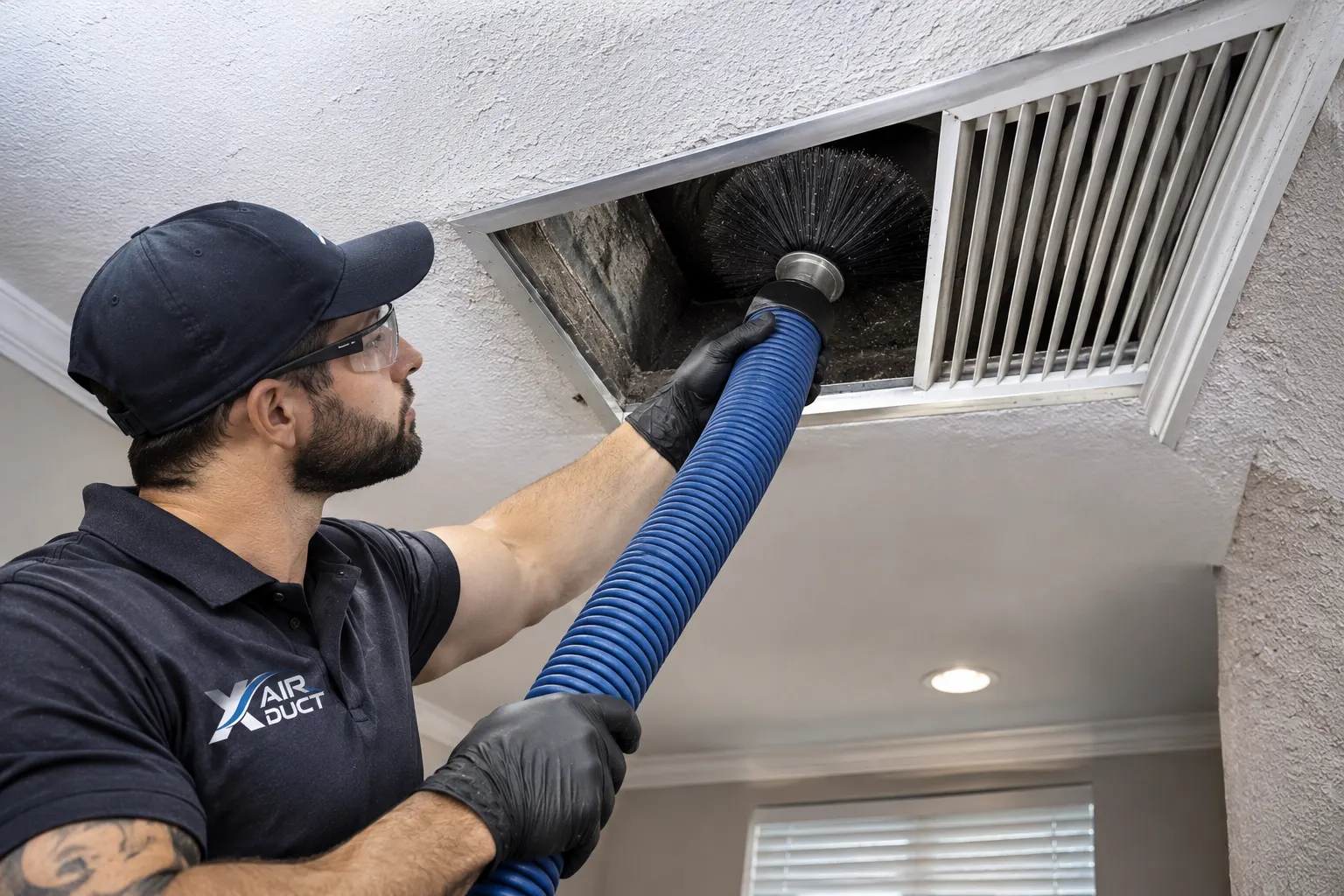
Rotary brushes spin inside the duct to loosen debris. Air whips and skippers use compressed air to dislodge material. Tool selection should match the duct: rigid sheet metal tolerates more aggressive brushing than flexible duct or duct board.
Inspection cameras
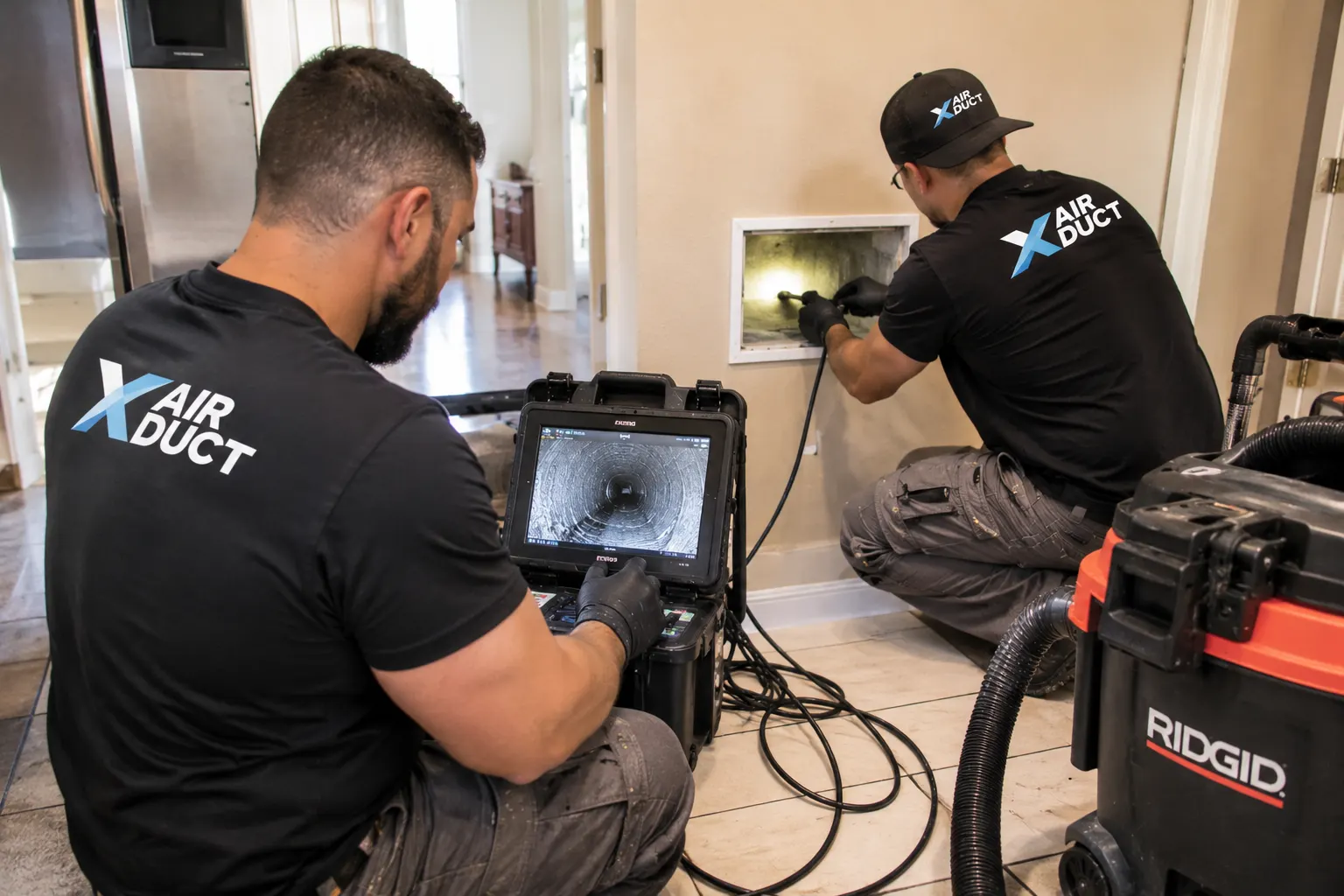
A camera on a push cable lets the technician and homeowner see inside. It helps decide whether cleaning is needed and confirms results afterward.
Protection equipment
Drop cloths, register covers, and floor runners protect the home and are as much a part of the job as the main machinery.
How negative-pressure collection works
The foundation of duct cleaning is negative pressure. A collection unit, either a portable machine brought inside or a larger unit connected through a hose, draws air out of the duct system so that loosened debris moves toward a collector rather than into the house. The connection point is usually the main trunk or plenum. Registers not being worked on are covered so the suction concentrates where the technician is cleaning.
Agitation tools in detail
Suction alone does not remove debris stuck to duct walls; something has to loosen it. Common agitation tools include:
- Rotary brushes on flexible cables, sized to the duct diameter, suited to sheet metal.
- Air whips or skipper balls driven by compressed air, which are gentler and often preferred for flexible duct.
- Hand brushes and contact vacuums for registers, boots, and grilles.
- Cameras on flexible cables to inspect before and after.
Matching tools to duct material
Tool choice is where experience matters. An aggressive brush that works well in a steel trunk can tear the inner liner of a flexible duct or scuff the fibrous surface of duct board. A technician should identify the material at each run and adjust. If you know your home has flexible duct in the attic, it is fair to ask what tools will be used on it.
What you will not see us use
X Air Duct does not apply sanitizers, biocides, encapsulants, or other chemical treatments. The EPA advises caution about chemical biocides and sealants in ducts and recommends that their use be fully understood before being applied. Our work is mechanical cleaning and inspection, and we explain what the equipment can and cannot reach.
Cameras and what they reveal
Inspection cameras on flexible cables let technicians and customers see inside ducts before and after cleaning. They reveal debris type, duct material, damaged liners, separated joints, and objects that have fallen into registers. Watching the monitor together turns a technical service into something you can verify yourself. Ask for the camera to be used on the same section before and after cleaning so the difference is clear.
Protecting the home during work
Equipment also includes the less glamorous items: floor runners, drop cloths, register covers, corner guards for hoses, and HEPA-filtered vacuums for cleanup. These protect your home and keep debris contained. A provider who arrives without protection materials is telling you something about how they work.
Questions to ask about equipment
Where will the collection unit connect, and how will you maintain negative pressure? Which agitation tool will you use on each duct material in my home? Will I be able to see the camera before and after? How will hoses be routed through the house? Clear answers show a provider understands the tools, not just owns them.
Limitations to keep in mind
Equipment alone does not guarantee results. Technique, access, and judgment matter as much as the machine.
Takeaway
Ask what tools will be used on your specific duct type and why.
Related reading and services
Have a question about your own system? X Air Duct brings 18 years of industry experience.
Request an estimate